
Torque and Force Calibration Company in Hawiyah
Traceable torque and force testing for oil, gas and plant maintenance teams working in Hawiyah and nearby Saudi industrial sites.
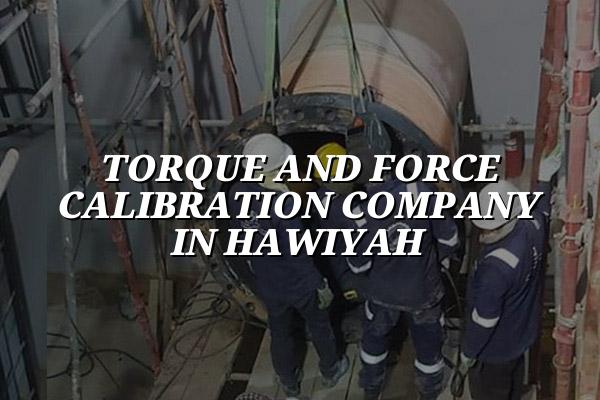
Torque and force calibration company in Hawiyah is the kind of search people make when a shutdown is coming and the bolting tools, load cells or force gauges have to be right the first time. We help you get traceable results that support safe maintenance, tighter assembly control and cleaner QA records.
For teams in Saudi Arabia's oil and gas corridor, that usually means fast planning, the right standards, and a calibration partner who can work onsite or collect instruments for controlled lab testing. That's how we handle torque wrenches, torque multipliers, hydraulic tools, force gauges and related equipment for plant, turnaround and workshop users.
What a torque and force calibration company in Hawiyah should cover
A good torque and force calibration company in Hawiyah should do more than hand over a certificate. You need controlled measurement, clear traceability, and a report that your maintenance superintendent, QA team and auditor can all read without chasing missing details. In our work, that usually starts with identifying the tool type, its range, the unit used in the field, and the condition it arrived in.
Where torque checks usually matter
We see the heaviest demand from oil and gas maintenance crews, fabrication shops, pump skids, compressor packages and bolting teams working on flanges, pressure vessels and rotating equipment. A torque wrench used on a flange joint in Hawiyah is not just a hand tool; it affects joint integrity, leakage control and how the full maintenance record stands up later. Force equipment matters just as much when a production line, test rig or lifting-related setup depends on measured load rather than guesswork.
Traceability and standards in plain terms
For calibration work, the main point is traceability back to a recognized measurement chain and documented uncertainty. Our laboratory work follows ISO/IEC 17025:2017, and for customers in Saudi Arabia that usually gives the confidence they need for internal audits, vendor checks and quality files. When electrical or allied measurement work is part of a larger maintenance scope, we keep the documentation tidy so it fits the way industrial teams actually review records.
- Identify the tool and range — we confirm the make, model, serial number and the torque or force span before the job starts.
- Check condition on receipt — we look for damaged drives, worn adapters, fluid leaks, corrosion and signs of overloading.
- Test against known references — the instrument is compared with suitable standards under controlled lab conditions or onsite where practical.
- Review results and issue records — you get the readings, pass/fail status and the traceable documentation your team can file.
- Match calibration interval to usage, not just the calendar.
- Keep torque tools clean and stored without load on the adjustment mechanism.
- Tag tools that have been dropped, overloaded or used after a harsh job.
- Ask for certification details before critical bolting work starts.
- Separate production tools from emergency spares so records stay clear.
Common torque and force instruments we handle for Hawiyah sites
| Instrument | Typical use | What we check |
|---|---|---|
| Click torque wrench | Flange bolting, maintenance assemblies, workshop tightening | Setting accuracy, repeatability, drive wear, trigger behavior |
| Torque multiplier | High-torque bolting where extra mechanical advantage is needed | Input/output ratio, reaction arm condition, backlash |
| Hydraulic torque tool | Heavy bolting on plant equipment and piping joints | Pressure response, output consistency, fittings and hoses |
| Load cell or force gauge | Pull testing, press verification, test rigs and applied force checks | Reading stability, zero return, range performance, traceability |
Why Hawiyah maintenance teams ask for onsite support
In Hawiyah, a lot of the work is time-sensitive and tied to shutdown windows, permit limits and plant access rules. Onsite calibration helps when the tools are already in service, when the site wants less handling, or when a full tool batch needs to be checked before bolting starts. For instruments that need more controlled handling, our in-house lab and pick-up and delivery arrangement keep the chain clean.
What this means for your crew
You spend less time moving tools around and more time using verified equipment. That matters in workshops where a torque tool might pass from the calibration bench to a live job in the same shift, or in contracting teams that need orderly paperwork for the client file. We also support nearby industrial work across Saudi Arabia and the wider Middle East, so regional project teams can keep one process for more than one site.
Useful when the job is on the line
Torque errors show up later as loose joints, uneven assembly, rejected inspections or extra rework. Force measurement errors can be even quieter, because the wrong reading may sit inside a test setup until the product or equipment fails a check. A disciplined calibration routine keeps those surprises down.
How Mayon Industrial Services Can Help
We support torque and force calibration with ISO/IEC 17025:2017 traceable methods, onsite mobilization and controlled lab handling for instruments that need it. If your team also needs mechanical service, inspection support, lab setup or repair work, we can line that up around the same job so you aren't coordinating several vendors for one maintenance event. That works well for Hawiyah projects and for clients across Saudi Arabia and the Middle East who want one technical contact.
Call +91 99447 80844 (India) or +966 59 633 8012 (Saudi Arabia), email services@mayonservices.com, or message us on WhatsApp.
Frequently Asked Questions
We handle torque wrench calibration for Hawiyah customers through onsite support and controlled laboratory work, depending on the tool condition and the job requirement. If a wrench has been dropped or is showing odd behavior, we usually recommend checking it before the next critical bolting job, not after.
Yes, we support force gauges and load cells for customers in Saudi Arabia, including project sites that need traceable documentation for QA files or internal checks. The exact method depends on the instrument type, its capacity and whether it is used for pull testing, press verification or a related setup.
Send the instrument type, make, model, serial number, range and how it is used in the field. A quick photo helps too, especially if the tool has visible damage, missing parts or a questionable adapter. That saves time when we plan the job.
Honestly, it depends on the tool and the situation. Onsite work helps when the site wants less movement or when a batch of tools needs to be checked quickly, while lab work is better for instruments that need tighter handling or a more controlled setup. We can advise on the practical option once we see the list.
Yes, that's a common request from Saudi industrial clients. We regularly work around maintenance windows, shutdown preparation and multi-tool batches, which is where torque and force verification tends to matter most. The aim is simple: have the right tools ready before the job starts.
Ready to put verified torque and force tools into service?
If your Hawiyah team needs traceable calibration, clear records and practical support around a live maintenance schedule, we're ready to talk.
Contact Mayon