
Weighing Scale Calibration Company in Hafar Al Batin
Traceable weighing scale calibration for plants, warehouses, and process sites across Hafar Al Batin and Eastern Saudi Arabia.
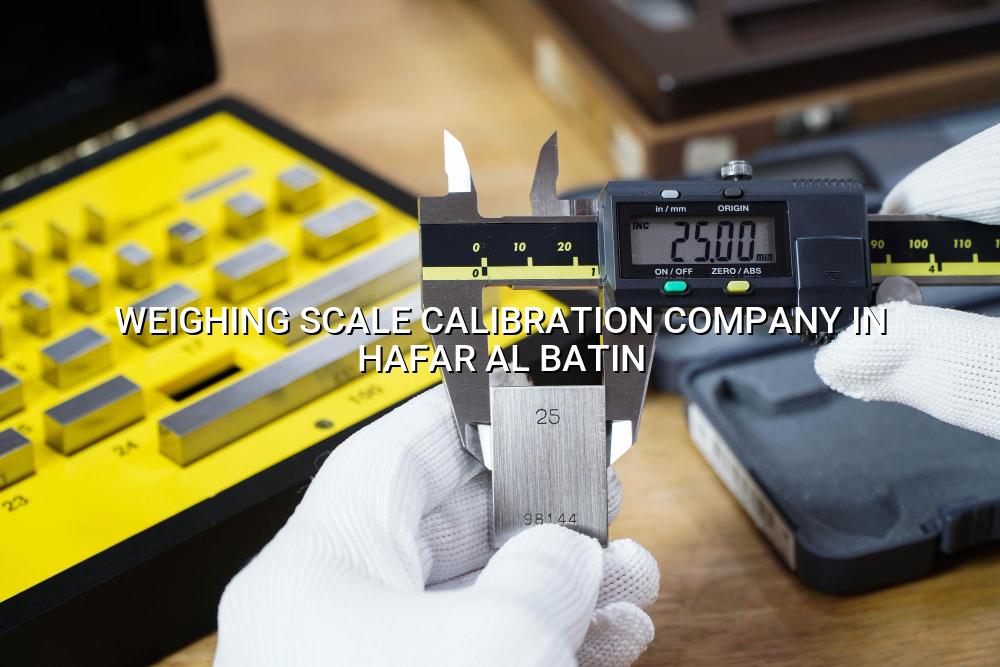
Weighing scale calibration company in Hafar Al Batin searches usually come from people who need a real answer fast: can the scale be trusted, can it be traced, and can the work be done with proper records. That's exactly where we help. You get practical calibration for platform scales, bench scales, counting scales, load cells, and process weighing points used in workshops, stores, and production lines.
Mayon Industrial Services works with industrial teams across Saudi Arabia and the wider Middle East, and we bring the same ISO/IEC 17025:2017 approach to every job. For Hafar Al Batin sites, that matters because many operations support logistics, tank farms, maintenance yards, food storage, and construction supply chains where a drifting scale creates stock errors, billing issues, and avoidable repeat checks.
What a weighing scale calibration company in Hafar Al Batin should cover
A proper calibration visit is not just about putting a test mass on a scale and printing a sheet. The technician should check repeatability, line up the load points, review zero and span behavior, and confirm whether the unit stays inside your working tolerance over the range you actually use. For many Saudi industrial sites, the bigger issue is not the first reading; it's what happens after repeated loading near the edges of the platform or after forklift vibration, dust, and floor movement.
Why the method matters on real sites
In Hafar Al Batin, we've seen scale problems show up in store rooms, batching areas, service yards, and receiving bays where the equipment works hard all day. A scale can look fine at low load and still drift when a sack, drum, pallet, or pallet jack shifts the weight off center. That's why traceability to ISO/IEC 17025:2017 and proper record keeping matter. They give your QA or maintenance team a defensible result, not just a number on paper.
What gets checked during calibration
For industrial weighing systems, we look at the use case first. A bench scale in a lab doesn't need the same handling as a 3-ton platform scale in a warehouse. The test plan should match the application, the load range, and the acceptance criteria your team uses for receiving, production, or dispatch. If the equipment is used for internal control, that's one thing. If it touches billing or compliance, the standard of care needs to be tighter.
- Confirm the scale type and location — we identify whether it is a bench, platform, hanging, or process scale, then check access, flooring, and power stability.
- Review the expected load range — we compare the scale's working range with how your team actually uses it, including typical products and peak loads.
- Test zero, span, and repeatability — we check the scale at meaningful points so you can see whether readings stay steady across the range.
- Issue traceable documentation — you receive calibration records that your QA, audit, or maintenance files can keep on hand for review.
- Recheck scales after relocation, even if the unit was not damaged.
- Keep platforms level and free from floor contact points that can change readings.
- Use known test loads that suit the scale's capacity and your process range.
- Save calibration records beside production, QA, and dispatch logs.
- Ask for onsite service when the scale is fixed into a line or too heavy to move safely.
Typical weighing equipment and how we approach each one
| Equipment type | Common use | Calibration focus |
|---|---|---|
| Bench scale | Parts, samples, small packs, lab stores | Zero stability, repeatability, mid-range accuracy |
| Platform scale | Drums, cartons, pallets, receiving bays | Corner loading, full-range performance, floor effects |
| Counting scale | Inventory and packing control | Piece weight consistency, resolution, tare behavior |
| Process weighing system | Batching and production lines | Integration check, load behavior, onsite verification |
Why ISO/IEC 17025 calibration helps your audit trail
When a scale is part of receiving, inventory control, or quality release, the paperwork matters almost as much as the readings. ISO/IEC 17025:2017 gives you a traceable framework for measurement competence, and that helps when internal audit teams, customer auditors, or plant management ask how the result was obtained. In Saudi industrial settings, especially around logistics and oilfield support work, that traceability can save a lot of argument later.
What your team should keep on file
Keep the calibration certificate, the asset ID, any adjustment notes, and the acceptance criteria together. If the scale is moved between bays or exposed to vibration from nearby equipment, note that too. Over time, those small records help you spot the real pattern: drift from movement, damage from rough handling, or a unit that has simply reached the end of its stable life.
Built for plant reality
We work around forklifts, loading docks, maintenance yards, warehouse traffic, and process areas where downtime has to stay controlled. If the unit needs special handling, our mobile calibration lab and pick-up and delivery options help keep the job moving without forcing you to improvise on site.
What makes a good weighing scale partner in Eastern Saudi Arabia
First, they should understand that not every scale failure is a calibration failure. A bent load cell, a loose junction box, a damaged cable, or an uneven base can all create poor readings. Good technicians tell the difference and don't force a calibration answer onto a mechanical fault.
Second, they should be willing to work onsite when the unit is part of a production line or too large to shift without disruption. That's normal for warehouses, fabrication shops, and cold storage facilities serving Hafar Al Batin, Dammam, and nearby industrial zones.
Third, they should speak to the people who use the scale every day. Operators know if the reading jumps when a pallet lands on the corner, and storekeepers usually know which shift causes the most problems. We listen to that detail before we touch the instrument.
How Mayon Industrial Services Can Help
We support weighing scale calibration with the same discipline we use across our ISO/IEC 17025 calibration work, plus mechanical checks when the problem sits outside the scale itself. If your site also needs condition monitoring, electrical testing, inspection, or lab setup, our team can handle that under one roof. For Hafar Al Batin customers, that means fewer calls, cleaner records, and one team that understands the industrial setting you're working in. Reach out and we'll help you plan the right visit.
Call +91 99447 80844 (India) or +966 59 633 8012 (Saudi Arabia), email services@mayonservices.com, or message us on WhatsApp.
Frequently Asked Questions
Choose one that understands your actual working load and can explain the test method in plain language. If the provider uses traceable calibration methods, gives clear records, and can handle onsite work for fixed or heavy units, that usually saves time and confusion. We also suggest asking how they deal with floor issues and damage checks, because not every bad reading is a calibration issue.
Yes, onsite calibration is often the sensible option for platform scales, process units, and equipment that is hard to move. It also helps when the scale needs to be tested in the same position where your team uses it every day. Our mobile calibration capability is built for that kind of work.
Honestly, the right interval depends on use, load severity, and how much the scale moves around. A unit used in a calm storage room may hold its condition longer than one used on a busy receiving dock or near vibration. We normally suggest setting the interval from history, not guesswork, and tightening it if the unit starts drifting or gets relocated.
You should receive a calibration record that identifies the instrument, shows the results, and notes the traceable method used. If your site needs internal audit files, keep that record with the asset tag, maintenance history, and any adjustment notes. That file trail helps a lot when QA asks for proof during review.
That happens a lot. If the base is uneven, the load cell is damaged, or the wiring is loose, calibration alone won't fix the reading. We check for those issues first so you don't spend time certifying a unit that really needs repair or replacement parts.
Yes, we do. Our team also handles calibration across multiple disciplines, mechanical services, inspection, electrical testing and commissioning, orbital welding, training, and lab design. That mix helps when your site needs more than one discipline to get back on track.
Ready to put your scale readings back on solid ground?
If your Hafar Al Batin site needs traceable weighing scale calibration, we'll help you sort the right approach and keep your records clean.
Contact Mayon