
Weighing Scale Calibration Company in Red Sea
Traceable calibration support for plants, warehouses and process sites that depend on accurate weighing every day.
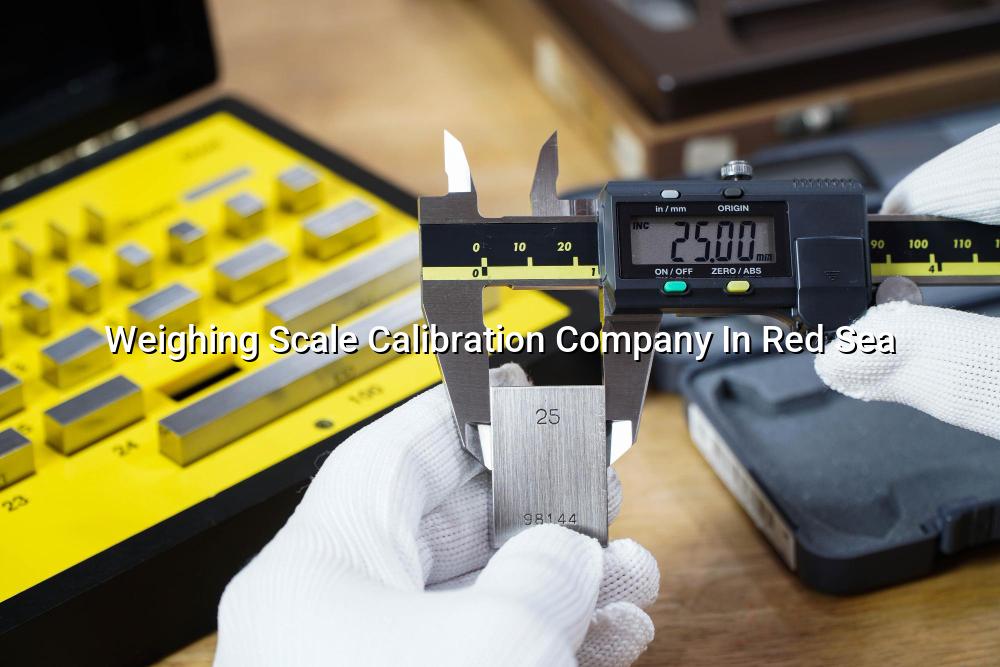
Weighing scale calibration company in Red Sea clients call us when production, shipping or warehouse records depend on numbers they can trust. If your site uses bench scales, platform scales, tank weighing systems or small process weighers, we help you confirm they’re reading correctly before small errors become inventory losses or reject issues.
We work with industrial teams in Saudi Arabia and across the Middle East, where Red Sea ports, logistics yards, food plants and fabrication sites all need traceable weighing results. Our team brings ISO/IEC 17025:2017 discipline, practical field experience and the kind of calibration support maintenance managers can plan around.
Weighing scale calibration in Red Sea sites
When a scale is off, the problem rarely shows up all at once. A 5 kg error on a loading bay scale can affect dispatch records, batching checks and customer acceptance, especially in facilities that handle repetitive daily loads. That’s why teams in Jeddah, Yanbu and other Red Sea industrial zones usually ask for calibration before a shutdown, after a move, or after a repair to the load cell, indicator or platform frame.
Why traceability matters on the shop floor
For business systems, “close enough” isn’t enough. Traceable calibration links your scale reading to recognised standards and gives your QA team a record they can use during audits, internal reviews or contract discussions. We often see this matter most in food and beverage, cold-chain stores, chemical blending and logistics depots where a small drift can affect stock control by the end of the month.
What we check during calibration
We look at repeatability, linearity and error at multiple test points, not just one load. That matters because a scale can look fine near the middle of its range and still misread at the low end or close to maximum capacity. If the unit is used for dispatch, receiving or process dosing, we also check the environment around it: vibration, floor level, nearby machinery and the condition of the indicator cabling.
- Confirm the scale type — we identify the platform, bench, floor or process unit and note the capacity, readability and intended use.
- Inspect the installation — we check level, anchoring, surrounding vibration and any damage before test weights are applied.
- Test at set points — we run checks across the range so you can see how the scale behaves under light, mid and heavy loads.
- Record the results — we document the findings so your team has a clear calibration record for QA, maintenance and internal review.
- Keep the scale area clean and free of packed dust, product spill or trapped debris under the deck.
- Check whether the scale is sitting level after civil work, relocation or floor repainting.
- Ask for calibration after load cell replacement, indicator repair or cabinet rewiring.
- For warehouse and dispatch scales, compare daily readings with control checks so drift is spotted early.
Typical weighing equipment and what we verify
| Equipment | Common use | What we verify |
|---|---|---|
| Bench scale | Parts, ingredients and small packed goods | Repeatability, display stability and error at low to mid loads |
| Floor or platform scale | Drums, sacks, cartons and pallets | Linearity, corner loading and reading across the working range |
| Tank or hopper scale | Process batching and bulk material handling | Load response, indicator drift and practical process performance |
| Weighbridge-related system | Vehicle and logistics operations | Consistency, installation condition and indication under real site conditions |
How Red Sea plants keep scales dependable
Red Sea facilities often run in heat, humidity and heavy traffic, so scale performance can shift faster than people expect. Forklifts pass close by. Floors settle. Washdown changes the deck condition. A scale that was acceptable during installation can start drifting once the site is fully operational, which is why planned verification makes more sense than waiting for a complaint.
Why onsite calibration saves time
Our mobile calibration lab lets us work at your facility when moving instruments would create more risk than value. That is useful for large platform scales, units tied into a process line and equipment that needs to stay in service with minimal disruption. If special handling is needed, we can also arrange pick-up and delivery for instruments that need controlled transport or in-house checks.
Built for industrial weighing work
Most clients want two things: reliable readings and a record they can stand behind. That’s where our ISO/IEC 17025:2017 approach helps, along with our temperature-controlled laboratory, field-tested procedures and practical experience with industrial weighing equipment across Saudi Arabia and the wider Middle East.
What to expect from a calibration visit
Most site visits start with a short review of the equipment list, location and access conditions. After that, we confirm whether the instrument needs in-lab work, onsite verification or a combination of both. For Red Sea customers, this is often the simplest way to handle mixed assets: some scales stay on the line, while smaller units come to us for controlled checks in our lab.
We also pay attention to the surrounding process. A scale near a vibrating conveyor or a loading dock can behave differently from one in a quiet packing room. The aim is not just to see a number on a display, but to understand whether that number remains dependable where the scale actually lives.
Common reasons teams book re-calibration
Relocation is a big one. So is overhaul work, a recurring quality issue, or a mismatch between stock records and actual weighed output. Some clients also schedule checks before customer audits or after a new line starts up, because the first few weeks of operation often show issues that installation tests miss.
Good records make audits easier
When your logbooks show equipment ID, location, service date and result status, your QA file becomes much easier to defend. That matters in plants following ISO 9001:2015 procedures or preparing for customer reviews. It also keeps maintenance teams from repeating the same guesswork every time a scale starts acting oddly.
- Keep model numbers visible so the right test method and capacity can be matched quickly.
- Share any recent repairs, move history or complaint logs before the visit starts.
- Make sure test areas are accessible for weights, tools and safe movement around the scale.
- Use calibration records as part of your planned maintenance and QA review, not as paperwork after the fact.
When weighing accuracy is part of a larger maintenance plan
In many plants, scale issues sit beside other maintenance problems. A conveyor may vibrate too much. A platform may not sit level after civil work. A process vessel may need mechanical checks before the weighing system can be trusted again. That’s why clients often ask us to combine calibration with mechanical services, condition monitoring or inspection work during the same visit.
We see this pattern in oil and gas support yards, petrochemical facilities, power projects, manufacturing units and cold-chain operations. The scale is only one part of the chain. If the surrounding equipment is unstable, the readings will keep drifting no matter how carefully the instrument was calibrated last time.
Our practical view
Accuracy improves faster when the installation is sound. A clean deck, correct grounding where needed, stable support and routine checks are usually worth more than chasing the display every week. That is the sort of advice our engineers give on site, because a good calibration should help the whole operation, not just the certificate file.
- Mechanical issues near the platform can look like instrument drift.
- Repeated overloads shorten the life of load cells and mounts.
- Poor housekeeping can trap debris under floor scales and change readings.
- A structured calibration plan reduces surprise shutdowns and rework.
How Mayon Industrial Services Can Help
If you need a weighing scale calibration company in Red Sea, we can support your site with onsite calibration, in-house laboratory checks and practical field advice that fits real industrial work. Our team handles calibration services, mechanical services, inspection support and related engineering tasks for plants that want dependable records and less downtime.
Call +91 99447 80844 (India) or +966 59 633 8012 (Saudi Arabia), email services@mayonservices.com, or message us on WhatsApp.
Frequently Asked Questions
We do. Many Red Sea sites prefer onsite calibration because the scale stays installed and the result reflects the real operating condition. That works well for floor scales, platform scales and process weighers that are awkward to move or depend on site layout.
There isn’t one fixed answer for every site. A scale in heavy daily use, near vibration, or exposed to washdown usually needs attention more often than one in a quiet packing room. Many teams set the interval based on risk, past drift and how critical the reading is to production or dispatch.
Yes. Those are common use cases for us, especially where stock control and dispatch accuracy matter. We check the scale against its working range and note anything in the installation that could affect day-to-day readings.
Yes, we do. Our temperature-controlled laboratory is useful when instruments need a more controlled environment than the site can offer, or when the equipment needs pick-up and delivery because of size, condition or handling needs.
For our work, the key reference is ISO/IEC 17025:2017 for competence and traceability in calibration and testing. Many clients also use the record inside ISO 9001:2015 quality systems. The exact internal requirement depends on your plant procedures and customer expectations.
Ready to get the numbers right?
If your weighing results affect stock, dispatch or batch control, let’s check the instrument and get a clear calibration record in place.
Contact Mayon