
Weighing Scale Calibration Company in Uqair
Traceable weighing checks for shops, plants, warehouses and field teams working around Uqair, with support from our Saudi and India operations.
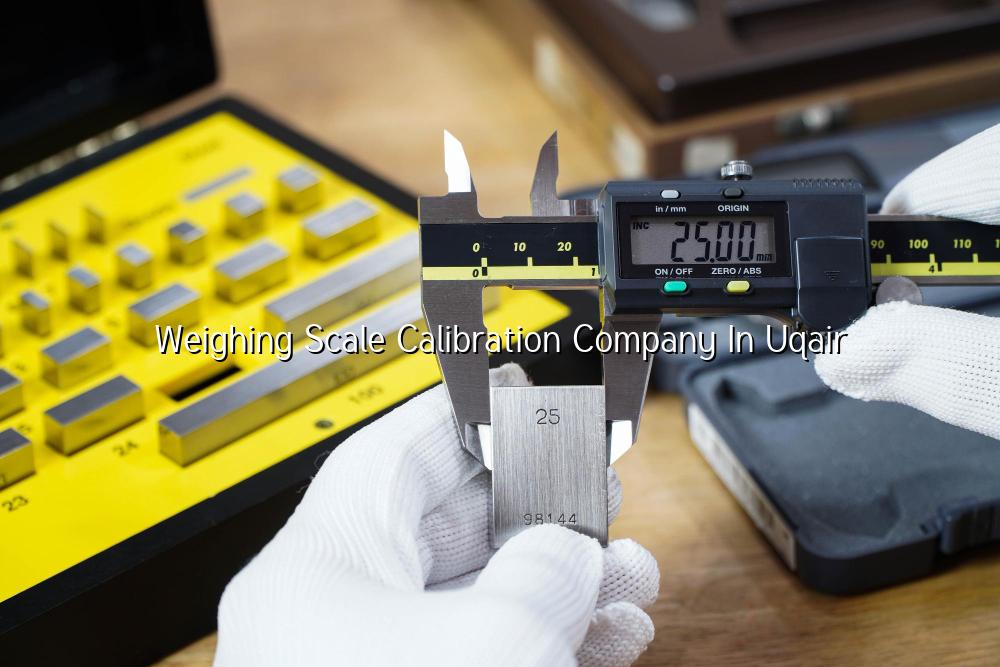
Weighing scale calibration company in Uqair searches usually come from people who need the numbers to be right before stock goes out, materials are received, or an audit lands on the desk. We help you get that confidence back with traceable calibration for balances and weighing systems, whether the work is done onsite or in our controlled laboratory.
From Uqair on the Eastern Province coast to nearby industrial and logistics routes in Saudi Arabia, our team supports operators who cannot afford drift, bad tare readings, or a scale that looks fine but fails when the load changes. We work to ISO/IEC 17025:2017 practices, and we keep the conversation practical: what you use, how you use it, and what needs checking next.
Weighing scale calibration company in Uqair for everyday plant control
For procurement teams, warehouse supervisors, food processors, and maintenance leads, a small scale error can turn into a big operational headache. One over-reading balance can trigger wasted product and unnecessary rework; one under-reading unit can mean short dispatch, complaint calls, and paperwork nobody wants to explain. Our weighing scale calibration company in Uqair service is built for that reality, not for theory on paper.
Where these checks help most
We usually see the need first in receiving bays, filling rooms, QC labs, and sites handling ingredients, chemicals, spares, or packaged goods. A bench scale used for batch control has a different risk profile from a floor scale at a warehouse bay, and both need the right test points, sensible loading, and a record you can show during internal review. When the load cells, display units, or platform mechanics start drifting, the problem often shows up as inconsistent repeatability before anyone notices a full failure.
What we look at during calibration
Our calibration approach checks the practical things operators actually depend on: indication at zero, response under load, return to zero, repeatability, and behaviour across the usable range. If a unit is part of a process line, we also look at how people place material, how often the scale is moved, and whether the environment around it is causing vibration or draft issues. In Saudi sites, dust, floor movement, and heat are common reasons a scale needs closer attention than the sticker suggests.
- Confirm the instrument type — we identify whether it is a bench balance, platform scale, counting scale, or specialty weighing unit so the test method fits the job.
- Review the working range — we check the load range, readability, and the way the scale is used day to day before choosing test points.
- Set up controlled checks — we test in the field or in the lab, using suitable reference standards and a documented procedure aligned to the instrument’s purpose.
- Record the results clearly — you receive findings that show whether the unit is fit for use, needs adjustment, or should be taken out for repair.
- Keep weighing units on level, stable flooring and away from doors that create constant air movement.
- Check repeat readings with the same test load before assuming the problem is only the display.
- Remove dust, spilled product, and trapped debris from platforms and load areas before testing.
- Recheck after relocation, electrical work, or mechanical repair, even if the scale still powers on normally.
Typical weighing equipment and how we handle them
| Weighing equipment | Common site use | Calibration focus |
|---|---|---|
| Bench balance | QC labs, sample prep, formulation checks | Repeatability, zero setting, response at small loads |
| Platform scale | Stores, dispatch, receiving, packing lines | Load response across usable range, corner performance, tare behaviour |
| Counting scale | Parts counting and kitting | Piece weight stability, count accuracy, drift control |
| Floor scale | Warehouse and production movement of bulk goods | Higher load points, platform stability, mechanical condition |
How calibration records support audits and daily control
Good weighing practice is not just about the result on the day. You need a record that helps QA, maintenance, and production speak the same language when someone asks whether the instrument was checked, what happened, and who handled it. That is why our work is set up around traceability, clear identification, and practical reporting for industrial users in Saudi Arabia and the wider Middle East.
Why the environment changes the reading
Heat, vibration, movement of nearby equipment, and poor installation all affect weighing performance. We see it often in stores near running compressors, in loading zones with uneven floors, and in compact labs where air flow and bench stability are not ideal. If your team is using a scale every shift, the same unit can behave differently in the morning and after a busy afternoon. That is normal. Ignoring it is the mistake.
Onsite or in-house, based on the job
We bring a mobile calibration lab for field work, and we also run a temperature-controlled in-house laboratory for items that need a more controlled setting. If an instrument needs special handling, pick-up and delivery can be arranged so the work is done properly without forcing your team to improvise on site.
Signs your scale needs attention before production is affected
Most scale issues do not start with a dramatic failure. They start with little things: a unit that takes longer to settle, a reading that changes after the same item is weighed twice, or a tare that does not come back cleanly. In our experience, the second or third complaint from the floor is usually the one that finally exposes a problem QA has been tracking quietly for weeks.
If your operation handles packed goods, powders, chemicals, spare parts, or food ingredients, you also need to think about contamination and handling. A platform with product build-up can mislead operators even when the electronics are fine. And if the scale moved recently, the installation itself may be the issue. People often blame the indicator first. The base is the real problem more often than they expect.
- Numbers drift even when the same test weight is used again.
- Zero does not stay stable after the unit has been switched on for a while.
- The scale behaves differently after cleaning, relocation, or floor work.
- Operators keep compensating with extra tare or manual adjustments.
How Mayon Industrial Services Can Help
We calibrate weighing scales alongside a wider set of industrial services, so if your site also needs mechanical support, inspection, or lab setup work, we can keep the project moving with one technical team. For Uqair and other Saudi locations, that means practical onsite support, proper reporting, and a route to our laboratory when an instrument needs controlled handling. If you want a weighing scale calibration company in Uqair that speaks the language of operations and QA, start with a quick call.
Call +91 99447 80844 (India) or +966 59 633 8012 (Saudi Arabia), email services@mayonservices.com, or message us on WhatsApp.
Frequently Asked Questions
The right choice is a team that can handle onsite work, lab work, and clear reporting without guessing. For industrial sites, you want traceable checks, sensible test points, and people who understand warehouse, QC, and production conditions. That matters more than a glossy brochure.
Yes, we can support onsite calibration using our mobile calibration lab for suitable instruments and site conditions. If a scale needs special care, we can arrange pick-up and delivery so it gets checked in a more controlled environment. That helps when the site is busy or the instrument needs cleaner handling than the floor can give.
Honestly, the interval depends on how hard the scale works, how often it moves, and how much the environment changes around it. A scale used every shift in a dusty or high-traffic area usually needs more attention than one used occasionally in a quiet lab. The safest approach is to set the interval from your risk and usage pattern, then watch the drift trend.
Look for unstable zero, drifting readings, repeat values that do not agree, and operators adding manual correction just to keep work moving. If the scale changed after relocation, electrical work, or cleaning, that is another signal. These are the moments when a proper check saves time later.
Yes. Our calibration work is aligned with ISO/IEC 17025:2017 practices, which is what many Saudi and GCC customers expect for traceability and technical discipline. That is useful when your quality team needs records that can stand up to internal review or customer audit questions.
Ready to get your weighing readings back under control?
Send us the instrument details, and we’ll help you choose the right onsite or lab-based calibration path for Uqair and nearby Saudi operations.
Contact Mayon