
Aramco Approved Calibration Company in Haradh
Traceable calibration support for Haradh oilfield and maintenance teams, with onsite mobile-lab service and controlled in-house work when instruments need it.
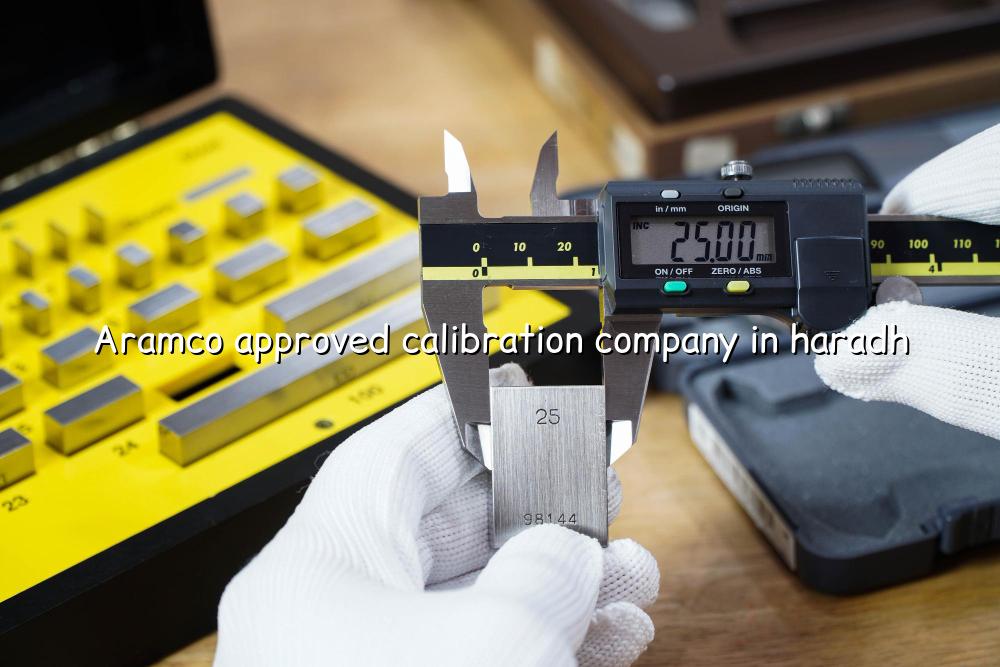
Aramco approved calibration company in Haradh searches usually come from a working plant team, not a casual browser. You need instruments checked, traceable, and accepted by site QA without extra back-and-forth.
That’s the angle here. We help maintenance, shutdown and inspection teams understand what a qualified calibration partner should cover in Haradh, how onsite work fits field conditions, and where controlled lab calibration makes more sense for sensitive instruments.
What an Aramco Approved Calibration Company in Haradh Should Cover
For Haradh facilities, the real job is simple: keep critical instruments within tolerance, keep records clear, and keep production moving. In the oilfield and gas sector, that usually means pressure gauges, transmitters, digital indicators, temperature instruments, torque tools, vibration-related devices, and electrical test equipment that support work in gas processing, pipeline maintenance and rotating equipment checks.
Why site teams ask for approval status first
Most QA and maintenance managers don’t start with the certificate format. They start by asking if the vendor can work to the standards their internal system expects. ISO/IEC 17025:2017 is the name that matters most for calibration competence, and for electrical calibration EURAMET CG-15 is often part of the discussion. If a supplier cannot explain traceability, method control, or uncertainty in plain words, the review usually stalls.
Haradh conditions change the work plan
Haradh isn’t a lab-friendly environment. Heat, dust, access restrictions, and running schedules all affect how instruments are collected, protected and returned. That’s why mobile calibration support matters. For instruments that can be handled onsite, a mobile lab reduces movement risk. For sensitive items, our temperature-controlled in-house laboratory in Chennai gives a better setting for stable measurement conditions and careful handling.
- Identify the instrument list — separate pressure, temperature, electrical, mechanical and safety-related items before work starts.
- Check site conditions — decide what can be calibrated onsite in Haradh and what should be picked up for controlled lab work.
- Match the method — use the correct reference standard, range and procedure for each instrument family.
- Review the result record — make sure pass/fail status, traceability and as-found details are easy for QA to read.
- Ask for ISO/IEC 17025:2017 traceability on every relevant calibration job.
- Keep critical spares and backup instruments ready during shutdown windows.
- Use onsite calibration for items that are difficult to remove safely.
- Send sensitive devices for controlled laboratory work when field conditions are poor.
- Confirm the vendor can support Haradh and wider Saudi operations without delay in paperwork.
Calibration Scope Often Requested in Haradh Oilfield Work
| Instrument group | Common site use | Typical support approach |
|---|---|---|
| Pressure instruments | Line checks, vessels, pumps and process skids | Onsite or in-lab calibration with traceable reference standards |
| Temperature devices | Process lines, storage, HVAC and monitoring points | Controlled calibration for better stability, onsite where practical |
| Electrical test equipment | Maintenance rounds and commissioning support | Bench calibration, method control and record review |
| Mechanical tools | Bolt tensioning, torquing and alignment work | Verification and calibration before use on critical joints |
Onsite Work or In-Lab Calibration?
In Haradh, the better choice depends on the instrument, the risk of removal, and the condition you want to control. Onsite work is best for assets that are awkward to disconnect, are needed every day, or sit in a larger system where removal would slow production. In-lab work is better when the device needs steadier conditions, tighter handling, or pickup and delivery because the item is delicate or has special storage needs.
What we usually look at first
We check the instrument type, its range, the last result, the tolerance window, and the site access window. That gives the maintenance team a practical plan instead of guesswork.
Field teams need clear paperwork
Haradh shutdowns are rarely patient. If the certificate, traceability record and pass/fail result are easy to read, QA can close the job faster. That matters for oil and gas work, but it also matters in power, construction, manufacturing and cold-chain support across Saudi Arabia and the wider Middle East.
Questions to Ask Before You Book Calibration in Haradh
Before you appoint any vendor, ask how they handle traceability, handling, and reporting. A supplier that works in Haradh should be able to explain calibration range, reference equipment, uncertainty, and whether the job will be done onsite or moved to a lab. If the answer is vague, that’s usually a sign the paperwork will be vague too.
We’ve seen teams in Saudi Arabia lose time because an instrument was removed for the wrong reason. A simple pre-check avoids that. Ask for the calibration path, confirm the acceptance criteria, and make sure the vendor can support the instrument family you actually use, not just generic test gear.
- Confirm whether the vendor has onsite and in-lab capability.
- Ask which standards and traceability records will appear on the certificate.
- Verify support for pressure, temperature, electrical and mechanical instruments.
- Check if pickup and delivery is available for special-condition instruments.
Why Field Instrument Control Affects More Than One Job
Calibration is rarely an isolated task. In Haradh, one instrument out of tolerance can affect commissioning, handover, inspection close-out, and sometimes a maintenance permit that needs QA sign-off. That is why teams often bundle calibration with condition monitoring, electrical testing and mechanical checks during the same maintenance window.
Where related services fit
Our team also supports vibration analysis, laser shaft alignment, infrared thermography, NDT, lifting-equipment inspection, bolt torquing, hydrotesting, electrical testing and commissioning, plus lab setup work when a client is building or upgrading facilities. That broader view helps reduce repeat visits and keeps the work aligned with the plant’s actual schedule.
Records matter as much as readings
In our experience, the second thing site teams ask for is the report format. They want clear instrument IDs, result status, and traceable data they can file without chasing the vendor later. Good calibration work saves time only when the paperwork is just as tidy as the measurement.
How Mayon Industrial Services Can Help
We support Haradh and wider Saudi Arabia with ISO/IEC 17025:2017 calibration services, onsite mobile-lab work, controlled in-house calibration, and pickup and delivery for instruments that need special care. If your work also touches mechanical maintenance, inspection, orbital welding, lab setup or condition monitoring, we can line those services up around the same job plan.
Call +91 99447 80844 (India) or +966 59 633 8012 (Saudi Arabia), email services@mayonservices.com, or message us on WhatsApp.
Frequently Asked Questions
Look for traceable calibration methods, clear reporting, and the ability to support the exact instrument types your site uses. A good vendor should explain onsite versus in-lab options without forcing one route for every item. If they work in oil and gas, they should also understand shutdown pressure and QA paperwork.
Yes, for many instruments it can. Onsite work makes sense when the item is hard to remove, needed daily, or part of a live system that would take time to isolate. For delicate instruments or items that need controlled handling, pickup and delivery to an in-lab setup is usually the better choice.
For calibration competence, ISO/IEC 17025:2017 is the key standard you’ll hear most often. For quality systems, ISO 9001:2015 may also appear in vendor reviews. For electrical calibration, EURAMET CG-15 is a useful reference point, especially when you need the method to be clear and traceable.
Not always. Many project teams prefer one vendor who can handle calibration, mechanical services, inspection, and testing around the same maintenance window. That reduces coordination time and helps when the same shutdown also needs bolt torquing, hydrotesting, or commissioning checks.
We support electro-technical, pressure, thermal, mechanical, dimensional, torque, force, mass, volume and related industrial instruments. We also handle condition monitoring tools, testing equipment and other assets used by oil and gas, petrochemical, power, construction and manufacturing teams across Saudi Arabia and the Middle East.
Send us the instrument list, site location, and the service you need, then we’ll help you decide the right mix of onsite and lab work. If there are special storage or handling needs, tell us upfront. That saves time and avoids moving the wrong item the wrong way.
Ready to keep Haradh instruments in control?
If you need a calibration partner that understands field conditions, traceability, and the pace of industrial work in Saudi Arabia, we’re ready to talk.
Contact Mayon