
Biomedical Equipment Calibration Company in Ras Tanura
Traceable calibration for vital medical instruments, built for clinics, hospitals and service teams working in Ras Tanura and the wider Eastern Province.
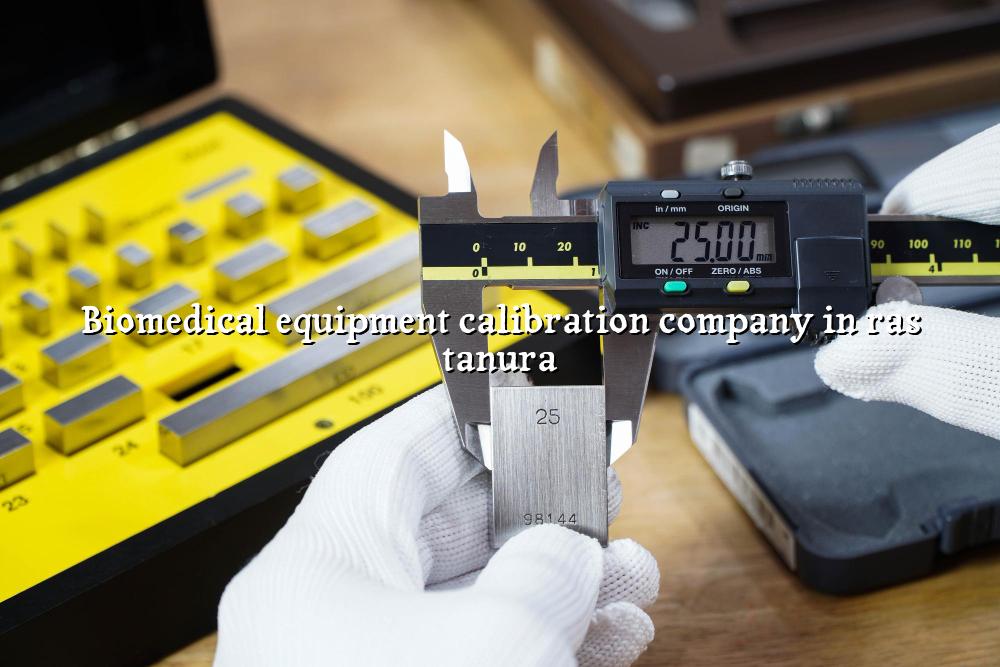
Biomedical equipment calibration company in Ras Tanura is the phrase many hospital teams use when a vital device starts drifting and they need a supplier who can prove the reading, not guess it. That is exactly where we come in: we calibrate biomedical instruments with traceability, clear documentation and field-ready support that fits hospital routines.
In Ras Tanura, Qatif, Jubail and the wider Eastern Province, clinics, occupational health units and hospital maintenance teams often work around tight schedules and compliance checks. We support that reality with onsite service, a mobile calibration lab for selected instruments, and pick-up and delivery when a device needs controlled handling back at our facility.
What a biomedical equipment calibration company in Ras Tanura should cover
A proper biomedical calibration service is not just about placing a sticker on a device. It means checking accuracy against known reference standards, recording pre- and post-adjustment values, and making sure the instrument still behaves as expected under real use. For hospitals and clinics, that matters with patient monitors, infusion pumps, defibrillators, sterilizers, thermometers, sphygmomanometers and other equipment that supports diagnosis or treatment.
Why traceability matters in healthcare equipment
In our work, traceability is the part most teams ask about after the first sample report. They want to know who checked the device, what standard was used, and whether the result will stand up during audit or internal review. That is why we work within ISO/IEC 17025:2017 principles for calibration competence, and we keep the paperwork plain enough for engineering teams and QA staff to use without rewriting it.
Onsite service or laboratory work?
Some biomedical devices are best handled at the client site. Others need the temperature-controlled environment of an in-house laboratory, especially when the instrument is sensitive, bulky or requires controlled conditions for reliable results. We use both approaches in Saudi Arabia, so you can choose the method that suits the equipment, the risk level and the hospital workflow.
- Identify the device and its use — confirm the make, model, serial number and whether it is used for monitoring, therapy or sterilization support.
- Review the tolerance and interval — check the expected limits, past calibration records and any signs of drift or damage.
- Calibrate against suitable references — use the right standard for the device, then record the readings before and after any adjustment.
- Issue the report and label — share the results, pass or fail status, and the next due date so your maintenance log stays clean.
- Ask for pre-adjustment data if you need to see how far the device had drifted.
- Keep calibration intervals tied to actual use, not just a calendar reminder.
- Separate patient-care devices from heavy workshop equipment during collection and return.
- Keep failed instruments out of service until QA or biomedical engineering clears them.
- Use onsite calibration for routine checks and lab service for instruments that need controlled handling.
Typical biomedical equipment and what we look at first
| Device | Common check points | Typical service setting |
|---|---|---|
| Infusion pump | Flow accuracy, alarms, battery condition, display stability | Onsite at wards, ICUs or treatment rooms |
| Patient monitor | Parameter accuracy, ECG response, NIBP, SpO2 and temperature inputs | Onsite for routine verification, lab if deeper testing is needed |
| Defibrillator | Energy output, charge time, discharge function and safety condition | Onsite when access is controlled and downtime must be short |
| Thermometer or temperature probe | Accuracy, stability, repeatability and sensor condition | In-lab or mobile lab, depending on the probe type |
How calibration helps hospital teams avoid surprise failures
Medical equipment rarely fails all at once. More often, it drifts. A monitor starts reading slightly off, a pump behaves inconsistently, or a temperature device becomes slow to settle. That small drift can create noise in clinical decisions and maintenance logs, which is why scheduled biomedical calibration is so useful for hospitals, clinics and home-care support teams.
What good records should show
A useful report should show the item identity, the method used, the measured results, any adjustment made, the final status and the person or team responsible for the service. If your organization in Saudi Arabia is working under ISO 9001:2015 procedures, tidy records make internal review much easier. They also help when the same device moves between wards, vendors or branches.
Built for active medical environments
We plan around real clinical conditions: occupied wards, operating schedules, restricted access areas and devices that can't be handled roughly. When the instrument needs a controlled environment, we collect it, calibrate it in our temperature-controlled lab, then return it with the result set ready for the maintenance file.
Practical points for biomedical maintenance in Ras Tanura
Ras Tanura is not a place where you want avoidable equipment downtime. The local medical and industrial support environment depends on devices being ready when needed, especially where staff move between shifts and equipment may be shared across departments. We keep that in mind when we plan service visits, because access windows and safety rules often decide more than the device itself.
For clients who manage a mixed asset list, we can align biomedical devices with the wider maintenance calendar for generators, compressors, pumps, electrical systems and inspection cycles. That helps your team avoid separate vendor visits for every small task, and it keeps the biomedical schedule tied to the rest of the plant or facility plan.
What usually slows a job down
Missing serial numbers, unclear asset ownership, blocked access to the room and devices that have not been cleaned before handover are the usual culprits. A little preparation goes a long way. If your team can stage the device, share the history and confirm the location, the work moves more cleanly.
- List the assets by department — group items by ward, clinic, lab or emergency area.
- Flag critical devices first — prioritize anything that affects patient monitoring or therapy.
- Choose onsite or pickup — decide based on sensitivity, access and how much downtime you can accept.
- Keep the final records together — file reports, labels and due dates with the maintenance log.
- Share the asset list before the visit so we can prepare the right references.
- Tell us if the device is used in ICU, lab, pharmacy or emergency care.
- Ask for onsite service when transport risk is higher than the calibration task itself.
- Use lab handling for units that need controlled temperature or careful packing.
How Mayon Industrial Services Can Help
We support biomedical calibration with the same discipline we use in our ISO/IEC 17025:2017-aligned calibration work for other industries. That means careful handling, clear results and service options that match your site conditions in Saudi Arabia. If you also need help with inspection, mechanical support, laboratory setup or related engineering work, our team can coordinate it from one point of contact.
Call +91 99447 80844 (India) or +966 59 633 8012 (Saudi Arabia), email services@mayonservices.com, or message us on WhatsApp.
Frequently Asked Questions
We handle a practical mix of biomedical instruments such as patient monitors, infusion pumps, defibrillators, thermometers and related clinical test devices. If the equipment supports patient care, monitoring or treatment support, we can usually review it and advise whether onsite or lab handling is the better route. The first step is to share the asset list and model details.
Yes, we do. Onsite service is often the best choice for devices that are fixed in place, time-sensitive or difficult to transport safely. We also support work from our in-house laboratory when the instrument needs controlled conditions or careful handling during the calibration process.
Because biomedical equipment calibration needs traceable results, not informal checks. ISO/IEC 17025:2017 is the framework that supports competence in testing and calibration work, which helps your team trust the readings and the records. It also gives QA and maintenance staff a cleaner basis for audits and internal reviews.
Yes. Some instruments are better moved by a team that already understands calibration, lab handling and packing discipline. For devices that need special conditions, we can arrange pick-up and delivery so the item reaches the right environment without extra handling at your end.
If the device shows inconsistent readings, fails a self-check, has visible damage or is due for periodic verification, calibration is usually the first conversation. If the unit cannot hold a reading or fails to power or function correctly, repair may be needed before calibration makes sense. We can look at both and tell you which path is more sensible.
Need biomedical calibration you can trust in Ras Tanura?
Send us your device list, and we'll help you choose the right service route for onsite work, lab handling or pickup and delivery.
Contact Mayon