
Bolt Tensioning Service Company in Abha
Controlled bolt loading for flanges, equipment joints, and shutdown work across Abha and the wider Saudi industrial belt.
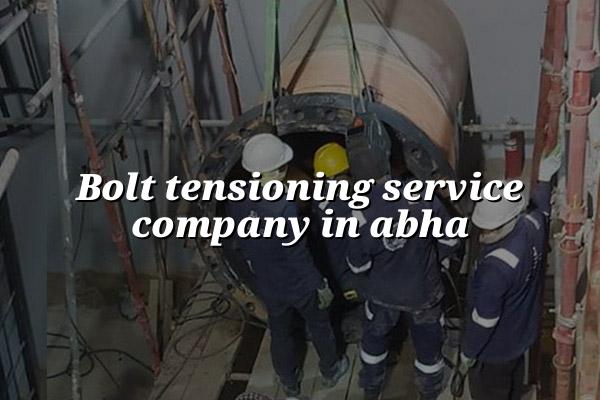
Bolt tensioning service company in Abha teams are often called when a flange has to seal correctly the first time, not after a leak shows up during startup. We help you control bolt load with the right tools, the right sequence, and proper records so your maintenance team can move with confidence.
From plant turnarounds in Saudi Arabia to package equipment work in nearby industrial sites, our crew supports flange joints, pressure systems, and critical assemblies where uneven tightening can cause trouble. We work with a field-ready mindset, mobile equipment, and the kind of discipline engineers expect on real jobs.
Bolt Tensioning Service Company in Abha for Critical Joints
When a joint carries pressure, heat, vibration, or repeated thermal cycling, bolt tightening has to be more than “tight enough.” We use controlled methods for bolt tensioning and bolt tightening so flange face loading is even, gasket stress stays where it should, and rework stays off your shutdown list. That matters in Abha as much as it does across Saudi petrochemical, power, and utility work.
Where bolt tensioning makes the biggest difference
In our experience, the jobs that benefit most are the ones with a small margin for error: exchangers, pumps, compressors, pipe flanges, hydraulic connections, and skids with repeated start-stop duty. A joint that looks fine by eye can still be underloaded on one side and overstressed on the other. We’ve seen that pattern on shutdown jobs where different crews worked different bolts, different tools, and different habits.
Why engineers ask for controlled tightening
Controlled bolt tensioning gives you repeatable clamping force, cleaner documentation, and a better shot at getting the joint right before fluids are introduced. It also helps when the same assembly needs future maintenance, because recorded tension values and bolt sequence notes make the next intervention easier. For Saudi sites, that kind of traceable work supports plant QA expectations and the documentation trail maintenance managers are asked to produce.
- Joint review — we check flange condition, bolt size, access, gasket type, and the work scope before any tool comes out.
- Tool selection — hydraulic tensioners, torque tools, or a controlled combination is chosen based on the joint design and access.
- Load application — bolts are tensioned in the agreed sequence so the flange face loads evenly, not in a random pattern.
- Verification and sign-off — final readings, visual checks, and job notes are recorded for handover and maintenance files.
- Use when leak-free sealing matters more than a quick hand-tight job.
- Helpful for shutdowns where multiple flanges must be closed in sequence.
- Reduces the risk of uneven load from worn or poorly matched hand tools.
- Supports maintenance records for plants that expect clear joint history.
- Works well alongside flange facing, hydrotesting, and commissioning work.
Common Bolt Tightening Methods Used on Industrial Sites
| Method | Best For | Typical Use on Site |
|---|---|---|
| Manual torque tightening | Smaller joints and lower-risk assemblies | Useful for general maintenance where access is open and load control is less demanding |
| Hydraulic bolt tensioning | Critical flanges and repeatable joint loading | Chosen for controlled preload on pressure equipment, pipework, and shutdown work |
| Torque-and-tension method | Joints needing staged load control | Used when the procedure calls for initial snugging, then controlled final loading |
| Sequence-based tightening | Large flange faces | Applied in a criss-cross pattern to reduce distortion and protect gasket seating |
What You Get From Proper Bolt Tensioning in Abha
Good bolt tensioning protects more than the joint itself. It helps your crew avoid repeated break-and-make work, reduces the chance of gasket damage, and gives your commissioning team a cleaner path to pressure testing. On refinery, utility, and industrial utility projects, that can save a lot of frustration because the joint closes once, with fewer surprises later.
Why documentation matters on Saudi projects
Plant teams in Saudi Arabia usually want clear records on who worked the joint, what method was used, and how the load was applied. We keep that in mind from the start. If the job also needs allied mechanical support, we can coordinate flange weld testing, hydrotesting, flange facing, and testing and commissioning so your scope stays with one accountable team.
Built for plant reality
We know the site pressure. Sometimes you’re closing a flange in heat, sometimes in a shutdown window, and sometimes with limited access around pipe racks. The work still has to be careful. That’s why our approach stays practical, measured, and suited to the equipment in front of us.
How We Plan a Bolt Tensioning Job From Start to Finish
Every joint starts with the same question: what does the equipment need, not what tool is sitting closest to hand? We look at the service conditions, flange condition, bolt condition, and access before choosing the method. That sounds simple, but it is where many field jobs go off track.
For larger shutdown scopes, we also coordinate with other work fronts so the same joint does not get opened and closed by different teams without a plan. If a flange is damaged, facing may be needed. If the system needs proof before handover, hydrotesting comes next. If the equipment sits in a high-vibration area, we’ll talk through how the tightening record fits the bigger maintenance picture.
- Pre-job checks — confirm scope, equipment condition, and access constraints before mobilization.
- Method statement review — align the tightening plan with the site requirement and the joint type.
- Tool setup — position the tensioning system and check that the bolt set is ready for controlled loading.
- Final review — confirm the joint is closed correctly and hand over the work package with site notes.
- Better fit for pressure systems than uncontrolled hand tightening.
- Useful on flanges that need documented reassembly after maintenance.
- Helps avoid uneven seating caused by random bolt sequence changes.
- Can be combined with other mechanical services on one work front.
How Mayon Industrial Services Can Help
We support bolt tensioning in Abha with practical field execution, mechanical know-how, and the discipline you want on pressure equipment and shutdown work. If the job also needs calibration support for test instruments, inspection help, orbital welding, or lab setup advice, our team can line up the right service without making you chase five different vendors. You get one team, one scope, and a cleaner handover.
Call +91 99447 80844 (India) or +966 59 633 8012 (Saudi Arabia), email services@mayonservices.com, or message us on WhatsApp.
Frequently Asked Questions
We set up controlled bolt loading for flanges and other critical joints so the clamp force is even across the assembly. That usually means checking the joint, choosing the right tensioning method, and recording the work clearly for handover. On plants, that helps reduce leakage risk and avoids the guesswork that comes with manual tightening alone.
Hydraulic tensioning is usually the better pick for critical flanges, larger bolt sets, or joints where repeatable preload matters. A torque wrench can still be fine for smaller or less demanding jobs, but it depends on the joint design, access, and the maintenance standard your site follows. We look at the actual joint before recommending a method.
Yes, we support shutdown and maintenance scopes in Saudi Arabia, including work from Dammam Industrial City 2 and related industrial sites. We understand the pressure around outage windows, so the goal is to keep the joint work organised and traceable. If your scope needs extra mechanical or inspection support, we can coordinate that as part of the same job.
We do. Our mechanical services cover work like flange facing, hydrotesting, bolt torquing, and related shutdown support, so the joint can be handled in one controlled sequence. That reduces handoff gaps between teams and makes it easier to keep the quality of the assembly consistent.
If the joint is critical, carries pressure, has repeated leakage history, or sits in a high-consequence service, controlled tensioning is often the safer route. The same applies when the flange must close evenly across a large face or when site records matter for QA. We can review the job scope with you and help decide.
Yes. Depending on the scope, we can also help with calibration services, inspection, condition monitoring, orbital welding, lab setup, repair and maintenance, and training. That makes it easier to manage one project without chasing separate contractors for every piece of the job.
Ready to put the right load on every bolt?
If you need controlled tightening, shutdown support, or help with a critical flange in Abha, talk to our team and we’ll help you plan the job properly.
Contact Mayon