
Bolt Torquing Service Company in Fadhili
Controlled tightening for flanges, skids, vessels and plant equipment in Fadhili and across Saudi Arabia.
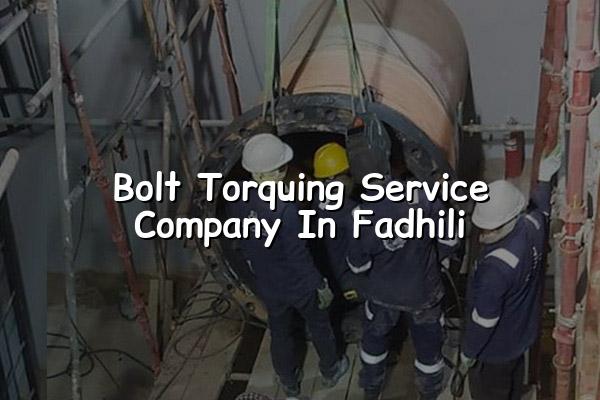
Bolt torquing service company in Fadhili work is about more than tightening hardware. You need the right sequence, the right tools and a record you can hand to QA or the client without a second thought.
We support plant teams, shutdown crews and maintenance contractors in Fadhili with controlled bolting for flanges, rotating equipment, skids and utility systems. Our team brings field discipline from Saudi Arabia's oil, gas and petrochemical sites, backed by the same methodical approach we use for calibration, inspection and mechanical service work across the region.
Bolt Torquing Service Company in Fadhili for Critical Joints
Bolted joints fail for simple reasons: uneven loading, dirty threads, wrong lubricant, poor sequence or a tool that was never checked against a known reference. In Fadhili, where turnaround windows are tight and equipment is often tied to process uptime, that risk can ripple into leaks, rework and extra isolation time. We keep the job disciplined from the first pass through to the final verification.
Where bolt torquing matters most
Most requests come from flange assemblies on pipework, exchangers, pumps, compressors and package units. We also support structural assemblies, machine bases and equipment that needs controlled preload before commissioning. For critical joints, we align the method with the joint condition, the gasket type and the access available on site.
What our crew checks before tightening starts
We do not rush into torqueing with a wrench and hope for the best. Threads, washers, stud condition, flange faces and the tightening pattern all get checked first. If the job needs calibrated tools, we use equipment with current traceability from our in-house laboratory or mobile calibration setup, because the value of the reading matters as much as the reading itself.
- Confirm the joint scope — we review flange size, bolt grade, gasket type and access constraints before any tool is applied.
- Prepare the hardware — studs, nuts, faces and washers are cleaned, checked and set in the correct orientation.
- Select the tightening method — manual torque, hydraulic torqueing or tensioning is chosen based on the joint and service condition.
- Apply the tightening sequence — the pattern is followed in controlled passes so load spreads evenly across the flange.
- Verify and record — the final values, tool details and job notes are captured for handover and QA review.
- Use calibrated torque wrenches, hydraulic torque tools or tensioners matched to the joint size.
- Apply the tightening pattern in stages instead of chasing final torque in one pass.
- Keep a clean record of bolt size, torque target and operator notes for QA files.
- Recheck after initial run-in where the project procedure calls for it.
Torqueing Options for Fadhili Site Conditions
| Method | Best Use | Site Note |
|---|---|---|
| Manual torque wrench | Smaller flanges, routine maintenance, access-friendly joints | Good for straightforward work when the procedure allows controlled hand tightening |
| Hydraulic torqueing | Large bolts, critical process flanges, heavier assemblies | Useful where repeatable force and better load control are needed |
| Bolt tensioning | High-integrity flange joints and specified tensioning jobs | Helps when even bolt stretch is preferred by the job plan |
| Staged tightening | Jobs that need load spread across multiple passes | Reduces the chance of flange distortion during final make-up |
Why traceable torque control matters
On industrial jobs, the torque figure alone is never the whole story. The actual result depends on tool condition, lubrication, thread friction, tightening pattern and the person doing the work. That is why managers in Fadhili usually want more than labour; they want a method they can defend during inspection, shutdown review or commissioning sign-off.
Our approach to verification
We use procedures that fit the task, then record what was used, where it was used and who carried it out. For joint integrity, that means the client can trace the work back to a defined process instead of a vague site note. It also helps when the same flange is opened later and the maintenance team wants to see what happened last time.
Built for shutdowns and maintenance windows
We support plant teams during planned shutdowns, turnaround work and corrective maintenance where the bolt pattern has to be right the first time. That fits Fadhili sites where process continuity, HSE controls and documentation all matter together. The job is not just tightening; it's controlled assembly with a paper trail.
How we handle bolt torquing on active sites
Site work in Fadhili often means tight access, live plant interfaces and different contractors sharing the same area. We plan around that reality. Our team confirms permit needs, tool access and the tightening order before work starts, then keeps communication clear with the client representative and the mechanical lead.
When the job calls for related support, we can also help with flange facing, hydrotesting, testing and commissioning or mechanical troubleshooting. That matters because bolting rarely sits alone; it sits inside a bigger job where alignment, sealing and final sign-off all need to happen together.
For shutdown teams, the best outcome is simple: the joint goes together properly and stays that way. For that to happen, the bolts need to be consistent, the sequence needs to be followed and the final check needs to be documented. That is the sort of work our crew is used to doing in Saudi Arabia's industrial environment, especially where oil and gas reliability is non-negotiable.
We also keep special conditions in mind. Some joints need careful handling because of temperature, contamination risk or equipment sensitivity. In those cases, a mobile calibration lab or pickup-and-delivery support for instruments can make the difference between an easy mobilization and a stalled job.
How Mayon Industrial Services Can Help
We handle bolt torquing as part of a wider mechanical and calibration support package, so your site team gets one partner instead of three different calls. If the job needs calibrated tools, flange work, hydrotesting, inspection or final commissioning support, we can coordinate that around the same workfront. That keeps the scope cleaner and the handover easier.
Call +91 99447 80844 (India) or +966 59 633 8012 (Saudi Arabia), email services@mayonservices.com, or message us on WhatsApp.
Frequently Asked Questions
The best fit is usually a team that can do the bolting work and prove the tools were in control. In Fadhili, shutdown teams often need torqueing, documentation and mechanical coordination in one package, not just a person with a wrench. We work that way, so the job stays clean from prep to handover.
We start with the joint condition, then set the tightening pattern and choose the method that fits the flange. The final check includes the recorded torque values, tool identification and the job notes, so maintenance and QA can both review the work. That approach helps avoid loose spots and uneven load.
Yes. We support onsite work in Saudi Arabia with a practical setup that can include calibrated tools and the documentation needed for industrial jobs. If the project needs special handling, we can also coordinate through our calibration capability and mobile lab support so the work doesn't stall waiting on equipment.
Yes, and that's often the better way to do it. When bolt torquing, flange facing and hydrotesting sit under one plan, the sequence is easier to manage and the client gets fewer handover gaps. We commonly support that kind of joined-up mechanical scope on industrial sites.
Oil and gas sites are the main ones, but we also see requests from petrochemical, power and manufacturing facilities. Any plant with flanges, compressors, pumps or utility systems can end up needing controlled bolting when maintenance or commissioning comes around. Those jobs tend to care about traceability and clear records.
Need controlled bolting on your next Fadhili job?
Send us the scope and we'll help you plan the torqueing work, supporting checks and documentation around your site schedule.
Contact MayonFor bolted joints, small mistakes get expensive quickly. The right method, the right sequence and proper traceability are what keep the work dependable, especially on industrial sites in Fadhili. If you want a team that treats torqueing as controlled maintenance, Mayon Industrial Services is ready to help.