
Bolt Torquing Service Company in Jeddah
Controlled bolt tightening for flanges, skids, vessels and shutdown work in Jeddah and across Saudi Arabia.
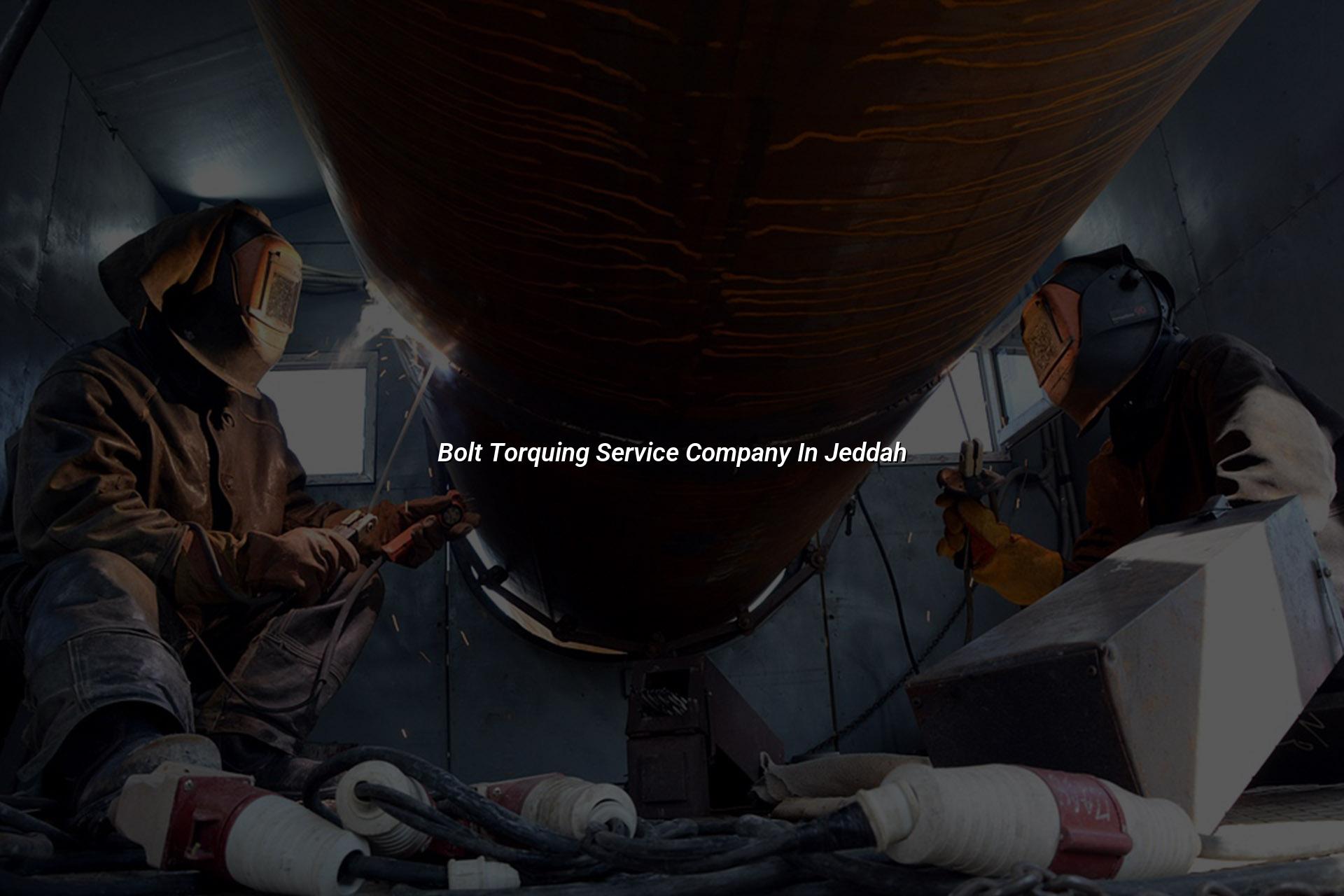
Bolt torquing service company in Jeddah is the kind of search people make when a flange, skid or pressure line has to go back together without guesswork. If you need tightened joints that hold up under operating load, you need a team that understands bolt load, sequence, lubrication and documentation, not just a wrench.
We handle this work for shutdowns, maintenance turnarounds and new installations in Jeddah, Jubail, Yanbu and other Saudi industrial zones. Our crews support oil & gas, petrochemical, power and manufacturing sites where flange integrity and repeatable tightening matter just as much as speed.
Bolt torquing service company in Jeddah for plant reliability
In our work, the biggest problems usually start before commissioning, not after. A joint can fail because the bolt pattern was tightened unevenly, the flange faces were not aligned, the gasket compressed badly, or the crew used the wrong sequence on a critical line. That’s why bolt torquing has to be handled as part of the mechanical scope, with the same discipline you’d expect from hydrotesting or flange facing.
Where controlled torquing makes the difference
We’re often called in for heat exchangers, pumps, compressors, piping spools, vessels and package skids. On many Saudi projects, especially around Jeddah port facilities and industrial plants serving the western region, the challenge is not just tightening the nuts. It’s doing it in a controlled pattern, keeping records, and making sure the final load on each stud is consistent with the job plan.
What our crew looks at before the final pull
Before any torque wrench or tensioning tool comes out, we check the joint condition. That means bolt size and grade, flange condition, gasket type, lubrication status, access constraints and whether the line has been isolated properly. If the assembly needs a special sequence or multiple passes, we plan that first. Small details decide whether the joint behaves well once the plant is back in service.
- Inspect the joint — we verify flange faces, studs, nuts, gasket fit and access before tightening starts.
- Prepare the hardware — bolts are cleaned, lubricated where specified, and matched to the planned tightening method.
- Torque in sequence — the joint is tightened in a cross pattern or another approved sequence to spread load evenly.
- Recheck and record — final values, tool details and observations are documented for the maintenance file.
- Suited to shutdowns, brownfield repairs and commissioning work
- Helps reduce uneven gasket compression and leak-prone joints
- Works well on flanges, skids, pressure equipment and utility piping
- Can be coordinated with hydrotesting, flange facing and testing & commissioning
Common bolt torquing methods used on industrial sites
| Method | Typical use | What the crew watches |
|---|---|---|
| Manual torque wrench | Light to medium joint work, maintenance tasks, access-friendly flanges | Sequence, repeatability, tool calibration status and correct socket fit |
| Hydraulic torque tool | Higher-load bolting, critical flanges, larger studs and shutdown work | Reaction point, hose routing, load steps and safe positioning |
| Bolt tensioning | Even preload on critical pressure joints and repeatable assembly needs | Stud stretch, load consistency and gasket seating behaviour |
| Retorque check | After initial assembly, start-up review or post-rest cycle inspection | Settling, joint movement, gasket compression and any loss of load |
Why torque discipline matters on Saudi industrial projects
Most plant managers don’t call for torquing because they like paperwork. They call because they want the joint to stay tight after heat, vibration and pressure cycles. In Jeddah and across the Kingdom, that expectation is normal on refinery units, utility systems, fabrication yards and EPC packages. A good bolting job supports leak control, safer start-up and less rework after restart.
How we keep the work controlled
We use the right tools for the job, follow an agreed sequence, and keep the job tied to the wider mechanical scope. If your work package includes flange work, hydrotesting, repair and maintenance or commissioning, we can align the bolting activity with the rest of the shutdown plan. That saves time on site and keeps the job moving in a cleaner order.
Built for field conditions
We know site work in Saudi Arabia isn’t always tidy. Access can be tight, weather can be rough and the window for the job may be short. Our team is used to that. We plan for the real layout, not a perfect drawing, and we stay focused on getting the joint assembled properly.
What a good bolt torquing job should include
A proper job should never be reduced to “tighten the bolts and move on.” The better approach starts with the joint specification, then uses the correct sequence, load steps and verification checks. If a site asks us to support a turnaround, we also think about tool access, lifting interfaces, nearby hot work and how the bolting fits into the isolation plan.
That’s especially useful on lines connected to pumps, vessels and exchangers, where a poor reassembly can create a nuisance leak that holds up commissioning. We’ve seen that pattern more than once. The repair itself may be simple, but a bad tightening job can push the problem into another shift.
Sites that usually need this service
Refineries, terminal facilities, chemical units, construction projects and manufacturing plants all have their own bolting problems. Some need a one-off maintenance response. Others need support during scheduled shutdowns with documentation that can be handed back to the client’s QA and maintenance team.
- Job review — confirm line status, joint type, bolt size and access before work starts.
- Tool selection — choose manual, hydraulic torque or tensioning equipment based on the joint.
- Assembly control — tighten in passes and sequence the load instead of forcing full load at once.
- Post-check — verify the joint after settling, then close out the record for handover.
- Use clean studs, nuts and washers before torqueing starts
- Keep flange faces aligned so the load isn’t fighting misfit
- Match the method to the joint rather than forcing one tool for everything
- Keep a clear handover trail for maintenance and QA review
Bolting work that fits into a larger maintenance package
Sometimes the real job is bigger than torquing. A flange may need facing first. A line may need cold cutting or hydrotesting later. A package skid may need mechanical completion before startup. When that happens, we coordinate the bolting with the rest of the scope so you’re not calling three different teams to solve one maintenance problem.
That is one reason clients in Saudi Arabia keep asking for integrated support. They want one team that can work on the mechanical side, inspect the issue, and keep the job moving without noise. If the site is in Jeddah, Dammam or anywhere in the eastern and western industrial belts, that kind of coordination helps.
Useful when vibration or misalignment is part of the story
If a bolted joint keeps loosening, the issue may not be torque alone. Vibration, pipe stress, misalignment or support problems can all show up at the flange. In those cases, condition monitoring or alignment checks can sit alongside the bolting scope, which is usually a better fix than simply tightening again.
Integrated support for shutdown teams
We can align this service with mechanical services, inspection services, electrical testing and commissioning, and repair and maintenance work. That gives you one point of contact and a cleaner shutdown plan.
How Mayon Industrial Services Can Help
We support bolt torquing with the same field discipline we bring to mechanical services, inspection and commissioning work. If your Jeddah site needs controlled tightening on flanges, skids or process equipment, we can plan the job around the shutdown window and the actual plant layout. When needed, we can also fold in flange work, hydrotesting or related repair tasks so the scope stays under control.
Call +91 99447 80844 (India) or +966 59 633 8012 (Saudi Arabia), email services@mayonservices.com, or message us on WhatsApp.
Frequently Asked Questions
We do, and we work on the kind of sites that need more than basic hand tightening. That includes maintenance shutdowns, package skids, pressure systems and flange joints in Jeddah and nearby industrial areas. The job is planned around the equipment, access and tightening sequence so the joint is assembled properly.
Usually it starts with inspection of the flange, studs, nuts and gasket condition, then moves to sequence-controlled tightening and final checking. On industrial sites, we also keep notes on the method used and the observed joint condition. That gives the maintenance team a cleaner handover.
Hydraulic torqueing is usually preferred on larger or more critical joints where access, load control or repeatability matter more. Manual torqueing still has its place on lighter maintenance work. The right choice depends on the joint design, the plant conditions and the shutdown plan.
Yes, and that’s often the better way to run the work. If a flange needs facing or a line needs hydrotesting after assembly, we can coordinate the sequence so the mechanical scope stays connected. It reduces handoff gaps and makes shutdown planning simpler.
Yes. We support projects across Saudi Arabia, including major industrial areas such as Dammam, Jubail and Yanbu, and we also serve the wider Middle East. If your site is in another Saudi location, get in touch and we can discuss the scope and site conditions.
Ready to get the bolting work done properly?
If you need controlled torqueing for a shutdown, turnaround or new installation, talk to us and we’ll map the job to your site needs.
Contact Mayon