
Bolt Torquing Service Company in Rabigh
Controlled bolting work for flanges, skids and plant equipment in Rabigh and nearby industrial sites.
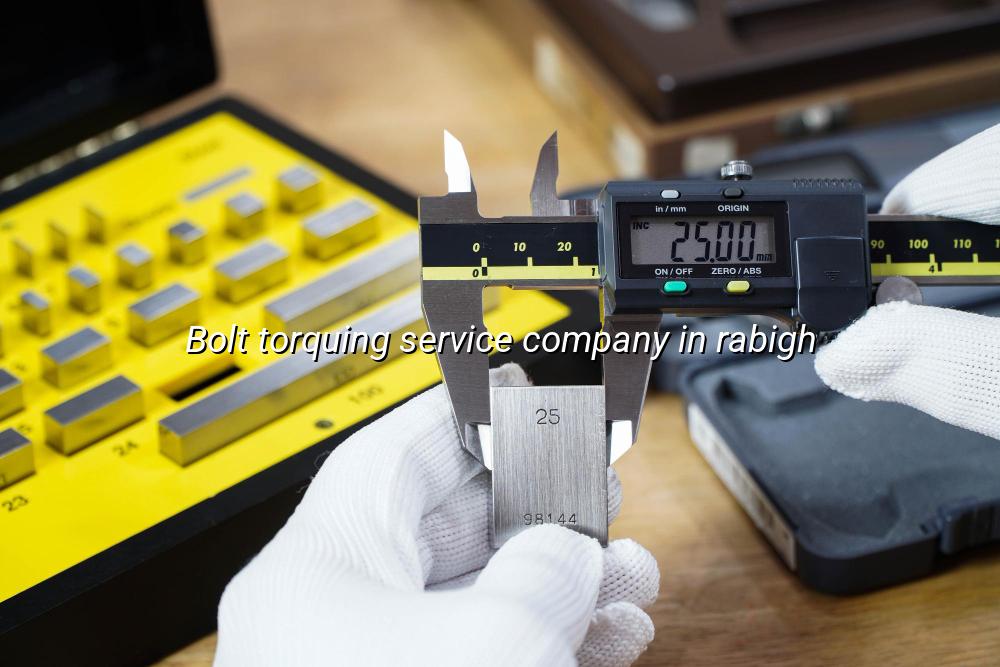
Bolt torquing service company in Rabigh teams usually get called when a flange has started weeping, a skid has been opened for maintenance, or a shutdown needs the bolts brought back under control. We handle that kind of work with a methodical approach, so you know the joint was tightened to a planned sequence and recorded properly.
Our work fits the real conditions you see in Rabigh and the wider Saudi industrial belt: petrochemical units, utilities, tank farms, compressors, pumps and package equipment that cannot afford loose fasteners or uneven load. We bring site-ready bolting support, torque control and supporting inspection discipline to help your maintenance crew close the job with less guesswork.
Bolt torquing service company in Rabigh for planned maintenance
In bolted joints, the number on the torque wrench is only part of the story. Surface condition, lubrication, bolt grade, gasket type, tightening pattern and the condition of the studs all affect the final clamp load. That is why we work from the joint outward, not just from the tool inward. For process lines, heat exchangers, pumps and offshore-linked plant assets around Rabigh, that discipline helps reduce repeat leakage and avoids the “tight enough, I think” style of maintenance that creates trouble later.
What we check before the first pull
We start by looking at the flange faces, bolt condition and access. If the studs show corrosion, galling or stretching, the torque sequence can give a false sense of security. We also check whether the job needs torquing, tensioning, or a combination of both, because some joints are better handled with controlled preload rather than a plain wrench pass. On critical equipment, the right answer is often about joint condition, not just tool size.
Why records matter on Saudi industrial sites
Plant teams in Rabigh often need proof for internal QA, turnaround folders or handover packs. We keep the work traceable with marked bolt positions, sequence control and job notes that fit into maintenance documentation. If a manager asks later why one flange was retorqued and another was replaced, you want a clean record. That is especially true on multi-trade shutdowns where mechanical, inspection and commissioning teams all touch the same line.
- Inspect the joint first — we confirm flange condition, stud quality, gasket fit-up and access before any tightening starts.
- Set the tightening plan — the team agrees the pattern, pass order and target load method for the specific joint.
- Apply controlled torque — bolts are tightened in stages so the load is shared evenly and the joint settles properly.
- Verify and document — we recheck the pattern, note the results and hand over a clear job record for the maintenance file.
- Use calibrated torque tools, not worn general-purpose wrenches.
- Match the tightening method to the joint, especially on critical flanges.
- Replace damaged studs and nuts before retightening a leaking joint.
- Keep the bolt sequence even so the gasket seats without distortion.
- Record the job for QA, shutdown closeout and future maintenance reviews.
Common bolting methods used on industrial flanges
| Method | Typical use | Main value |
|---|---|---|
| Standard torque tightening | General flange work, pumps, vessels and maintenance joints | Simple, controlled and easy to document |
| Multi-pass torque sequence | Larger flanges and joints that need even load distribution | Helps the gasket seat more evenly |
| Hydraulic tensioning | Critical service joints and larger bolting arrangements | Improves preload consistency where access allows |
| Torque + verification check | Shutdown handover and QA-sensitive equipment | Provides a clear final check before restart |
Why proper bolt torquing protects more than the flange
When a joint is tightened badly, the first problem may be a small seep. The second problem is usually bigger: downtime, rework, insulation damage, corrosion under insulation or a missed production window. In our experience, the expensive part is rarely the wrenching itself; it is the follow-up work caused by a poor first pass. Proper bolting support also helps when your team is trying to hand over equipment after mechanical completion or before commissioning checks.
Where this matters most
We see the strongest need on exchangers, separator skids, utility piping, compressor packages, pump housings and maintenance flanges that are opened often. In Rabigh and other Saudi industrial zones, those jobs often sit inside tight shutdown windows, so a clean first-time close matters. If the site also needs inspection support, we can coordinate the bolting job with related mechanical or NDT activity rather than treat it as an isolated task.
Built for shutdown work
We support planned maintenance, turnaround closeout and corrective work where flange condition, torque control and documentation all have to line up. That makes the job easier for supervisors, QA staff and the mechanical crew on site.
What clients usually ask for on industrial shutdowns
Flange retightening after leak checks
After a leak appears, many sites want the joint assessed, bolts checked and the tightening pattern reviewed before the line goes back in service. We approach that carefully, because simply adding more force is not always the answer.
Maintenance records for QA teams
Procurement and QA managers often need a clear record of what was tightened, checked or replaced. That is standard practice on sites that run formal closeout folders and internal handback sign-offs.
Support for process-critical units
Rabigh plants can’t afford sloppy bolting on hot, pressurised or vibration-prone equipment. We plan the work around the joint’s service condition, the access available and the restart risk.
How Mayon Industrial Services Can Help
We support bolt torquing with the same practical discipline we use in calibration, mechanical services and inspection work. If your Rabigh site needs controlled flange tightening, supporting maintenance documentation or coordination with other shutdown tasks, our team can fit into the job without creating more work for yours.
We also work across Saudi Arabia and the Middle East with onsite capability, so the discussion stays close to the plant reality. Call +91 99447 80844 (India) or +966 59 633 8012 (Saudi Arabia), email services@mayonservices.com, or message us on WhatsApp.
Frequently Asked Questions
Yes, we do. We support shutdown and maintenance work on industrial flanges, package equipment and plant piping where controlled tightening and proper records matter. The exact method depends on the joint condition, the access available and the criticality of the line.
We look at the joint design, bolt size, service conditions and how the flange has been prepared. Some jobs are fine with a torque sequence, while others benefit from tensioning because the preload is easier to control. We don’t guess on that part.
Yes. Rabigh and the wider Saudi industrial corridor include exactly the kind of process plants that need careful bolting discipline. We’re used to working alongside maintenance, inspection and commissioning teams on sites where restart risk is taken seriously.
Send the joint type, pipe or equipment size, service condition, site location, access constraints and any existing maintenance notes. If you already have flange drawings or a shutdown checklist, that helps us prepare the right crew and tools before we arrive.
We provide job notes and traceable records suited to maintenance closeout and QA review. The level of detail depends on the scope, but we always aim to leave the site with a clear handover trail rather than a verbal-only finish.
Ready to tighten the joint the right way?
If your Rabigh project needs controlled bolting, clear records and a crew that understands industrial shutdown work, speak with Mayon Industrial Services.
Contact Mayon