
Calibration Lab Setup Company in Hail
Build a calibration lab that fits your instruments, workflow, and compliance needs in Hail and across Saudi Arabia.
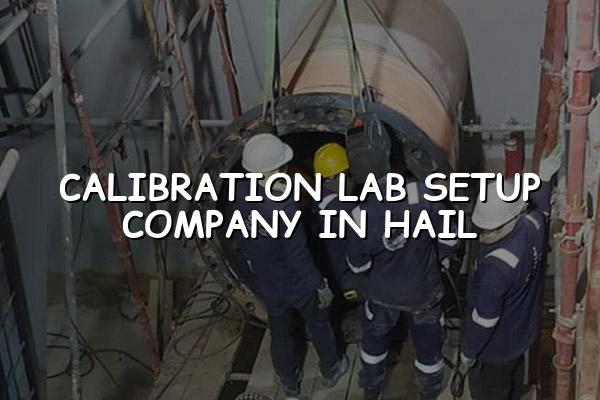
Calibration lab setup company in Hail projects need more than benches and cabinets. You need a lab that matches the instruments you calibrate, the standards you work to, and the space you actually have on site. That’s where we help you plan it properly from the start.
We work with industrial clients across Saudi Arabia who want a calibration room, a full laboratory, or a phased setup that starts small and grows with demand. Our team understands ISO/IEC 17025:2017 expectations, controlled environments, traceability, and the practical side of running a lab in oil & gas, power, manufacturing, healthcare and cold-chain work.
Calibration lab setup in Hail that works on day one
A good lab setup starts with the instruments, not the furniture. If you’re handling pressure gauges, thermometers, balances, torque tools, electrical test equipment, or dimensional gauges, each group needs its own flow, storage, and environmental control. In Hail, many customers are thinking about industrial service support for projects tied to the Northern Region, and they want a lab that can serve maintenance teams without creating bottlenecks.
Space, layout, and workflow
We plan the room so instruments move in one direction: receiving, inspection, cleaning, calibration, verification, and dispatch. That reduces mix-ups. It also makes internal audit work easier because the process is clear. For a calibration lab setup company in Hail, the layout has to support people as much as equipment. Good access, safe bench heights, cable routes, and clean storage matter every day.
Environment, utilities, and control
Temperature stability, dust control, power quality, lighting, and earthing all affect measurement confidence. A room that looks fine to a visitor can still be poor for calibration work if it drifts too much or if instruments are exposed to vibration. We also look at whether you need a temperature-controlled in-house lab, a mobile calibration lab, or a mix of both, because onsite work often makes more sense for larger plants in Saudi Arabia and the wider Middle East.
- Assess the instrument mix — list every range, resolution, and discipline you need to support, from electrical and pressure to thermal or dimensional work.
- Define the room roles — separate incoming inspection, active calibration, storage, and packing so your workflow stays clean.
- Specify the utilities — check power, earthing, lighting, HVAC, compressed air, water, and any special fixtures before fit-out starts.
- Choose the control system — set up asset records, calibration schedules, environmental logs, and traceability records before the first instrument arrives.
- Use a clean receiving point so dirty or damaged tools do not enter the active lab area.
- Keep reference standards stored separately from daily-use instruments.
- Plan for calibration certificates, labels, and status boards from the beginning.
- Build in space for maintenance benches, benches for checks, and secure cabinet storage.
Reference points for a calibration lab setup project
| Lab area | What it supports | Setup focus |
|---|---|---|
| Receiving and quarantine | Incoming instruments and condition check | Clear labeling, work order control, safe holding space |
| Active calibration zone | Pressure, electrical, mechanical or thermal work | Stable benches, controlled access, tidy cable and hose routing |
| Reference standards store | Master equipment and critical gauges | Secure storage, environmental care, traceable records |
| Dispatch and packing | Return of calibrated equipment | Certificate control, protective packing, final status check |
Why ISO/IEC 17025-ready design saves time later
People often call us after they have already fitted the room and then discover the workflow does not support proper traceability. That becomes expensive. An ISO/IEC 17025:2017-ready design is not only about the certificate wall; it is about measurement uncertainty, environmental records, document control, and a process that supports repeatable results. We also build around ISO 9001:2015 quality management where the client needs it, plus BS EN standards for inspection-related work and EURAMET CG-15 for electrical calibration references.
What the setup should cover from the start
You’ll want space for incoming verification, reference standard control, calibration records, nonconforming item handling, and a clear maintenance plan for the lab itself. If the business serves Saudi industrial customers, that traceability becomes part of the value you sell, because plant teams and QA managers want confidence in every reading. A proper setup also helps when you add services later, such as condition monitoring, PAT testing, or temperature mapping.
Built for industrial users, not just inspections
We think about how the lab will be used by technicians, supervisors, and auditors in the real world. That means enough space for handling larger pressure standards, secure storage for sensitive electrical instruments, and a process that doesn't break down when work volume rises. In our experience, that practical planning is what keeps a lab useful after the opening day.
What we can include in the lab design scope
Depending on your target service list, we can plan equipment for pressure calibration, electro-technical calibration, mechanical and dimensional work, thermal baths, mass and volume tasks, and supporting fixtures for daily checks. Some clients need a focused setup for one discipline. Others want a broader lab that can support multiple departments, outside customers, and field mobilization from the same base.
We also help with the practical side: workflow diagrams, room arrangement, equipment selection guidance, setup of work areas, and commissioning support once the hardware arrives. If your team is building a calibration facility in Hail while also serving sites in Dammam or other Saudi industrial zones, we can shape the plan around that wider operating model instead of forcing a one-size-fits-all layout.
Questions to settle before you start fit-out
Before any contractor starts drilling or installing shelves, settle the basics. What will you calibrate? Will you serve only internal instruments or outside clients too? Do you need onsite calibration support as well? These choices change the room size, the standards you buy, and the way you organize work.
- Confirm the main disciplines: electrical, pressure, thermal, mechanical, or dimensional.
- Decide if the lab needs a controlled room or a full multi-room layout.
- Plan for future instruments, not only the first purchase list.
- Include records, tags, storage, and packing in the same design conversation.
How Mayon Industrial Services Can Help
We design calibration labs with the end use in mind, not just the floor plan. Our team can support lab design and setup, instrument calibration, equipment layout, mobile calibration support, repair and maintenance, and training for the people who will run the facility. If you’re building a new calibration lab in Hail or upgrading an existing one, we can help you shape a setup that fits your workload and your compliance needs.
Call +91 99447 80844 (India) or +966 59 633 8012 (Saudi Arabia), email services@mayonservices.com, or message us on WhatsApp.
Frequently Asked Questions
We plan the lab around your instruments, your workflow, and the standards you need to follow. That usually includes layout advice, equipment selection support, environmental planning, and commissioning help once the lab is built. If you want the facility to support ISO/IEC 17025 work, we also keep traceability and record control in view from the start.
Yes. A lot of clients start with a focused room for their most-used instruments and then expand later. We can shape the setup so it stays orderly now and still leaves room for future growth, which avoids ripping out good work six months later.
For many disciplines, yes, stable conditions help a lot. Thermal work, precision electrical work, and sensitive dimensional checks all benefit from a controlled environment. The exact requirement depends on what you calibrate and how tight your tolerances are.
Absolutely. Many Saudi clients want both. We can plan an in-house room for standards and controlled work, then pair it with a mobile calibration lab for plant visits, which is useful for larger operations in Hail and nearby industrial sites.
For calibration and testing competence, ISO/IEC 17025:2017 is the main one we plan around. Depending on the work, ISO 9001:2015, BS EN standards for lifting and inspection, and EURAMET CG-15 for electrical calibration references can also shape the design. We do not add standards that the job does not need.
Ready to plan your calibration lab in Hail?
If you want a lab that supports real industrial work, not just a nice-looking room, talk to our team and we’ll help you shape the right setup.
Contact Mayon