
Calibration Lab Setup Company in Duba
Plan a practical calibration lab with the right layout, traceability, equipment and controls for industrial work in Dubai and the wider GCC.
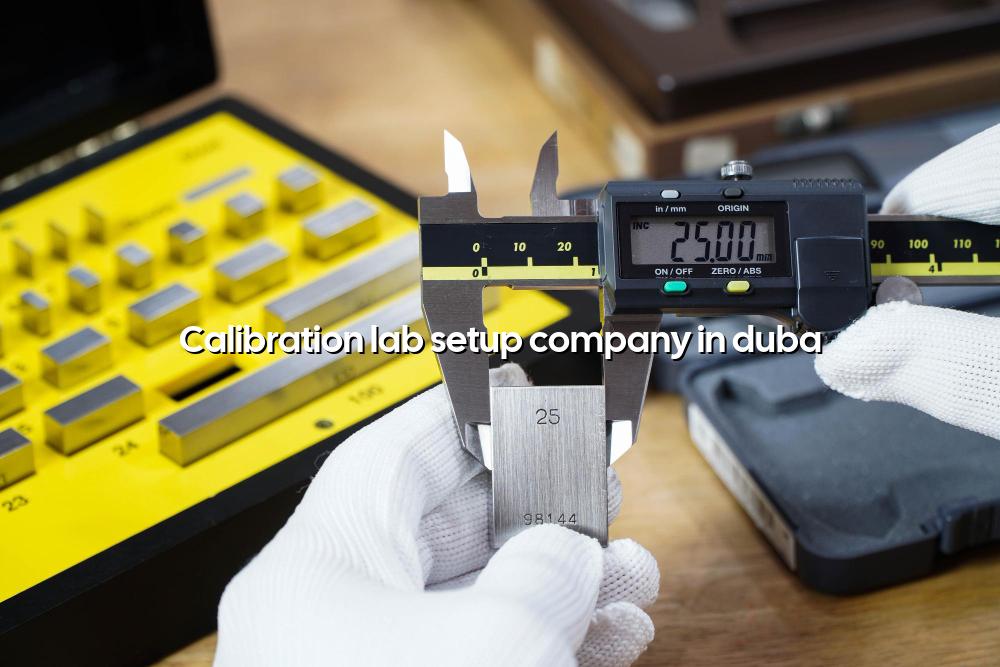
Calibration lab setup company in Duba is exactly the kind of search we hear from teams that need a working lab, not just a room with benches. You want a layout that supports traceability, stable environmental control and practical daily use, while still fitting the equipment you already own or plan to buy.
We build calibration and test labs for industrial customers across India, Saudi Arabia and the Middle East, so we know the questions that come up early: where to place the standards, how to separate clean work from heavy mechanical handling, and how to keep the workflow ready for ISO/IEC 17025:2017 expectations. That mix matters just as much in Dubai-facing projects as it does in Chennai or Dammam.
What a calibration lab setup needs from day one
A good calibration lab starts with the work you plan to do every week. If you are handling pressure, temperature, mass, torque, dimensional or electrical instruments, the room layout has to support that mix without making technicians walk back and forth for every check. In practice, that means a sensible flow from receiving to inspection, cleaning, calibration, labelling and release, with enough space for standards, workstations and records.
Why Dubai projects need careful planning
Dubai-based and GCC-facing clients usually want a lab that can support fast-moving industrial sites, but speed only works when the basics are right. Temperature stability, clean power, proper storage and a repeatable document trail are what keep the lab useful after the opening week. We see the same pattern in oil and gas, petrochemical, power, healthcare and cold-chain work: the lab has to serve real instruments, not a brochure.
Where the first mistakes usually happen
Most issues start before the walls are finished. Teams buy the instruments first, then try to fit the room around them. That leads to cramped benches, poor cable routing, weak separation between dirty and clean jobs, and standards stored where vibration or humidity can affect them. A better plan starts with scope, then room zoning, then equipment list, then commissioning and staff training.
- Define the scope — list the instrument families, ranges and onsite work you want the lab to support.
- Set the room zones — separate receiving, calibration benches, storage, packaging and records.
- Select the core standards — choose reference equipment that fits your actual workload and traceability needs.
- Commission the utilities — check power quality, earthing, lighting, compressed air and environmental controls before use.
- Build around the instruments you calibrate most often, not the ones that look impressive.
- Keep reference standards in controlled storage and away from workshop traffic.
- Plan for calibration records, labels and verification logs from the start.
- Leave space for future disciplines such as pressure, thermal or electrical work.
- Match the lab design to ISO/IEC 17025:2017 traceability expectations.
Common calibration lab areas and what they need
| Lab area | Typical need | Planning point |
|---|---|---|
| Pressure calibration | Comparators, dead weight testers, manifold space | Stable benching, safe cylinder handling and clear access around test rigs |
| Temperature calibration | Baths, dry blocks, thermal storage | Heat control, insulated storage and clean segregation from drafty areas |
| Dimensional and mechanical work | Gauge blocks, micrometers, torque tools | Low vibration, clean surfaces and organised instrument staging |
| Electrical calibration | Standards, test leads, verification tools | Good earthing, stable supply and tidy cable routes for repeatable checks |
Design choices that protect traceability
Traceability is not just a certificate on the wall. It lives in the details: reference equipment selection, calibration intervals, environmental monitoring, instrument identification, record control and staff competence. If the lab is going to support clients in Dubai, Saudi Arabia or elsewhere in the Middle East, those details need to be visible in the workflow, not hidden in a drawer.
Practical control points we always check
We look at room temperature, humidity trends, vibration sources, power backup, access control and how instruments move through the space. A lab that calibrates pressure gauges and temperature probes will not need the same bench setup as a lab focused on electrical testing, so the design should reflect the actual service mix. That sounds simple. It saves a lot of rework later.
Turnkey lab design and commissioning
Our team can help from concept to handover: layout planning, utility review, equipment selection, installation, commissioning and staff training. If you need a calibration laboratory that can support field work too, we can also integrate mobile-lab thinking into the setup so the operation stays flexible.
How to choose equipment for a new calibration lab
You do not need every instrument on day one. A lab that starts with the right core set will usually perform better than one that buys too many tools and then struggles to maintain them. Start with the standards needed for your main disciplines, then build out only when the demand is clear. That keeps capital tied to work you actually have.
For pressure work, that may mean comparators and dead weight testers. For thermal work, it may mean dry blocks, baths and monitoring tools. For electrical calibration, the lab may need controlled benches and stable power. If the service scope includes onsite jobs, a mobile calibration lab can fill the gap between the main facility and field locations.
- Choose standards that match your actual instrument ranges.
- Plan bench access for routine maintenance and verification.
- Keep storage, packing and dispatch close to the receiving area.
- Include spare capacity for growth in India and the GCC.
From installation to day-to-day operation
Once the fit-out is complete, the lab still needs commissioning. That includes checking the utilities, verifying workstations, confirming storage conditions, setting up labels and sample routing, and training the team on the actual workflow. We often see labs open too early, with good equipment but weak control of records. That creates friction for customers and staff alike.
Daily operation should be simple enough that technicians can follow it without guessing. When the process is clear, you reduce rework, keep instruments moving, and make audits less painful. The best labs feel orderly because they were designed that way from the beginning.
Typical handover sequence
Before handover, we check that the installation matches the approved scope, the equipment is placed correctly and the records system is ready. Then we walk the team through use, storage, checks and escalation steps. If the project includes training, we can also support calibration management techniques so the lab team has a stronger grip on planning and control.
- Confirm utilities before the first instrument is placed.
- Set up records, labels and traceability files before live work starts.
- Train the team on receiving, calibration and release steps.
- Keep growth space in mind for future disciplines and products.
How Mayon Industrial Services Can Help
We set up calibration labs for industrial teams that need real output, not a showroom. Our work can include layout planning, reference equipment selection, lab installation, commissioning, calibration process support and training. If your project needs onsite capability too, we can fold in mobile calibration lab support so the operation works across sites in Dubai, Saudi Arabia and the wider Middle East.
Call +91 99447 80844 (India) or +966 59 633 8012 (Saudi Arabia), email services@mayonservices.com, or message us on WhatsApp.
Frequently Asked Questions
It helps you plan and build a lab that can actually support calibration work on a daily basis. That usually means room layout, utility checks, equipment selection, traceability planning and commissioning support. If your scope includes onsite work, the setup can also be designed around mobile lab needs.
You start with scope, then build the lab around traceability, controlled conditions, documented methods and competent staff. The room itself needs clean workflows, suitable storage and reliable utilities. The paperwork and records system should be ready before you begin live customer work.
Yes, if the layout and utilities are planned properly. The key is separating the work areas so vibration, heat, storage and cable routing do not interfere with each other. A mixed-discipline lab can work well, but only if the benching and control points are set from the start.
Yes. We work across India, Saudi Arabia and the Middle East, including industrial projects that need a lab in one place and field support in another. That matters when a client wants one setup that supports both fixed-site and mobile work.
Start with the standards for your main service lines. For many teams that means pressure, thermal, dimensional or electrical reference equipment, depending on the instruments they handle most often. It is usually smarter to buy for current demand first, then add more as the workload proves itself.
Ready to plan a lab that works on the shop floor?
If you're setting up a calibration facility in Dubai or supporting GCC clients from there, we can help you shape the layout, equipment list and commissioning plan.
Contact Mayon