
Calibration Lab Setup Company in Jeddah
Plan, build and commission a calibration lab that matches your instruments, workflow and compliance needs in Jeddah and across Saudi Arabia.
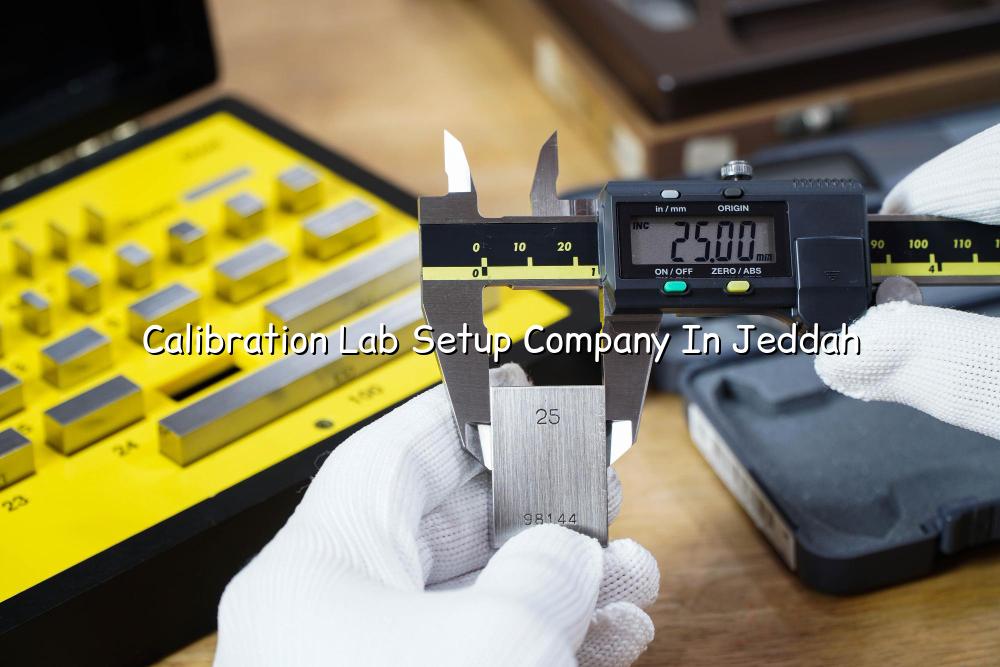
Calibration lab setup company in Jeddah searches usually come from teams that need more than a room with benches. You need a working layout, stable environment, traceable standards and a setup that fits the instruments you actually handle, not a brochure version of a laboratory.
We help industrial, healthcare and maintenance teams shape a calibration lab that supports daily work in Jeddah and the wider Saudi market. That means practical planning for space, utilities, instrument flow, temperature control, documentation and commissioning, backed by the sort of ISO/IEC 17025 thinking buyers expect from day one.
Calibration Lab Setup Company in Jeddah for Real-World Operations
A calibration lab only works when the flow makes sense. In practice, that means receiving, cleaning, staging, calibrating, checking and releasing instruments without cross-traffic, confusion or avoidable rework. In Jeddah, where many facilities support oil & gas, petrochemical, power, cold-chain and manufacturing activity, even a small layout mistake can slow the whole maintenance cycle.
Start with the instruments, not the furniture
We usually begin by mapping the instrument list and the measurement ranges you need to cover. Pressure, temperature, mass, dimensional, torque, electrical and biomedical items all ask for different benches, storage, reference standards and environmental controls. If you are handling sensitive devices, the room conditions matter just as much as the equipment you buy.
Build around traceability and control
Teams in Saudi Arabia often want a lab that supports ISO/IEC 17025:2017 readiness from the start. That means proper calibration chain planning, controlled workspace conditions, test documentation, reference equipment selection and a path for verification before routine use. We see too many projects that buy tools first and think about workflow later; the result is a lab that looks complete but works badly.
- Assess the service scope — we define whether the lab will handle electrical, thermal, pressure, mechanical or mixed-discipline work.
- Plan the room flow — we map entry, quarantine, testing, storage and dispatch so instruments don't backtrack through the same area.
- Select utilities and controls — stable power, lighting, earthing, temperature control and safe storage all go into the plan.
- Commission and verify — once installed, the setup is checked against the intended workflow, the reference set and the documentation system.
- Keep a separate hold area for instruments waiting for repair, cleaning or re-check.
- Use clear labels for standard equipment, working ranges and due dates.
- Put temperature-sensitive items away from doors, heat sources and direct sunlight.
- Leave room for pick-up and delivery handling if instruments need special conditions.
Typical Calibration Lab Elements and What They Support
| Lab Element | What It Supports | Why It Matters |
|---|---|---|
| Controlled workspace | Stable calibration and verification conditions | Helps protect repeatability for sensitive measurements |
| Reference standards | Traceable comparison against known values | Forms the base of quality and traceability |
| Receiving and quarantine area | Incoming instrument handling | Stops unlogged items from entering the main flow |
| Documentation station | Certificates, logs and job tracking | Supports audit readiness and clear handover |
What a Good Lab Layout Looks Like
A good lab layout keeps people, instruments and standards moving in one direction. It gives your technicians enough space to work safely, isolates sensitive activities and avoids the classic bottleneck at the only bench everyone has to share. If you are planning for Jeddah, you also need to think about heat load, dust control and the kind of workload that comes with industrial shutdowns and maintenance campaigns.
Commissioning should test the workflow, not just the equipment
We like to see the lab run through the same sequence it will use on live jobs. That shows up problems early: a door in the wrong place, a bench that is too close to a heat source, a storage issue for standards, or a document trail that takes too long to complete. Fixing those items during commissioning is far easier than doing it after the lab is already busy.
Built for Saudi industrial use
We design for real service conditions: calibration rooms, staging areas, tool storage, utility access and room for future expansion. That matters for Jeddah plants supporting oil & gas, petrochemical, healthcare, food, cold chain and manufacturing work. A lab that can grow with demand is far easier to manage than one that has to be rebuilt in two years.
Questions We Ask Before Designing a Calibration Lab
Before we draw a single line, we ask simple questions. What do you calibrate most often? Which instruments need the tightest control? Will the lab stay in one room, or should it be built to support future expansion? The answers shape everything from the bench height to the storage layout for reference devices and consumables.
We also look at how the lab connects to the rest of your operation. If the team in Jeddah supports field work, the internal lab should work with pickup and delivery, mobile-lab support and easy handover procedures. That is especially useful when some instruments need special handling or when site work and in-house work are both part of the service model.
- Space for future standards and added disciplines
- Clear separation between clean work and rough handling
- Storage that matches sensitive or delicate instruments
- Room for calibration logs, tags and certificate control
How the Setup Process Usually Moves
In our experience, the best projects are the ones that stay grounded in operations. A finance team may focus on fit-out, but the technicians will live with the result every day. That is why we keep the discussion tied to actual instruments, actual jobs and actual room conditions in Jeddah, not generic lab drawings.
Once the plan is approved, the install stage covers the physical space, reference equipment, controls, storage and the basic discipline needed to keep the lab stable. After that comes verification and handover, where the team is trained on the flow, the logs and the limits of the setup. The goal is simple: a lab that can be used confidently, not a room that just looks finished.
How Mayon Industrial Services Can Help
We support calibration lab setup with practical design input, equipment planning, mobile calibration support and commissioning know-how. Our team also works across calibration services, lab design, repair and maintenance, so we understand how a lab behaves once the work starts building up. If you're planning a new facility in Jeddah, or expanding an existing one, we can help you make the space work from day one.
Call +91 99447 80844 (India) or +966 59 633 8012 (Saudi Arabia), email services@mayonservices.com, or message us on WhatsApp.
Frequently Asked Questions
Start with the scope. You want to know whether the team can handle your mix of electrical, pressure, thermal or mechanical work, and whether they understand ISO/IEC 17025-style planning. Also ask how they handle workflow, environmental control and handover, because those parts usually make or break the lab once it gets busy.
Yes. A lot of Saudi clients need both. The best setup usually has a controlled in-house space plus a clear process for mobile calibration or pickup and delivery, so instruments that need special handling can still be managed properly.
If you plan to operate that way, yes, the design should support it from the start. That doesn't mean every detail is already accredited, but the room layout, reference planning, documentation flow and control points should all make future compliance easier instead of forcing a rebuild later.
The timeline depends on the scope, room condition and equipment list. A small lab is very different from a multi-discipline setup with reference standards, storage, controls and future expansion built in. We avoid promising a fixed number because every site comes with its own practical issues.
We often see demand from oil & gas, petrochemical, power, construction, healthcare, pharmaceutical, food & beverage and cold chain operations. Those sectors need traceability, clear records and a lab that can cope with daily maintenance work, shutdowns and audit checks.
Absolutely. That is often the easiest place to start because we can work with the actual space, existing utilities and instrument list. From there, we can help with layout, setup, commissioning and the practical steps needed to make the room ready for daily work.
Ready to set up a lab that actually works?
If you're planning a calibration lab in Jeddah, we'll help you shape it around the instruments, standards and workflow you need.
Contact Mayon