
Calibration Labs Setup Consulting in Khamis Mushait
Plan a calibration lab that suits your instruments, workflow, utilities and compliance needs in Khamis Mushait.
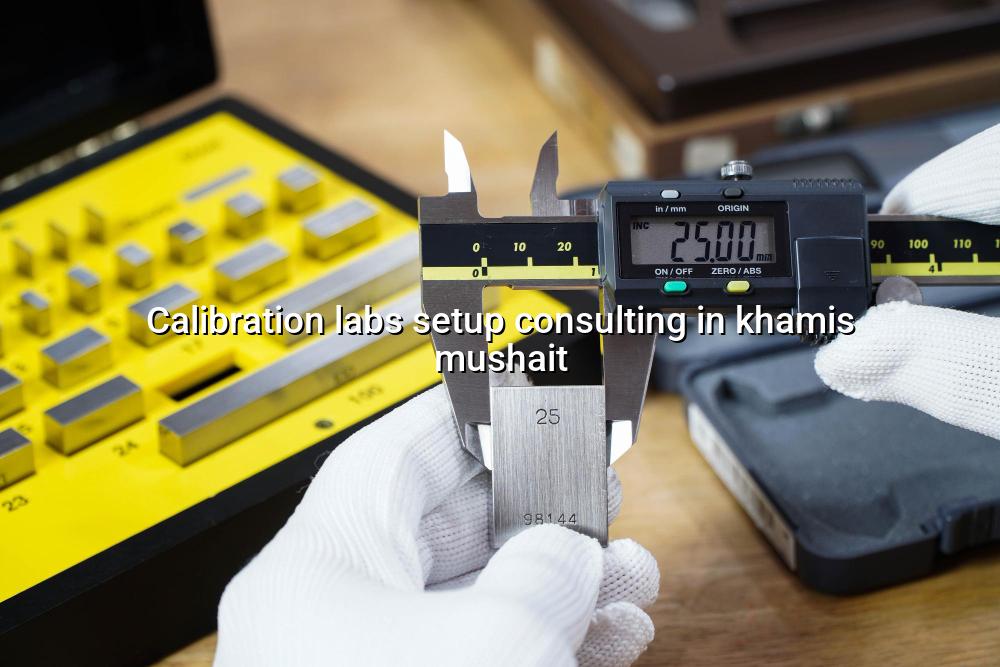
Calibration labs setup consulting in Khamis Mushait helps you build a lab that works on day one, not one that looks good in a drawing and then struggles with workflow, utilities or traceability. If you’re setting up a new facility or fixing an old one, we help you shape the space around the instruments you actually calibrate and the standards you need to meet.
Our team works with industrial clients across Saudi Arabia, India and the Middle East, so we see the same issues again and again: poor room layout, unstable environmental control, weak incoming inspection, and benches that don’t fit the load or service route. We plan around ISO/IEC 17025:2017 expectations, practical maintenance access and the way your technicians move through the lab each day.
Calibration lab setup in Khamis Mushait for ISO-ready work
A good calibration lab is more than a room with benches. You need a clean layout, correct power distribution, stable temperature control, secure storage for reference standards and a defined path for instruments coming in, waiting, being tested and leaving again. In Khamis Mushait, where many customers support industrial, maintenance and cold-chain operations, that layout has to suit both routine work and occasional high-priority jobs.
What we look at first
We start by mapping the services you want to offer. Electro-technical, pressure, thermal, dimensional or mechanical work each needs different furniture, environmental control and utilities. A temperature bath does not behave like a dead weight tester, and a torque bench has a very different footprint from a biomedical setup. We also look at the building itself, because room orientation, floor loading and access for equipment movement can shape the whole project.
Where labs often go wrong
Most bad setups fail in the same places. The bench height is wrong, the cable routes are messy, the HVAC cannot hold stable conditions, or the calibration flow crosses paths with packing and dispatch. Another common issue is buying equipment before the method plan is fixed. That leads to duplicated instruments, underused assets and awkward layouts that technicians have to work around every day.
- Define the service scope — we decide which calibration disciplines, inspection tasks or support services the lab will handle.
- Survey the site — we review room size, access points, utility points, floor condition and any environmental constraints.
- Plan the layout — we place benches, reference standards, quarantine areas, storage and packing zones in a clear working sequence.
- Match utilities and controls — we confirm power, earthing, lighting, temperature control and any special connections needed for equipment.
- Keep reference standards in a controlled storage zone, away from vibration and direct handling.
- Separate receiving, testing and dispatch so instruments do not pile up at one bench.
- Reserve space for verification tools, calibration software and certificate printing without blocking the main workflow.
- Plan for future growth; a lab that is already full on opening day usually becomes a bottleneck within months.
Reference table for calibration lab setup decisions
| Planning Area | What We Check | Typical Impact |
|---|---|---|
| Room layout | Bench placement, access paths, receiving and dispatch zones | Cleaner workflow and less handling damage |
| Environmental control | Temperature stability, airflow, dust control, humidity management | Better repeatability for thermal and precision work |
| Utilities | Power, earthing, lighting, compressed air and water points where needed | Safer installation and fewer rework visits |
| Compliance planning | ISO/IEC 17025:2017 documents, traceability, equipment records, method files | Stronger readiness for audits and internal review |
How the right lab design supports traceability
Traceability is not only about certificates. It starts with the way the lab is built and managed. If the room conditions drift, the storage is poor or technicians have to improvise around equipment, then the quality system becomes harder to defend. A well-planned calibration lab supports records, calibration intervals, equipment identification and clean movement of instruments through each stage.
What this means for owners and QA teams
You get a lab that is easier to train, easier to audit and easier to maintain. In our experience, that matters most when the workload rises and more than one technician is using the same space. Good design reduces small mistakes, and small mistakes are what usually create rework later.
Built for industrial demand
We design for the reality of oil & gas, petrochemical, power, manufacturing, healthcare and cold-chain operations. That means proper storage, sensible routing, enough bench room for real instruments and a setup that supports ISO/IEC 17025:2017 work without forcing your team to fight the space.
What a calibration lab in Khamis Mushait should include
For most projects, we look at the lab as a system. The building, the equipment, the methods and the people all need to fit together. A calibration room for pressure and mechanical work may need different benches and storage from a thermal or electrical area, and a mixed-discipline lab needs a layout that avoids confusion between samples, standards and tools.
We also think about support services. If you plan to offer installation and commissioning, or later expand into testing and maintenance, the base lab should already have room for staging, packing and temporary holding. That makes the site more useful over time instead of forcing another move after the first growth phase.
Utility planning matters just as much. Stable power, clean earthing and a sensible cable route protect both the instruments and the technicians. If you use a mobile calibration lab for onsite jobs, we can also help you link the in-house setup with field equipment, so your records, storage and servicing approach stay aligned.
That is especially useful for clients supporting plants in Saudi Arabia and GCC markets, where the pressure to keep equipment moving is real. A lab that is planned well can absorb that demand without turning into a storage room with a certificate printer.
Related services that support a new calibration facility
Many clients ask us to do more than design the room. They need lab design and setup, instrument calibration support, mobile lab planning and sometimes repair and maintenance for pumps, compressors or hydraulic systems used around the facility. Keeping these pieces connected makes the project easier to manage.
We also see projects where the lab is part of a wider industrial program: condition monitoring, electrical testing and commissioning, or inspection services for lifting equipment and PPE. If those services are coming later, it helps to leave the right physical and procedural space now.
For some customers, the next step is training. Calibration management techniques workshops help engineers and technicians understand records, discipline, traceability and day-to-day control, which makes the new lab easier to run after handover.
How Mayon Industrial Services Can Help
We help you turn a concept into a working calibration space with the right layout, utility planning and equipment flow. Our team can support lab design and setup, calibration services, condition monitoring, mechanical services and training, so the project stays practical from the first survey through handover. If you’re planning a new lab in Khamis Mushait or improving an existing one, we can help you shape it around the work you actually do.
Call +91 99447 80844 (India) or +966 59 633 8012 (Saudi Arabia), email services@mayonservices.com, or message us on WhatsApp.
Frequently Asked Questions
We normally look at the room, the workflow, utilities, equipment list, storage and documentation needs. If you’re aiming for ISO/IEC 17025:2017-aligned work, we also check traceability, environmental control and how instruments will move through the lab.
Those two disciplines need different layouts and control points, so we plan them separately before tying them into one facility. Pressure work often needs benches, secure storage and handling space, while electrical work needs safe power distribution, earthing and a tidy route for test equipment.
Yes. That happens a lot. We can review the existing room, identify where the flow breaks down and suggest changes that improve receiving, testing, storage and dispatch without forcing a full rebuild unless the site really needs one.
No, we support clients in India, Saudi Arabia and the wider Middle East. Our head office is in Medavakkam, Chennai, and we also operate from Dammam Industrial City 2 through our Saudi Arabia setup.
For our work, the main references are ISO/IEC 17025:2017, ISO 9001:2015, BS EN standards and EURAMET CG-15 for electrical calibration. The right standard depends on the service you want to provide, so we plan the facility around the actual scope instead of forcing a one-size-fits-all setup.
Ready to plan a lab that really fits your work?
If you need a practical, standards-aware setup for calibration work in Khamis Mushait, we can help you move from idea to working space with less guesswork.
Contact Mayon