
Calibration Labs Setup Consulting in Turaif
Plan a calibration laboratory in Turaif with the right workflow, equipment, traceability and commissioning support for industrial use.
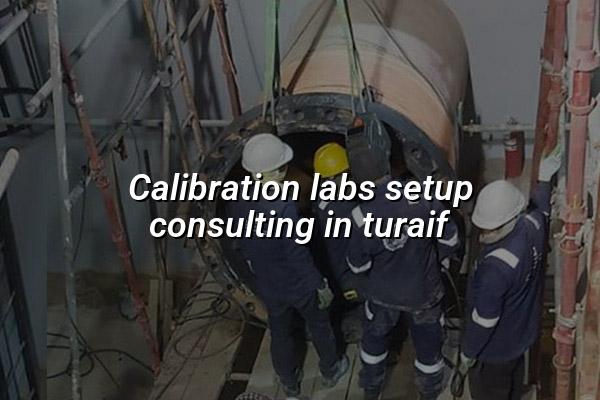
Calibration labs setup consulting in Turaif helps you turn a bare room, store area, or workshop bay into a traceable working lab that your team can actually run. You get help with layout, equipment choice, workflow, environmental control, and the practical details that make day-one commissioning far less painful.
We work with industrial clients who need calibration capacity for maintenance programs, vendor control, and QA release work. In Saudi projects, that usually means planning for temperature stability, clean power, instrument storage, and a documentation flow that fits ISO/IEC 17025 expectations from the start.
What calibration lab setup consulting covers in Turaif
A good lab setup is not just a room with benches and a few reference instruments. For calibration work, the space has to support traceability, environmental stability, document control, and safe handling of standards across electrical, pressure, mechanical, thermal and dimensional disciplines. That is why our consulting starts with the actual service list you want to offer, the client sectors you serve, and the test range each discipline needs.
Start with the workflow, not the furniture
Most lab mistakes happen before any equipment is ordered. We see teams buy benches first, then try to squeeze in cleaning areas, receiving, quarantine, calibration, packing and dispatch. A better approach is to map the movement of instruments from intake to final return, then size the lab around that flow. In Turaif and other industrial locations in Saudi Arabia, that matters because space is often shared with maintenance stores or workshop activities.
Match the room to the standards and instruments
We help you align the lab with the work you intend to perform under ISO/IEC 17025:2017 and ISO 9001:2015. That includes choosing the right work surfaces, stable storage for reference standards, and environmental controls that suit temperature calibration, pressure work, mass, torque, and electrical testing. If your plan includes onsite service or mobile support, we also shape the layout so your instruments, kits and packing systems are easy to move without damage.
- Define the service scope — list the calibration disciplines, ranges, and industries you plan to support, from oil & gas to manufacturing.
- Review the site conditions — check floor loading, power quality, access, ventilation, security and space for receiving and dispatch.
- Set the lab flow — place intake, quarantine, calibration, verification, storage and packing areas in a sequence that reduces handling.
- Select the equipment plan — specify standards, support tools, fixtures and any temperature-controlled or mobile-lab needs.
- Commission and validate — confirm the room, utilities, instruments and records system are ready before routine work begins.
- Keep calibration standards in a controlled, secure storage zone with clear status labels.
- Separate incoming, under-calibration and ready-for-dispatch instruments to reduce mix-ups.
- Plan enough bench space for reference equipment, laptops, forms and fixture sets.
- Allow room for future scopes such as electrical, pressure or thermal work.
- Build in a pickup and delivery path for instruments that need special handling conditions.
Typical decisions in a calibration lab setup project
| Area | Key decision | Why it matters |
|---|---|---|
| Room layout | Separate intake, calibration, storage and dispatch zones | Reduces handling errors and keeps instrument status clear |
| Environmental control | Temperature stability and practical humidity control | Supports repeatable results for sensitive standards and instruments |
| Utilities | Clean power, earthing and suitable work lighting | Helps electrical testing, laptop use and safe bench operation |
| Documentation | Controlled forms, traceability records and status labels | Supports ISO/IEC 17025-style discipline and internal audit readiness |
Why Turaif projects need a careful lab design
Turaif sits in a region where industrial users expect work to be traceable, tidy, and ready for audit. That can mean support for mining-related maintenance, utilities, contracting, or plant service teams that need reliable calibration access without sending every instrument far away. When the lab is planned well, your team spends less time moving equipment around and more time doing actual work.
Better control, fewer surprises
We usually see the first problems appear in storage and handling. A pressure standard left in the wrong place, an electrical standard without a secure shelf, or a balance area with poor bench discipline can create avoidable repeat work. A sensible layout, clear labelling, and a documented route for incoming instruments make a real difference, especially when different technicians share the same space.
Built for real industrial use
We design for the way your people actually move through the day: receiving, checking, testing, recording, and releasing. That includes room for future expansion if you later add thermal, biomedical, torque, or mechanical disciplines, plus space for mobile work kits if onsite jobs become part of the plan.
Equipment, utilities and records you should plan from day one
We often advise clients to think in three layers. First comes the core laboratory shell: benches, shelving, lighting, security and access. Second is the technical layer: standards, reference equipment, fixtures, software and calibration support tools. Third is the control layer: forms, checklists, calibration status, receipt logs, and document revision control.
That third layer gets ignored more than people admit. A neat room with poor records still causes trouble. If you want the lab to support customer-facing work or internal quality programs, you need a clear way to show what arrived, what was tested, what was rejected, and what went back out.
For Saudi and GCC projects, we also factor in practical logistics. Some instruments are better handled in a controlled in-house setting; others need a mobile calibration lab or pick-up and delivery because of fragility, special conditions, or site access. That choice should be made early, not after the room is already built.
How we usually sequence the setup
We begin with the scope, then confirm the room and utilities, then identify the equipment list, and finally align the documentation and commissioning plan. That sequence keeps the project grounded in actual use. It also makes it easier to compare options if you are deciding between a small focused lab and a broader multi-discipline facility.
Common services that influence the layout
Calibration services, condition monitoring, inspection, electrical testing, PAT testing and temperature mapping all affect how a lab should be arranged. A facility that supports pressure and torque work needs different storage and handling than one focused on thermal or biomedical instruments. If orbital welding, mechanical repair, or lab design is part of the same project, the space plan needs to keep those activities from interfering with one another.
- Include secure storage for reference standards and instruments waiting for calibration.
- Plan power, earthing and cable routes before benches are fixed in place.
- Keep a dedicated area for labels, reports, seals and controlled forms.
- Make space for calibration kits that travel to site in India, Saudi Arabia and the Middle East.
- Reserve a path for future lab expansion instead of filling every wall on day one.
How Mayon Industrial Services Can Help
We help clients in Turaif plan calibration labs that are practical from the first day of use, not just nice on paper. Our team can support the design review, the equipment list, the workflow, and the commissioning steps, while keeping ISO/IEC 17025:2017 traceability in mind. If you also need onsite calibration, mechanical support, inspection, or a mobile lab arrangement, we can shape the setup around that reality.
Call +91 99447 80844 (India) or +966 59 633 8012 (Saudi Arabia), email services@mayonservices.com, or message us on WhatsApp.
Frequently Asked Questions
It usually covers lab planning, room layout, equipment selection, workflow design, and the basic controls you need for traceable work. We also look at storage, receiving, dispatch, utilities and how the lab will support your maintenance or QA team. If you want onsite work as well, we factor that into the design.
You start with scope, then build the room and process around that scope. The lab should support stable environmental conditions, clear instrument status control, document control, and traceable standards. A proper setup makes later accreditation work much easier because the basics are already in place.
Yes. Many industrial teams want a fixed lab for controlled work and a mobile calibration capability for site jobs, shutdowns and larger plant areas. We can help plan both, so you don't end up with duplicate tools that don't fit your day-to-day needs.
That depends on your service scope, but electrical, pressure, mechanical and thermal reference equipment are common starting points. If your clients use torque tools, balances, gauges or temperature devices, those should be included early in the plan. We look at the actual instrument mix before suggesting any equipment list.
Yes, we support clients in Saudi Arabia and across the Middle East, along with our work in India. Our approach suits industrial users who need traceability, clear workflow and practical commissioning support. We can also advise on pick-up and delivery or mobile-lab arrangements when the instruments need special handling.
The timing depends on scope, room readiness, equipment lead times and how much documentation needs to be built. Some projects are straightforward; others need more coordination because the lab is tied to a plant shutdown, a new facility, or a multi-discipline scope. We avoid promising exact dates before we see the site and the brief.
Ready to plan a lab that actually works?
If you need a calibration facility in Turaif that supports traceability, practical workflow and future growth, speak with our team and start with the right plan.
Contact Mayon