
Cold Cutting Service Company in Haradh
Safe, spark-free cutting for pipes, steel sections and plant assets where hot work is restricted.
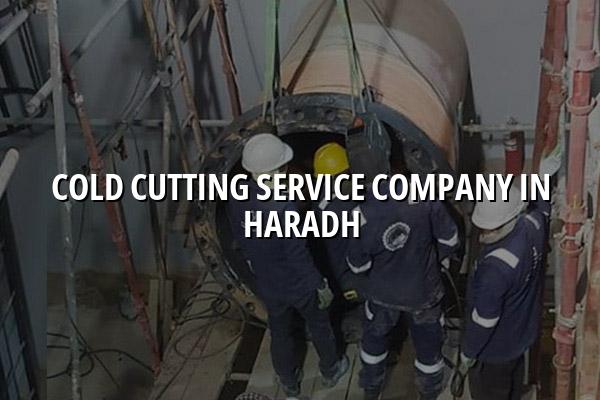
Cold cutting service company in Haradh support matters when your team has to cut pipe, plate, or structural steel without heat, sparks, or shutdown risk. We help you keep work controlled, clean, and suitable for live plant conditions, tank areas, and maintenance zones where hot work permits are tight.
In Haradh and the wider Eastern Province, we see this need most often in oil and gas maintenance, fabrication tie-ins, and plant modifications where access is awkward and schedules are already packed. Our approach fits Saudi site rules and the kind of field work engineers actually face: restricted spaces, coated surfaces, nearby equipment, and a real need to protect surrounding assets.
Why cold cutting service company in Haradh searches are usually urgent
Most clients who ask for a cold cutting service company in Haradh are trying to solve one of three problems: they need a pipe cut on an operating plant, they need controlled removal around a flange or vessel, or they need a process that keeps ignition sources out of the area. Cold cutting is the practical answer when torch cutting is not allowed, or when the job would create too much heat, smoke, or damage to nearby coating and insulation.
Where the method fits best
We use cold cutting on carbon steel pipe, sections, and fabricated steel where the work must stay spark-free. That makes sense for maintenance shutdowns, brownfield modifications, and repair work around utilities, pumps, skids, and pipe racks. In Haradh, these jobs often sit inside larger oil and gas or petrochemical scopes, so planning matters more than speed.
What clients usually need from the crew
You usually need more than a cutting tool. You need site preparation, measurement checks, controlled clamping, and a crew that can coordinate with permit holders, QA teams, and maintenance supervisors. We also get called when the client wants a clean cut face for the next weld or mechanical fit-up, because a messy cut creates rework nobody wants.
- Check the job scope — we confirm the material, wall thickness, access limits, and whether the line or equipment can be isolated.
- Set the work area — the team prepares the cut zone, protects nearby assets, and makes sure the setup suits the permit conditions.
- Carry out the cut — cold cutting equipment is fixed in place and the cut is made with controlled progress, not guesswork.
- Inspect the result — we check the cut quality, end face condition, and whether the piece is ready for removal, welding, or further mechanical work.
- Choose cold cutting when heat, flame, or sparks are a problem on site.
- Give the crew the pipe size, material grade, and cut location before mobilization.
- Ask for a clean, fit-up-ready end if the next step is welding or flange work.
- Keep permit control and isolation checks aligned with your site procedures.
Cold cutting compared with common field cutting options
| Method | Heat or Spark Risk | Typical Site Use |
|---|---|---|
| Cold cutting | Very low | Live plants, restricted zones, spark-free work areas |
| Oxy-fuel cutting | High | Open areas where hot work is permitted |
| Abrasive cutting | Medium | General steel work, but with more dust and throw-off |
| Manual hacksawing | Very low | Small diameter jobs, light maintenance tasks, slower progress |
How a clean cold cut helps the next trade
A good cold cut gives your welding, piping, or mechanical team a better start. The end is easier to measure, the fit-up is cleaner, and there is less need to grind back heat-affected material or burn marks. That can matter a lot on a tie-in job where the next crew is already waiting with supports, gaskets, or spool pieces.
Why QA teams ask for it
QA and maintenance teams like the method because it helps reduce variation. In a brownfield setting, you want one controlled action, not a sequence of extra repairs. When you are working around instrumentation, painted surfaces, or finished skids, a spark-free cut can save time in the wider job even if the cut itself looks simple.
Good for tight plant conditions
Haradh projects often involve live utilities, pipe racks, and phased maintenance work. Cold cutting keeps the operation better controlled where flame and excessive heat would create extra permit hurdles or extra cleanup.
What we check before mobilizing to Haradh
Before we send a crew, we look at the technical basics that decide whether the job will be straightforward or awkward. That includes material type, line size, access to the cut point, lifting needs, and whether the client wants a section removed, a pipe trimmed, or a full dismantling support job. We also look at the surrounding conditions, because cutting beside a coated vessel is not the same as cutting a loose section in a fabrication yard.
In our experience, the best jobs are the ones where the client shares the drawing, photos, and the exact cut location early. That lets us plan clamping, tools, and crew size properly. It also helps us decide whether the cold cutting task should sit on its own or be bundled with flange work, bolt torquing, testing, or commissioning support.
Common Haradh use cases
We often see requests from oil and gas maintenance teams, mechanical contractors, and plant operators who need spark-free removal of pipe sections or structural steel. Sometimes it is a maintenance fix. Sometimes it is part of a larger turnaround package. Either way, the job needs a field team that understands both the cutting method and the site rhythm.
- Gather site data — share the line number, dimensions, photographs, and any restriction notes.
- Review the access — check whether the cut point needs scaffolding, lifting support, or confined-space planning.
- Select the setup — match the tool and crew arrangement to the material and the site condition.
- Execute and clear — complete the cut, remove the section safely, and leave the area ready for the next trade.
- Best used where hot work permits are difficult or restricted.
- Helps reduce cleanup around coatings, insulation, and nearby equipment.
- Supports fit-up work where the next weld needs a clean edge.
- Works well in shutdowns, tie-ins, and maintenance interventions.
How Mayon Industrial Services Can Help
We support Haradh clients with cold cutting as part of wider industrial work, so you can keep one team accountable for the job instead of coordinating several vendors. If your scope also includes mechanical services, inspection, testing and commissioning, or repair work, we can plan the field activity around the same shutdown window. That keeps the job simpler for your maintenance team and gives you one point of contact for the practical parts.
Call +91 99447 80844 (India) or +966 59 633 8012 (Saudi Arabia), email services@mayonservices.com, or message us on WhatsApp.
Frequently Asked Questions
We do, and that is usually the reason people call us. They need a spark-free method for pipe or steel removal where hot work would be awkward or not allowed. We plan the cut around the site condition, the permit rules, and the next trade that has to work after us.
For many maintenance jobs, yes. Torch cutting brings heat and sparks, while cold cutting keeps the work much more controlled. That makes it a better fit for restricted areas, coated equipment, and sites that want to reduce ignition risk during maintenance.
Send the line size, material, cut location, photos, and any access notes. If the job sits inside a shutdown or turnaround, tell us the permit conditions and the work sequence too. That helps us plan the setup properly and avoid delays on site.
Yes, it can. We often use it where a pipe segment must be removed cleanly before flange work, welding, or other mechanical tasks. It is especially useful when the client wants a cleaner edge and less heat impact on the surrounding area.
Yes. We support clients in Saudi Arabia from Dammam Industrial City 2 and also serve India and the wider Middle East. If your job is in another industrial location in the region, send the site details and we will tell you how we can support it.
Ready to plan a safer cut in Haradh?
Send us the job details and we’ll help you map the cold cutting scope to the site condition, access limits, and next trade.
Contact Mayon