
Dead Weight Tester Supplier in Arar
Pressure calibration equipment, supply support, and onsite service for Arar and the Northern Borders industrial corridor.
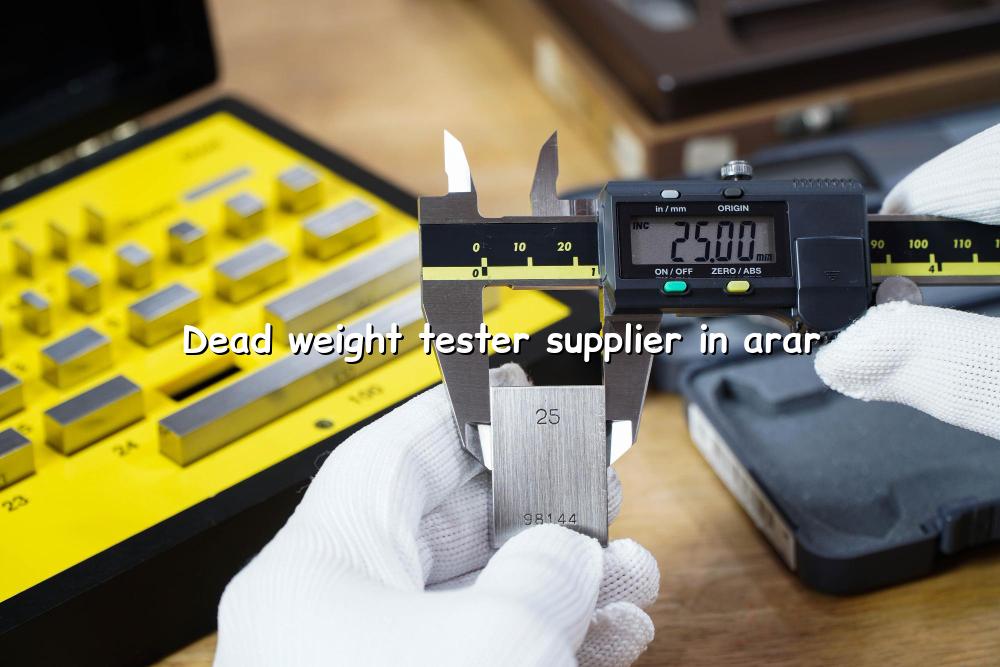
Dead weight tester supplier in Arar is the kind of search you make when the calibration job cannot wait for trial and error. You need the right instrument, the right pressure range, and a supplier who understands field use, traceability, and how fast equipment gets moved around real plants.
We work with industrial teams across Saudi Arabia and the wider Middle East from a practical point of view: supply, support, and calibration all need to line up. In Arar, that matters for maintenance teams, QA engineers, and service contractors handling pumps, manifolds, gauges, transmitters, and test benches in demanding sites.
Dead Weight Tester Supplier in Arar for Pressure Calibration Work
A dead weight tester is still one of the most trusted ways to generate pressure when you need a stable reference for calibration. For oil and gas, petrochemical, power, fabrication, and maintenance work around Arar, the question is not just who can sell a unit. It is who can help you choose a system that fits your pressure range, working fluid, field conditions, and calibration routine under ISO/IEC 17025 expectations.
What buyers usually ask first
Most procurement teams start with pressure range, medium, and portability. That makes sense. A workshop in an industrial zone near Arar may need a different setup from a mobile calibration crew visiting a remote site, and a hydraulic model is not the answer for every application. We also hear from teams that need a dead weight tester for comparator work alongside gauges, transmitters, and safety devices, so the accessories matter just as much as the main frame.
Why the supplier side matters
A good supplier does more than hand over a box. You want proper documentation, sensible packaging for transport, advice on maintenance, and a path back to calibration or verification when the unit is in service. In our experience, that is where delays begin if the buyer only looks at the product name and not the support behind it.
- Confirm the application — define whether you need bench use, workshop use, or portable field work.
- Select the pressure range — match the tester to the instruments you calibrate most often, not the rare special case.
- Check the build and accessories — look for the correct pistons, masses, oil system, connectors, and carrying arrangement.
- Ask about calibration support — make sure the supplier can support traceability and re-calibration planning.
- Review delivery handling — a pressure standard should arrive protected, clean, and ready for commissioning.
- Choose a supplier who understands ISO/IEC 17025 calibration environments.
- Ask whether the tester suits gauge, transmitter, and valve testing.
- Confirm if onsite support is available for Arar and nearby Saudi sites.
- Make sure spare parts and servicing are practical, not theoretical.
- Keep transport, storage, and cleanliness in mind from day one.
Dead Weight Tester Options and Typical Use Cases
| Use Case | What to Check | Why It Matters |
|---|---|---|
| Gauge calibration | Stable pressure generation and suitable connection fittings | Helps keep the reading repeatable during routine shop checks |
| Transmitter work | Compatible range and clean pressure medium | Protects sensitive instruments from contamination or over-range use |
| Field service | Portability, packing, and handling support | Reduces damage risk during movement between sites |
| Maintenance workshop | Accessory set and service access | Makes daily testing easier for technicians handling multiple assets |
How the Right Pressure Standard Supports Day-to-Day Work
When a plant team keeps a dead weight tester in regular use, the real value shows up in consistency. The operator can repeat pressure generation with less guesswork, and QA teams get a cleaner basis for checking documents, tolerances, and instrument condition. For Saudi sites, that kind of discipline helps when the plant is juggling shutdown work, maintenance windows, and contractor schedules.
Where it fits in a broader maintenance plan
A dead weight tester is rarely used alone. It sits beside pressure gauges, valves, manifolds, calibration records, and sometimes a mobile laboratory visit. If your team also needs calibration services, mechanical support, or inspection work, keeping one supplier familiar with the full setup saves time and avoids mixed instructions from different vendors.
Good equipment should make the job simpler
That means clear documentation, proper handling, and a supplier who answers the technical questions without turning them into sales talk. For Arar buyers, it also means someone who can support the order with real industrial context, not just catalog language.
Things to Review Before You Place an Order
Buyers in Arar often want one purchase to cover workshop and field jobs. That is possible, but only if the dead weight tester is matched to the work. Check whether the system is intended for oil-based or other compatible media, whether the instrument set needs a rugged case, and whether the supplier can advise on installation and periodic checks. If your team operates across Saudi Arabia or the wider GCC, transport and storage become part of the decision, not an afterthought.
We also suggest thinking about training. A well-built tester still needs an operator who knows how to prepare the system, clean it, load it safely, and record results properly. That is especially true where several technicians share one unit across shifts.
- Check the exact pressure class your instruments require.
- Ask for documentation that fits your quality system.
- Plan for storage, cleaning, and transport between sites.
- Confirm the supplier can support future calibration needs.
How Mayon Industrial Services Can Help
We support clients who need more than a product listing. If you are sourcing a dead weight tester for Arar, our team can help you match the equipment to your calibration work, the pressure range you actually use, and the way your site handles testing and records. We also support onsite calibration, lab work, and related pressure and mechanical services, so the supply side and the service side stay aligned.
Call +91 99447 80844 (India) or +966 59 633 8012 (Saudi Arabia), email services@mayonservices.com, or message us on WhatsApp.
Frequently Asked Questions
We do, and we focus on the practical side: matching the tester to your pressure range, application, and handling needs. If your team works across Arar and other Saudi sites, we can also help you think through support, documentation, and calibration planning so the unit stays useful after delivery.
Start with the pressure range and the instruments you test most often. A workshop that calibrates gauges daily has a different need from a site team checking transmitters or valves, and the wrong range leads to poor usability very quickly.
Yes, if the setup is suitable for transport and handling. For field use, the case, cleanliness, and support equipment matter as much as the tester itself, because a pressure standard only stays reliable when it is protected and operated correctly.
Yes. Our work is not limited to supply, and many clients ask us to stay involved so the instrument remains part of a proper calibration process. That includes support for onsite work, lab work, and related mechanical or pressure service needs.
Oil and gas, petrochemical, power, manufacturing, and maintenance contractors are the common ones. We also see interest from teams handling test benches, utility systems, and instrument rooms where pressure verification has to be repeatable and documented.
Ready to source the right pressure tester?
If you need a dead weight tester supplier in Arar, talk to a team that understands calibration, handling, and the way industrial sites actually work.
Contact MayonThe right dead weight tester should make your work easier, not harder. If you want a supplier who can help with the equipment, the support, and the calibration side in one conversation, Mayon Industrial Services is ready to help.