
Dead Weight Tester Supplier in Dammam
Source traceable pressure standards and support for industrial calibration work in Saudi Arabia.
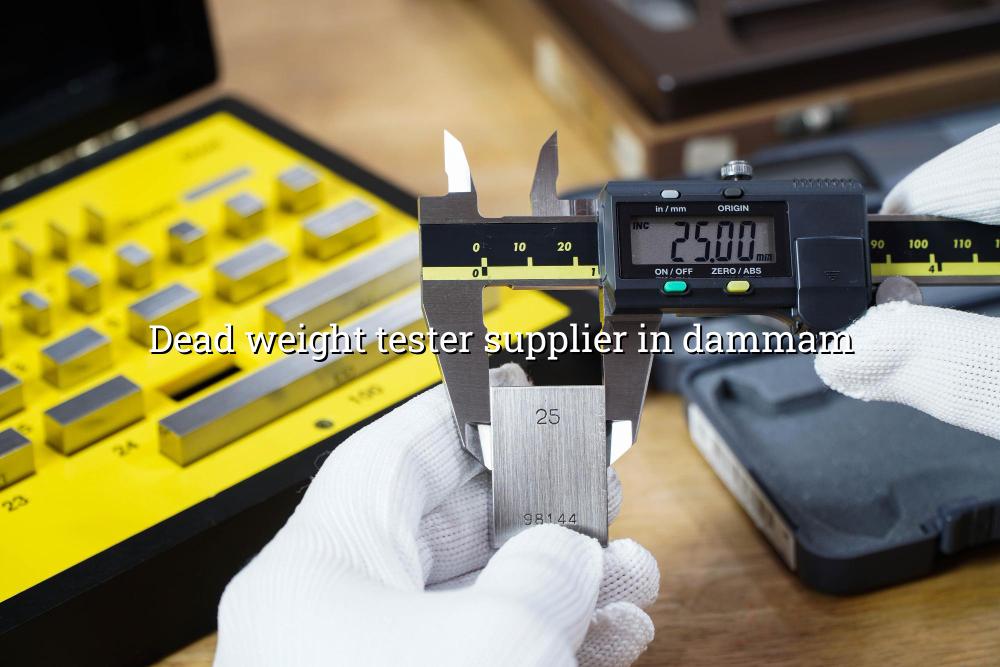
Dead weight tester supplier in Dammam is a search most QA and maintenance teams make when they need pressure standards they can trust, not just another boxed instrument. We help you source the right dead weight tester for calibration benches, workshop verification and field support, so your gauges and transmitters stay traceable.
From Dammam Industrial City 2 to wider Eastern Province projects, our team works with oil & gas, petrochemical, power and manufacturing clients who need dependable pressure calibration equipment and practical support. We also serve India and the Middle East with onsite work, mobile-lab capability and ISO/IEC 17025:2017 discipline.
Choosing a Dead Weight Tester Supplier in Dammam
When someone asks us for a dead weight tester supplier in Dammam, they’re usually after two things: a stable pressure standard and a supplier who understands the real worksite. In a plant, that means a unit that fits the pressure range you test most often, works with your hydraulic medium, and can be supported when the instrument is moved between the workshop, lab and site.
Why pressure traceability matters on site
A dead weight tester is only useful if the readings stay consistent under normal operating conditions. That’s why teams in Dammam, Jubail and nearby industrial areas ask about piston-cylinder quality, weight sets, local support and calibration traceability to ISO/IEC 17025:2017. If you're checking transmitters, pressure gauges or switches, you want a standard that makes review easy for maintenance and audit teams.
What separates a good supplier from a reseller
We see this difference all the time. A reseller can ship a box. A proper supplier helps you select the right pressure range, matching accessories, carrying case, pump arrangement and documentation path, then stays involved when you need calibration, repair or replacement parts. That matters in Saudi Arabia, where many buyers need one contact point for purchasing and after-sales support.
- Confirm the test range — match the dead weight tester to the gauges, transmitters and valves you verify most often.
- Check the pressure medium — choose oil or fluid compatibility based on your workshop and site procedures.
- Review the standards path — ask how the unit will be used for traceable calibration and records.
- Plan for support — make sure spares, maintenance and pickup options are available before you place the order.
- Select a pressure range that covers your routine calibration points without forcing unnecessary over-specification.
- Ask for clear documentation so your quality team can file the instrument correctly.
- Confirm whether onsite setup or bench installation support is needed before dispatch.
- Keep the supplier close to your maintenance cycle, not just your purchase order.
Dead Weight Tester Options and Buying Checks
| Buying point | What to look at | Why it matters |
|---|---|---|
| Pressure range | Match the tester to your normal gauge and transmitter points | A poor range choice makes day-to-day use awkward |
| Weights and piston set | Stable construction and clear identification of load sets | Helps keep test results repeatable and easy to review |
| Accessories | Pump, fittings, connectors and protective case | Makes bench work and field handling more practical |
| Supplier support | Calibration, maintenance and local response | Reduces downtime when the instrument is needed for production or audit work |
How the Right Supplier Helps Your Calibration Team
A dead weight tester supplier in Dammam should do more than quote a part number. The better support comes from understanding how your lab works, what the pressure points are in your plant, and how often you need the unit transported between site and workshop. That is where practical advice saves time, especially for oil & gas and petrochemical users who keep tight records.
Lab, mobile, and onsite work all need different planning
In our experience, the same tester can be used very differently depending on whether it stays in a temperature-controlled lab or travels to a production area. A mobile setup needs proper handling, secure storage and a clear calibration history. For onsite work, our team checks the instrument condition before use, then supports the client with the same traceability expectations they would expect in a formal lab.
Built for industrial pressure work
We support clients who test pressure instruments in refineries, compressor rooms, utilities and maintenance shops. That means the conversation starts with the application, not with a catalogue page.
Practical Checks Before You Buy
Most buyers in Dammam are not shopping for a shelf item. They’re trying to keep a calibration routine running without gaps, and that means the details matter. Before you place an order, ask about the intended pressure medium, the full set of load weights, how the piston-cylinder assembly is protected, and whether the supplier can help if your team later needs calibration of connected instruments.
What QA teams usually ask us
Quality teams often want the paper trail first, followed by the hardware. They ask how the instrument will be identified, what documentation comes with it, and how it fits into an ISO/IEC 17025:2017 environment. That’s a good habit. It keeps purchasing, maintenance and compliance on the same page from the start.
What maintenance teams usually ask us
Maintenance managers are more direct. They want to know if the tester is easy to handle, simple to clean, and supported when seals, fittings or related equipment need attention. If the unit will be moved between a workshop in Dammam and a site elsewhere in the Eastern Province, handling matters as much as the pressure range.
- Ask for a clear match between the instrument range and your normal test points.
- Confirm that your team understands the loading steps before first use.
- Check the support route for accessories, seals and related pressure gear.
- Keep calibration records with the instrument, not in a separate inbox thread.
Where This Fits in a Larger Calibration Setup
A dead weight tester rarely works alone. It sits inside a wider calibration setup that may include pressure comparators, dead weight testers, temperature baths, torque tools and the documentation process your auditors review. For some clients, the purchase is part of a bigger lab build or equipment refresh.
If you're setting up a calibration room in Saudi Arabia or reviewing a mobile capability for field use, we can help with lab design, instrument setup and practical training. That is often the point where the buying decision gets easier, because the team can see how the tester will actually be used.
We also support repair and maintenance for related equipment such as pumps, hydraulic cylinders and hydrotest systems. If your pressure work crosses into mechanical service or commissioning, it's better to deal with one technical team that understands the full picture. That saves back-and-forth, and it keeps the work moving.
How Mayon Industrial Services Can Help
We support clients looking for pressure calibration equipment in Dammam with practical advice, calibration services and related engineering support. If you need a dead weight tester, we can help you assess the application, guide the selection, and support the instrument once it’s part of your routine. Our team also works across onsite calibration, mechanical services, lab setup and training, so you get help from people who understand the job end to end.
Call +91 99447 80844 (India) or +966 59 633 8012 (Saudi Arabia), email services@mayonservices.com, or message us on WhatsApp.
Frequently Asked Questions
You can source it through a supplier that understands industrial calibration rather than a general reseller. We work with clients in Dammam Industrial City 2 and across Saudi Arabia, so the discussion starts with your application, pressure range and support needs. That usually leads to a better fit than a quick catalog choice.
Check the pressure range, the working fluid, the accessory set and how the unit will be supported after delivery. If your team runs pressure calibration as part of ISO/IEC 17025:2017 work, ask for documentation that fits your records. Those basics save trouble later.
Yes, if the setup, handling and environmental conditions are right. Some clients keep the tester in a lab, while others move it for field work with proper protection and handling. We help plan that around your site conditions and maintenance workflow.
Yes. We support calibration work for pressure-related instruments and can also help with mechanical services, lab setup and onsite work. If your team needs a fuller pressure calibration setup, we can talk through the whole chain rather than only one instrument.
We see them most in oil & gas, petrochemical, power and manufacturing environments. Those sectors rely on pressure verification for gauges, transmitters and maintenance checks, so a stable standard matters. The same applies when a client is building or refreshing a calibration bench.
Honestly, that's a common request. Many teams prefer one technical point of contact for purchasing, calibration support and later maintenance. We can work that way, which keeps communication simpler for procurement and QA teams.
Need a pressure standard your team can trust?
Talk to us about dead weight tester supply, calibration support and practical setup for your Dammam or Saudi operations.
Contact Mayon