
Dead Weight Tester Supplier in Petro Rabigh
Source pressure calibration equipment with traceability, practical support and regional delivery for demanding industrial work.
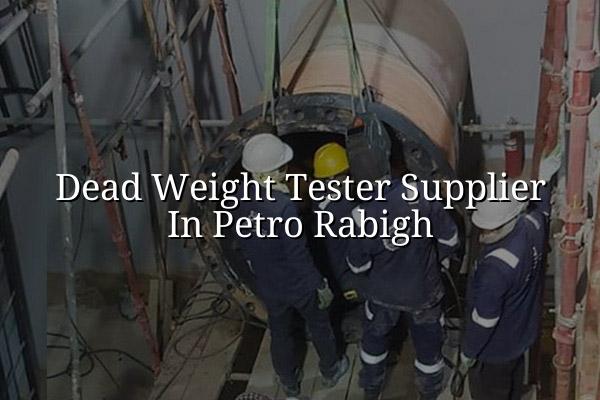
Dead weight tester supplier in Petro Rabigh searches usually come from a real problem: a maintenance team needs a pressure standard that can be trusted in the field, not just listed on a brochure. We help you source equipment that fits calibration work, verification routines and plant testing without wasting time on unsuitable models.
For oil, gas and industrial teams in Petro Rabigh, the right setup has to work with traceability, clean handling and practical site support. We work across Saudi Arabia, India and the Middle East with calibration, repair and lab setup experience that supports procurement, QA and maintenance staff who need clear answers.
Choosing a Dead Weight Tester Supplier in Petro Rabigh
A dead weight tester is still one of the most trusted pressure references for workshops and calibration rooms because it uses calibrated masses and piston-cylinder assemblies to generate pressure. In Petro Rabigh, where plant reliability matters and downtime is expensive, buyers usually want three things at once: the right pressure range, dependable materials, and documentation that stands up in audits.
What buyers usually check first
Most enquiries start with the working range. A team checking hydraulic gauges, transmitters or pressure switches needs the tester to match the instrument class and the site application. We also see requests for portability, especially when the equipment will move between workshops, shutdown areas and field service vehicles.
Why traceability matters in this market
In Saudi industrial work, traceability is not a nice extra. People want a clear calibration chain, documented results and equipment that supports ISO/IEC 17025:2017-based work. When the end user is in petrochemical service, the paperwork matters almost as much as the hardware.
- Confirm the pressure range — match the tester to the gauges, transducers or switches you actually use on site.
- Check the medium and construction — select oil-based or pneumatic capability based on the application and cleanliness needs.
- Review traceability documents — make sure the certification format fits QA and maintenance records.
- Plan the location of use — decide whether you need a bench unit, a mobile option or a setup for both.
- Ask for calibration support that matches the equipment you buy.
- Look for dead weight testers suitable for workshop and onsite use.
- Verify whether pick-up and delivery is available for sensitive instruments.
- Keep spare weights and seals in mind when planning maintenance.
- Confirm that the supplier understands Saudi industrial work, not just generic lab supply.
Dead Weight Tester Options and Typical Use Cases
| Use Case | Buyer Priority | What to Verify |
|---|---|---|
| Instrument workshop | Stable bench performance | Pressure range, piston condition and documentation |
| Plant maintenance | Portable handling | Weight set, case design and ease of transport |
| Calibration lab | Traceable reference | Certificate format, calibration chain and repeatability |
| Shutdown support | Field readiness | Compatibility with gauges, transmitters and test adapters |
What makes a supplier useful after the sale?
The best supplier is not just the one who can ship a unit. It is the one who can explain how the tester will be used, support inspection of the device, and help your team keep it in service through maintenance and calibration planning. That matters in Petro Rabigh, where work often sits between production pressure and planned shutdown windows.
Support that keeps the unit in service
We recommend checking whether the supplier can support calibration, repair, and related pressure equipment such as comparators, manifolds, and hydraulic accessories. If the tester is part of a wider quality system, it helps to have one point of contact for calibration services, product sourcing and technical follow-up.
Built for real plant conditions
Rabigh-area teams often work in heat, dust and time-sensitive maintenance windows. A good pressure standard needs proper handling, a clean storage plan, and support that understands on-site calibration as well as in-lab verification. That is the practical difference between buying equipment and solving a measurement problem.
Points to raise before you place the order
Ask whether the tester is intended for hydraulic or pneumatic use, and confirm the exact accessories you need. Some teams also want a mobile calibration lab to come to site, while others prefer pick-up and delivery for instruments that need controlled handling. If you are supporting multiple units across a refinery or terminal, that decision affects how quickly your team can keep work moving.
We also suggest checking whether the supplier can support related inspection and testing tasks. A pressure tool is often one part of a larger maintenance scope that includes calibration, commissioning and verification of adjacent instruments. When those services sit under one technical roof, coordination gets simpler.
For procurement teams, the useful details are boring in the best way: pressure range, documentation, accessories, storage, and service support. Get those right early and you avoid the common problem of buying a unit that looks fine but does not fit the plant’s calibration workflow.
In our experience, the second conversation matters more than the first. The first call is about availability. The second is where the real technical fit shows up.
How Mayon Industrial Services Can Help
We support teams that need pressure calibration equipment, calibration services, and practical advice on choosing the right dead weight tester for oil and gas work. Our in-house laboratory, mobile calibration lab and field experience help you keep equipment aligned with ISO/IEC 17025:2017 expectations and the realities of plant work in Saudi Arabia.
We also support related needs like mechanical services, inspection, repair and maintenance, so your pressure equipment sits inside a wider technical plan instead of becoming a one-off purchase. If you need a dead weight tester supplier in Petro Rabigh, speak with our team and we will help you map the next step.
Call +91 99447 80844 (India) or +966 59 633 8012 (Saudi Arabia), email services@mayonservices.com, or message us on WhatsApp.
Frequently Asked Questions
You can source through a supplier that already understands Saudi industrial sites, pressure calibration needs and document control. We support buyers who need practical help with selection, calibration and related services, not just a box on a pallet.
Check the pressure range, the medium it uses, the condition of the piston-cylinder assembly, and whether the certification format fits your QA process. If the tester will move between units, ask about transport and storage as well.
Yes, if the setup is chosen and handled correctly. Some teams use bench units in a lab, while others prefer a field-ready arrangement with clean handling and support from a mobile calibration lab.
Yes. We support calibration services, repair and maintenance, and related pressure equipment work so your tester stays useful over time. That matters when the unit is part of a larger maintenance and inspection program.
Ask direct questions about Saudi site work, pressure calibration traceability and support for oil, gas and petrochemical applications. A supplier that can answer clearly and talk about real use cases is usually the safer choice.
Need a pressure solution you can trust?
If you're sourcing a dead weight tester for Petro Rabigh, talk to our team and we will help you match the equipment to the job.
Contact Mayon