
Dead Weight Tester Supplier in NEOM
Traceable pressure standards, onsite support and supply for demanding oil, gas and industrial projects in Saudi Arabia.
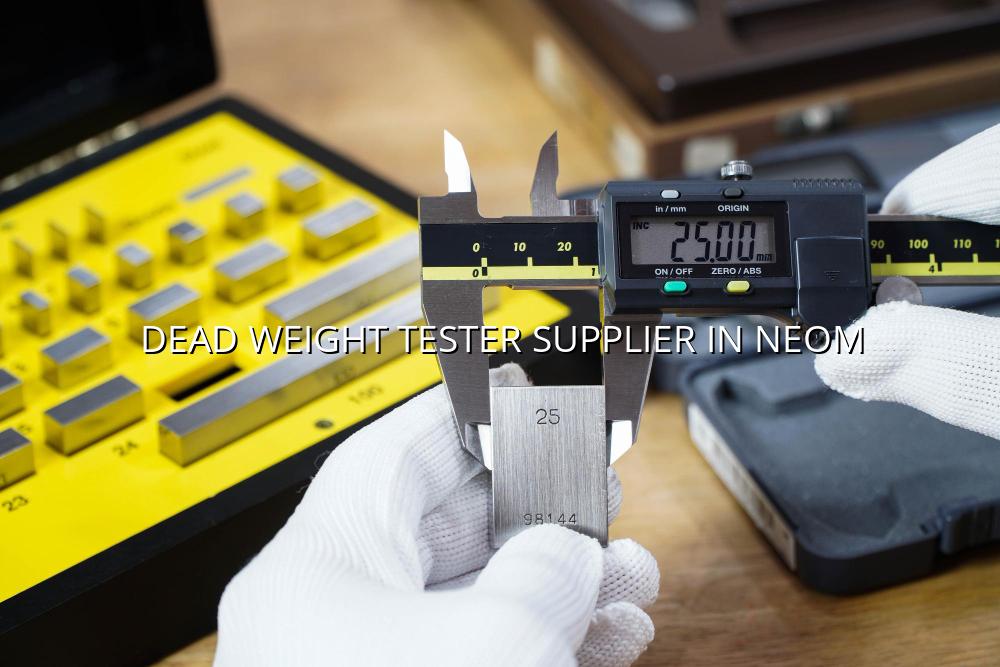
Dead weight tester supplier in NEOM is a search most teams make when they need pressure standards they can trust on site, not just in a catalogue. We help you choose the right tester for calibration work, commissioning checks, and controlled laboratory use, so your pressure instruments stay traceable and defensible.
That matters in NEOM's industrial environment, where oil and gas, power, construction and process packages all depend on clean documentation and repeatable results. Our team supports Saudi Arabia from Dammam Industrial City 2, with calibration, mechanical services, inspection work and industrial supply built around ISO/IEC 17025:2017 traceability.
What to expect from a dead weight tester supplier in NEOM
A proper dead weight tester is not just a pressure source. It is a primary standard that uses known masses and piston-cylinder area to generate pressure with a high level of repeatability, which is why teams use it to verify gauges, transmitters and other pressure devices during calibration work. In practice, buyers in NEOM often want two things at once: dependable equipment and a supplier who understands onsite reality, from clean bench work to field use near construction and process areas.
Why the supply decision matters
We see many projects delay pressure calibration because the tester chosen for the job does not match the instrument range, the working fluid, or the site conditions. A good supplier helps you sort those points before the order goes out. If you need a dead weight tester for an in-house lab, you may want a temperature-stable setup and easy handling. If it is for field use, portability, protection during transport and clear documentation matter just as much.
How we look at application fit
Our conversations usually start with the pressure range, the media, and the instruments you plan to test. That sounds simple, but it keeps the project on track. A dead weight tester for hydraulic work, for example, is handled differently from a bench unit used for routine gauge checks. We also pay attention to the traceability chain, because Saudi industrial sites often need records that stand up to QA review and client audits.
- Define the pressure range — confirm the gauges, transmitters or switches you will calibrate and match the tester range to that work.
- Choose the working medium — decide whether the application needs oil, water or another approved setup for the equipment and site rules.
- Check portability needs — select a bench model for the lab or a transportable unit for onsite service in NEOM and nearby project areas.
- Review traceability documents — ask for calibration records and supporting paperwork that align with ISO/IEC 17025:2017 expectations.
- Match the tester to the pressure class used in your plant or project package.
- Confirm the piston, masses and accessories are suitable for site handling.
- Ask whether onsite setup and commissioning support are available in Saudi Arabia.
- Keep the calibration path clear from tester to instrument to final certificate.
- Plan storage and transport so the tester stays protected between jobs.
Dead weight tester selection points for NEOM projects
| Selection point | Why it matters | What to check |
|---|---|---|
| Pressure range | Sets the usable span for gauges and transmitters | Confirm minimum and maximum pressures against your instruments |
| Working medium | Affects suitability, cleaning and site handling | Check whether hydraulic or other approved media fit the application |
| Traceability | Supports audit-ready calibration records | Request documentation aligned to ISO/IEC 17025:2017 |
| Portability | Influences onsite deployment and transport | Review weight, case protection and field setup needs |
Why traceability matters in Saudi industrial work
In NEOM and the wider Eastern Province, pressure equipment often sits inside larger quality systems. That means the tester itself must be handled as a controlled asset, not a casual shop tool. When a buyer asks for a dead weight tester, we think about the full chain: supply, setup, calibration verification and documentation that supports client inspection or internal QA review.
Where teams use it most
We usually see dead weight testers used by calibration labs, maintenance departments, commissioning teams and contractors working on process plants, utility systems and package skids. They are also useful where portable pressure verification is needed before a system is handed over. If the work is onsite, our mobile calibration lab and field support help reduce unnecessary movement of sensitive instruments.
Supply, calibration and support in one chain
Many customers do not just need a product. They need a supplier who can help with the tester, calibrate related pressure instruments, and keep the paperwork clean. That is where our calibration services, repair and maintenance work, and onsite support come together for projects in Saudi Arabia and across the Middle East.
Common mistakes buyers should avoid
A lot of pressure equipment gets delayed because the first purchase brief is too thin. People list the instrument name, but skip the pressure range, medium, or the way the tester will be used on site. That leads to awkward rework later, and in our experience the second round of clarification always takes longer than the first order would have. A better brief saves time and helps your QA team sign off faster.
What to include in your enquiry
Keep it practical. Tell us the instrument types, the required pressure range, whether you need onsite support in NEOM or delivery to an existing lab, and whether the tester will stay fixed in one room or move between locations. If your team also needs calibration of gauges, transmitters, or pressure accessories, we can line up the work so the project does not drift across too many vendors.
- State the instrument list — give us gauges, transmitters, switches and any special accessories to be tested.
- Share the operating environment — mention lab, workshop or field use, plus any transport or storage limits.
- Specify the documentation need — tell us if the job is tied to client audits, internal QA, or commissioning records.
- Ask for related services — include calibration, inspection or maintenance if the tester will support a wider project scope.
- Do not buy on pressure range alone; media and application matter too.
- Confirm whether the tester will sit in a lab or travel to project sites.
- Make sure the supplier can support Saudi Arabia and the NEOM project corridor.
- Keep traceability paperwork ready before the equipment arrives.
- Ask for support on nearby pressure calibration tasks, not just the product itself.
How Mayon Industrial Services Can Help
We help NEOM buyers choose pressure equipment that fits the work instead of forcing the work to fit the equipment. Our team can support dead weight tester supply, pressure calibration, mechanical service needs, inspection work and onsite industrial support from Saudi Arabia, with the same traceability mindset we use in our ISO/IEC 17025:2017 laboratory.
Call +91 99447 80844 (India) or +966 59 633 8012 (Saudi Arabia), email services@mayonservices.com, or message us on WhatsApp.
Frequently Asked Questions
Yes, that usually means a supplier who can provide the tester and help you use it in a real industrial setting. For NEOM work, buyers normally want traceability, site support and clear documentation, not just a boxed instrument. We handle that kind of request from Saudi Arabia with calibration and engineering support around the product.
It can, if the model and setup suit field use. The practical points are transport, stability, cleanliness and the working medium. Many teams also prefer a supplier that can support onsite calibration around the tester so they do not have to move every related instrument back to a lab.
Ask for the calibration records, identification details and any paperwork that shows the equipment is suitable for the range you need. In Saudi industrial projects, that documentation often becomes part of the QA file. If the tester will support client handover or commissioning, keep the records with the rest of the project pack.
We see demand from oil and gas, petrochemical, power, construction and manufacturing teams. The common thread is pressure equipment that must be checked against a known standard before it goes into service or stays in service. Cold chain and healthcare sites may also need pressure verification for certain systems.
Yes. We support Saudi Arabia from Dammam Industrial City 2 and also serve India and the wider Middle East. If your project is in a different city but still within our service region, we can discuss the supply path and any related calibration or engineering needs.
Ready to specify pressure equipment the right way?
Send your range, application and site details, and we'll help you match the tester to the job without guesswork.
Contact Mayon