
Equipment Repair Service Company in Jizan
Practical repair support for industrial equipment in Jizan, backed by onsite troubleshooting and lab-grade care where needed.
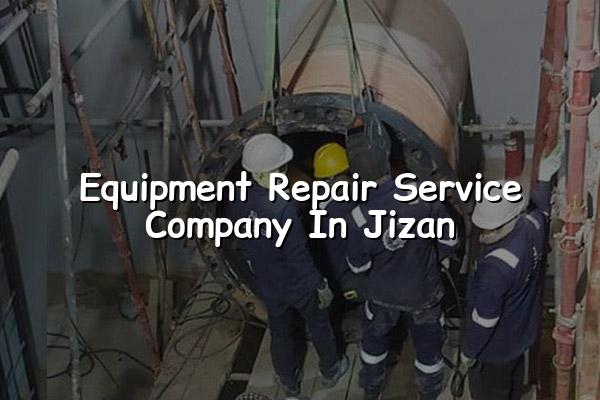
An equipment repair service company in Jizan has to do more than swap parts. You need a team that can find the fault, isolate the cause, and get your machine back to work without creating a second problem two weeks later.
That is the kind of work we handle at Mayon Industrial Services for plants, warehouses and utility sites that depend on pumps, compressors, generators, hydraulic cylinders and related equipment. We support customers across Saudi Arabia with onsite troubleshooting, workshop repair, testing and commissioning, and careful follow-up where the job calls for it.
What a reliable equipment repair service company in Jizan should do
In Jizan, equipment often works in hot, dusty conditions and under tight production pressure. That changes the repair conversation. A good service partner should be able to inspect the failure safely, identify wear, leakage, vibration, overheating or electrical issues, and decide what can be repaired onsite and what should move to the workshop. We see this most often with rotating equipment, hydraulic power packs, air compressors and generator auxiliaries.
Why the fault picture matters first
Most breakdowns don't begin with one dramatic event. They build up through poor alignment, contamination, loose fasteners, seal damage, lubrication loss or a control issue that nobody had time to check. When our team starts a repair, we look at the condition around the machine, not just the broken component. That approach saves time later and helps stop repeat failures on the same line.
Onsite work and workshop repair need different handling
Some jobs belong in place. A leaking hose, misaligned coupling, or a pump that needs inspection after abnormal noise can often be handled onsite if access is safe. Other jobs need the bench, proper fixtures and controlled testing. We use both approaches, and in industrial sites that mix mechanical, electrical and hydraulic systems, that balance makes a real difference.
- Inspect the machine in service — check the symptoms, the installation, the duty cycle and any recent change in operation.
- Separate the fault from the cause — look for the wear pattern, contamination source or alignment issue that created the problem.
- Choose the right repair path — decide what stays onsite, what needs workshop attention and what should be replaced.
- Test before release — run checks, verify function and confirm the machine is safe to hand back to operations.
- Ask for a fault description in plain words from the operator before you touch the unit.
- Keep the serial number, model and duty details ready so parts and checks match the actual equipment.
- Do not restart a machine with unexplained vibration, heat or leakage just because it still runs.
- Use calibrated instruments when you verify pressure, temperature, torque or electrical condition.
Typical repair focus for industrial equipment in Jizan
| Equipment | Common symptoms | Repair focus |
|---|---|---|
| Pumps | Low flow, noise, seal leakage, overheating | Inspect bearings, alignment, impeller condition, seals and base condition |
| Air compressors | Pressure drop, high temperature, unstable output | Check filters, belts, valves, lubrication and control settings |
| Generators | Starting issues, alarms, irregular output | Review electrical condition, fuel support systems and operating sequence |
| Hydraulic cylinders | Drift, slow movement, internal leakage | Examine seals, rods, contamination and pressure behavior |
How repair work supports uptime, safety and planning
A proper repair job does more than stop a machine from failing today. It gives your maintenance team a clearer picture of what to watch next month. That can mean replacing a worn seal before it becomes a shutdown, documenting electrical readings before a recurring trip, or advising whether the asset should stay in service or be rebuilt.
Testing matters after the repair
We do not like guessing. Once the work is complete, the machine should be checked under conditions that make sense for the asset. For some equipment, that means pressure testing. For others, it means alignment checks, electrical verification or a controlled function test. The point is simple: you need evidence that the fault is gone and the system behaves the way it should.
Repair decisions that fit the job
Some assets are better repaired in stages, especially when the plant cannot stop for long. We can help you plan that sequence so you are not forced into rushed work, and so the repair matches the real condition of the equipment instead of a guess from the first symptom.
Related services that often sit beside equipment repair
Mechanical services
Cold cutting, flange work, hydrotesting, bolt torquing and tensioning, testing and commissioning. These are common when the repair involves piping, pressure parts or heavy assemblies.
Calibration services
When a repair touches pressure, temperature, torque, electrical or dimensional checks, calibrated instruments matter. We work to ISO/IEC 17025:2017 discipline where calibration is needed.
Condition monitoring
Vibration analysis, laser alignment, ultrasound and infrared thermography help spot issues before they become repeated breakdowns. That is useful on pumps, motors and rotating systems.
A practical repair workflow for plant teams
For most plant managers, the best repair workflow is not complicated. It starts with a clear problem statement and ends with a machine that has been checked, documented and handed back without loose ends. In a Jizan site, where production windows can be tight and manpower is often stretched, that discipline matters.
We usually work through the job in a straight line. First comes site assessment. Then a decision on safe isolation and access. After that, the repair itself, followed by testing and a short handover note so your team knows what changed and what to monitor next.
After the repair, keep an eye on these points
Look at noise, temperature rise, pressure stability, electrical trips and any fresh signs of leakage or drift. If the same issue starts to return, the root cause was probably not fully removed. That is where a careful maintenance record helps a lot.
- Keep a short history of every fault, even if the machine was only down for a brief period.
- Share operating photos or videos before a visit when the fault is intermittent.
- Ask for post-repair checks, not just a verbal “it is working” update.
- Pair repair work with condition monitoring on assets that fail more than once.
How Mayon Industrial Services Can Help
Mayon Industrial Services supports repair work with the mix most plant teams need: onsite fault finding, mechanical services, calibration, inspection, orbital welding, lab setup and training. If your issue is mechanical, hydraulic, electrical or measurement-related, we can help you decide the right repair path and carry it out with proper checks.
Call +91 99447 80844 (India) or +966 59 633 8012 (Saudi Arabia), email services@mayonservices.com, or message us on WhatsApp.
Frequently Asked Questions
You should call a team that can diagnose the fault, not just replace parts. For industrial sites, that usually means someone who understands mechanical, hydraulic and electrical systems together. We handle that kind of work for customers in Saudi Arabia, including Jizan-linked operations.
Yes, many pump and compressor issues can be checked onsite first. We look at symptoms like noise, heat, vibration, leakage and unstable output, then decide whether the repair can stay in place or should move to the workshop. That keeps the work practical and safe.
Yes, we do. Hydraulic work often needs careful inspection of seals, rods, pressure behavior and contamination, because a bad repair can show up later as drift or slow movement. We treat that work with proper testing before release.
We normally ask for the equipment type, model or serial number, the fault symptoms, and any recent maintenance history. Photos or a short video help a lot when the failure only happens sometimes. If the unit is already isolated, that is useful to know too.
Yes, we believe testing is part of the repair, not an optional extra. Depending on the asset, that can mean function checks, pressure verification, alignment work, electrical checks or a controlled run test. The aim is to hand back equipment that behaves properly, not just looks repaired.
Need repair support for equipment in Jizan?
Send us the fault details, and we will help you figure out the next safe step for your machine and your team.
Contact MayonWhen equipment fails, the best partner is the one who can trace the issue properly and fix it with care. Mayon Industrial Services brings that practical approach to repair, inspection and supporting engineering work, and we are ready to help your operation move forward with less guesswork.