
Flange Facing Service Company in Qassim
On-site flange facing for piping lines, shutdowns and maintenance teams working in Qassim and nearby industrial locations.
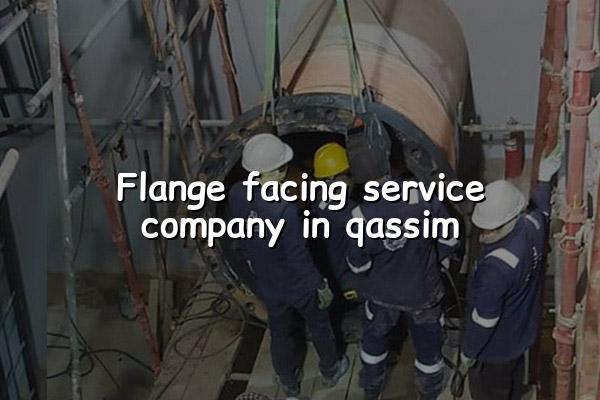
Flange facing service company in Qassim support is what you need when a gasket seat has gone out of true, a face is pitted, or a line won’t seal after maintenance. We help you get the joint back to a proper sealing surface so you can move ahead with hydrotesting, commissioning or restart work without guesswork.
In our work across Saudi Arabia and the wider Middle East, flange problems usually show up during shutdowns, tie-ins and pump or vessel maintenance. We bring the right machining approach to site, which matters when the line is large, the equipment is fixed in place, or the schedule simply won’t tolerate repeated dismantling.
Why flange facing service company in Qassim matters for sealing performance
A flange face that is scratched, warped or uneven doesn’t just look poor. It can affect gasket compression, leak tightness and the consistency of your assembly torque. That is why maintenance teams in Qassim, Buraidah and nearby industrial zones call for on-site flange facing instead of trying to make a damaged joint work with a stronger bolt load. The fix should be on the face, not forced through the bolts.
What we look at before we cut
We start with the condition of the flange, the access around the joint and the nature of the sealing surface. Raised face, flat face and other common flange arrangements all need a different approach. If the line has been exposed to corrosion, heat, vibration or poor dismantling practice, we also check whether the damage is localised or spread across the full contact area.
Why onsite machining saves time on real jobs
For many plant teams, the issue is not only surface quality. It is access. Bringing a spool to a workshop can mean lifting risk, alignment errors and extra downtime. On-site flange facing keeps the work where the system already sits, which is especially useful on pipelines, skids, heat exchangers, vessels and package units that are difficult to remove from service.
- Inspect the joint — we review flange condition, bolt pattern, access and any signs of leakage or damage before machining starts.
- Measure the sealing face — our team checks flatness, surface condition and the practical area that needs to be restored.
- Set up the machine properly — accurate alignment matters, because a poor setup can create a second problem while fixing the first.
- Machine the face and verify the result — the final surface is checked so the joint can be reassembled with confidence.
- Useful when a flange leaks after gasket replacement and the face still won’t seal.
- Better than repeated tightening that can distort bolts and stress studs.
- Helps during shutdowns where the line must return to service with less rework.
- Fits plant work in oil & gas, petrochemical, power and manufacturing sites.
Common flange facing situations and what they usually need
| Situation | Typical issue | What flange facing helps restore |
|---|---|---|
| Leak after gasket change | The face still has scratches or uneven wear | Cleaner sealing contact for the new gasket |
| Shutdown repair on fixed equipment | Spool removal would take too long | On-site correction without major dismantling |
| Corrosion or pitting on the face | Damage breaks the sealing line | A more uniform mating surface |
| Misalignment from previous maintenance | Joint load is uneven during reassembly | A face that supports better gasket compression |
How the right flange facing method protects the rest of the job
Good flange facing is not only about removing metal. It is about keeping the joint usable without creating new problems around it. That means protecting adjacent machinery, keeping swarf under control, and working in a way that suits the site’s permit system and shutdown sequence. On industrial sites in Saudi Arabia, that discipline matters because one loose step can affect several trades at once.
Where this shows up most often
We see the need most often on cooling water lines, process piping, compressor skids, pump connections, exchanger nozzles and other places where a leak will slow the whole plant. When a flange is part of a critical loop, you do not want a temporary fix that forces another shutdown next week. You want the joint prepared correctly the first time.
Built for shutdown pressure
Our site team understands how maintenance windows work. The real job is to fit into the sequence, complete the machining cleanly and leave the crew with a flange that can be reassembled with less drama.
What a maintenance manager should ask before booking flange facing
Start with the flange size, material and the kind of service the line carries. A water line and a hydrocarbon line may both need machining, but the risk picture is different, so the work planning is different too. You should also know whether the face problem is isolated, whether the joint has been over-torqued, and whether other damage is hiding around the bore or bolt holes.
It also helps to know what must happen after the job. If the line is going into pressure testing, commissioning or a controlled restart, the face preparation has to support that sequence, not slow it down. That is where a site-focused team saves time, because we think about the whole return-to-service chain, not just the cut.
- Confirm the flange type and approximate size before the crew arrives.
- Share whether the joint is for water, steam, oil, gas or another process duty.
- Tell us if the item is fixed plant, a skid or a removable spool.
- Let the team know if flange facing must fit into a shutdown or test sequence.
Where flange facing sits alongside other Mayon site services
Flange facing often sits next to hydrotesting, bolt torquing, cold cutting, flange weld testing and commissioning work. That mix matters because the face you machine has to support the rest of the mechanical sequence. If a line has to be tested after maintenance, the quality of the joint preparation can influence how smoothly that next step goes.
For plant teams in Qassim and across Saudi Arabia, it is useful to work with one company that can handle both the machining side and the associated mechanical tasks. It reduces handover gaps. It also gives you one team that understands the plant’s condition, the sequence of work and the pressure behind the schedule.
One job, many connected tasks
We often support shutdown work where flange facing, inspection and mechanical testing need to happen in a single maintenance window. That’s the practical way to keep the line moving.
How Mayon Industrial Services Can Help
We support flange facing as part of broader mechanical and inspection work for industrial plants in Saudi Arabia, India and the Middle East. Our team can come to site with the right approach for shutdowns, repairs and reassembly work, and we can also support the related calibration, testing and maintenance tasks that often sit around the same job. If your line needs a true sealing surface, talk to us and we’ll help you plan the next step.
Call +91 99447 80844 (India) or +966 59 633 8012 (Saudi Arabia), email services@mayonservices.com, or message us on WhatsApp.
Frequently Asked Questions
Maintenance teams usually ask for it when a flange won’t seal after gasket replacement, when corrosion has damaged the face, or when a shutdown job reveals uneven seating. We often see it on process piping, pump connections and skid-mounted equipment. If the joint is critical, getting the face right is the safer move.
Yes, in many cases it can. That is one of the main reasons plant teams call for on-site machining. If the access, clearance and safety conditions are suitable, field flange facing avoids extra lifting and shop transport.
Scratches, corrosion, pitting, uneven wear and damage from poor dismantling are common. Sometimes the face looks fine at first glance, but the joint still leaks because the sealing area is no longer true. That is usually discovered during maintenance or pressure testing.
Yes. A corrected flange face supports better gasket seating and reduces avoidable leakage during testing or startup. It is a practical step when the line has to return to service cleanly after maintenance.
We do. Flange facing often sits alongside bolt torquing, hydrotesting, inspection and other mechanical tasks during a shutdown window. That combined approach helps reduce handovers and keeps the sequence moving.
Ready to restore a flange face you can trust?
If the joint has to seal properly, the surface has to be right. Speak with our team and we’ll help you plan the work around your maintenance window.
Contact Mayon