
Flange Weld Testing Service Company in Al Hasa
Field-ready flange weld checks for plant teams who need dependable weld integrity verification in Al Hasa and nearby industrial sites.
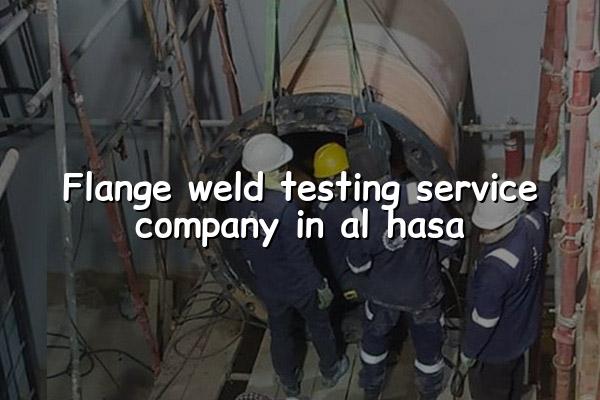
Flange weld testing service company in Al Hasa support helps you catch weld defects, leakage risks, and fit-up issues before a line is pressurised. If your team is preparing a shutdown tie-in, a new skid, or a piping repair, you need testing that gives a clear yes or no on integrity.
We work with oil and gas, petrochemical, power, and industrial maintenance teams across Saudi Arabia and the wider Middle East. In Al Hasa, that often means tight schedules, remote sites, and plant rooms where the last thing you want is a flange joint that has to be reopened after commissioning.
What flange weld testing needs to cover in Al Hasa
For flange joints, the test plan should match the service condition, the pipe size, and the risk level of the line. We look at weld appearance, dimensional fit, alignment, and the surrounding piping condition, then we support the job with the right non-destructive testing or pressure-related checks as required by the scope. When a client asks for a flange weld testing service company in Al Hasa, they usually want one thing first: confidence that the joint can stay closed under real operating load.
Where the trouble usually starts
Most flange problems begin long before the test stage. Bad bolt-up, a mismatch between flange faces, poor tack welds, pipe stress, or rushed fabrication can all leave a joint looking acceptable while hiding a leak path. On site, we often see repeat issues around pump skids, header lines, utility piping, and modified tie-ins where the work was done around live plant constraints.
Why testing is better before startup
Testing before startup costs less than reopening a line after a fault. That sounds obvious, but teams still end up learning it the hard way when a gasket fails or a weld defect shows up during hydrotest. A proper check lets the maintenance manager, QA lead, and contractor all sign off on the same facts instead of arguing over what “looked fine” during fabrication.
- Review the joint details — confirm the flange rating, material, weld procedure, and service condition before anyone starts testing.
- Inspect the fit-up — check face alignment, root gap, tack quality, and any visible distortion around the weld zone.
- Apply the right test method — select visual inspection, NDT, or pressure-related checks based on the line duty and shutdown plan.
- Document the result — record the findings clearly so the client has a usable handover record for commissioning and maintenance files.
- Verify flange welds before hydrotesting or reinstatement.
- Spot leakage risks caused by misalignment or face damage.
- Support shutdown and turnaround work without guessing on joint quality.
- Keep documentation clear for QA, maintenance, and commissioning teams.
Common flange weld testing checks and what they tell you
| Check | What it shows | Typical use |
|---|---|---|
| Visual inspection | Surface defects, poor profile, weld inconsistency, and obvious fit-up errors | First pass on every flange weld before deeper testing |
| Dye penetrant testing | Surface-breaking cracks and pinhole-type defects on suitable materials | Useful where the weld surface is accessible and clean |
| Dimensional verification | Face alignment, squareness, and basic assembly tolerance issues | Critical for lines where gasket sealing is sensitive |
| Hydrotest support | Pressure retention and joint behaviour under controlled test conditions | Common for piping systems before handover or restart |
How the right testing approach protects the whole line
A flange weld is only one joint, but it can hold up an entire system. If the joint fails after hydrotesting, the delay spreads to reinstatement, flushing, commissioning, and sometimes downstream equipment. That is why industrial clients in Saudi Arabia usually ask for a service partner who can coordinate testing, inspection, and documentation with minimal friction on site.
What good handover looks like
You should get a clear record of what was checked, what was found, and what action was taken. In a project environment, that record matters as much as the actual test because it helps your QA file, contractor close-out, and future maintenance planning. We keep the language straightforward so your team can use it without rewriting half the report.
Why clients call before commissioning
They want fewer surprises on startup, clearer accountability between fabrication and mechanical completion, and a practical way to verify weld quality on flange joints that matter most. That is especially true on remote plant sites where access, weather, and shutdown windows are all limited.
Practical checks we usually see on flange weld jobs
On a real job, the testing sequence often starts with a visual review, then moves into targeted inspection based on the weld condition and the client’s specification. If the joint is part of a pressure system, we coordinate the work so it fits the shutdown plan and does not slow the rest of the mechanical completion package. That approach matters in Al Hasa, where plant teams may be balancing fabrication, tie-ins, and restart pressure at the same time.
Short jobs still need discipline
A small spool piece can cause a lot of trouble if it is rushed. We’ve seen cases where a contractor wanted to close out a minor flange repair quickly, only for the joint to be rechecked because the weld profile or face alignment did not sit right. Small jobs deserve the same attention as bigger lines; the risk is just easier to underestimate.
Documentation should be usable, not decorative
If your report is full of vague language, it won’t help during a dispute or later maintenance review. Good testing records should tell the next engineer what was inspected, which method was used, and whether the joint was acceptable for service. That is simple, but it saves time every month after handover.
- Match the inspection method to the joint material and service pressure.
- Check flange faces for damage before blaming the weld alone.
- Coordinate with shutdown crews so testing doesn’t disrupt reinstatement.
- Keep photos and findings clear enough for QA handover.
How Mayon Industrial Services Can Help
We support flange weld testing with the same practical mindset we bring to calibration, mechanical services, inspection, and commissioning work. If your project needs weld verification, hydrotest support, or related field inspection in Al Hasa or elsewhere in Saudi Arabia, our team can help you plan the job cleanly and document it properly. We also bring the benefit of ISO/IEC 17025:2017 aligned calibration support when your instruments and test gear need traceable control.
Call +91 99447 80844 (India) or +966 59 633 8012 (Saudi Arabia), email services@mayonservices.com, or message us on WhatsApp.
Frequently Asked Questions
We check weld condition, joint fit-up, visible defects, and any signs that could affect sealing or pressure integrity. Depending on the job, that can include visual inspection, targeted NDT, and support during hydrotest preparation. The goal is to catch problems before the line goes back into service.
Yes, and that is one of the most common use cases. Shutdown work usually needs a practical sequence so inspection does not hold up reinstatement, bolt-up, or pressure testing. We work around the job plan so your team can keep the wider turnaround moving.
Yes. That is usually the smartest time to do it because defects are easier to correct before the system is pressurised. It also helps avoid repeat work if the joint fails during the test.
We see the most demand from oil and gas, petrochemical, power, manufacturing, and industrial maintenance teams. Any plant that depends on pressure piping, utility lines, or critical process tie-ins can benefit from it, especially when the schedule is tight and the cost of a leak is high.
Yes, we can support inspection, mechanical services, testing and commissioning, and calibration needs around the same project. That matters because a flange weld test is rarely the only task on site. Clients usually prefer one team that can work across the related scopes without creating extra coordination problems.
Need flange weld testing that fits your shutdown plan?
Send us the scope, and we’ll help you plan the inspection, testing, and handover around your actual site conditions.
Contact Mayon