
Flow Meter Calibration Company in Diriyah
Traceable flow meter testing for plants, utilities and project teams working in Diriyah and across Saudi Arabia.
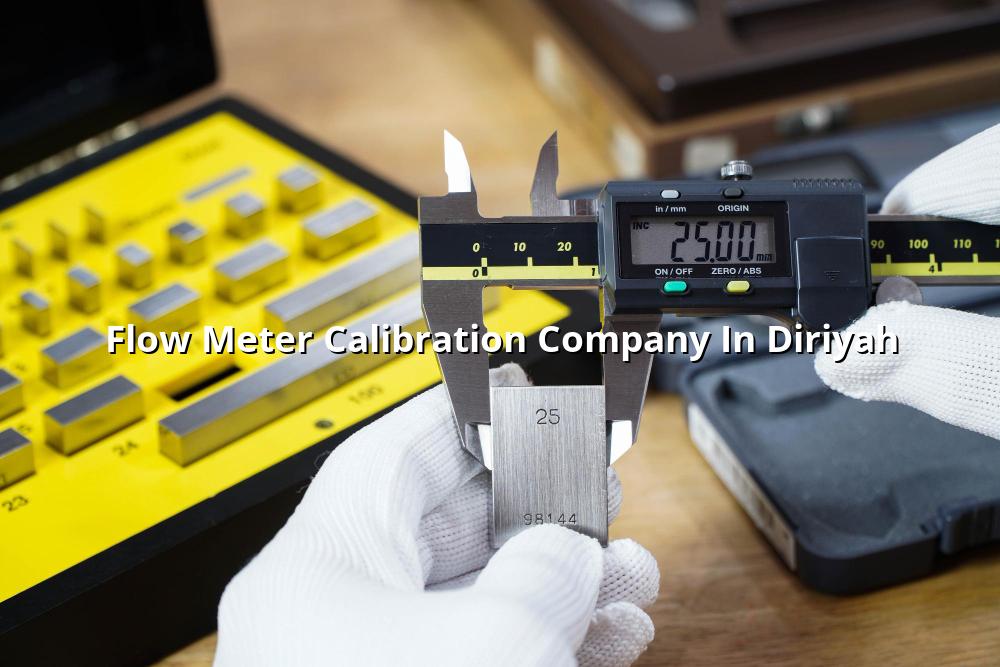
Flow meter calibration company in Diriyah teams usually call us when the numbers on a custody-transfer line, utility skid, or process loop stop matching what the plant expects. We help you verify the meter against traceable standards, so you can trust the readings before they affect billing, production, or batch control.
Our work supports operators, maintenance leads, and QA teams who need dependable calibration records, practical field support, and a supplier who understands Saudi industrial sites. From Diriyah projects to wider Riyadh-area operations, we bring ISO/IEC 17025:2017 discipline, mobile-lab support, and the kind of paperwork auditors actually read.
Flow Meter Calibration in Diriyah for Reliable Process Control
Flow meter calibration is not just a lab exercise. In oil and gas support systems, chilled-water plants, chemical dosing lines, and utility networks, a drifted meter can hide loss, trigger bad decisions, or make a good process look unstable. We handle electromagnetic, ultrasonic, turbine, positive displacement, and other common industrial flow instruments, then confirm the result with traceable methods suited to the service condition.
What we check before the meter goes back online
We start with the basics: meter type, nominal size, process medium, line condition, and the expected flow range. That sounds simple, yet half the errors we see come from the wrong range, poor installation, or a meter that was removed without enough context. If the instrument has been exposed to vibration, contaminated product, or unstable power, we look at those clues too.
Why plant teams ask for onsite support
Many Diriyah and Riyadh-area clients prefer onsite calibration because shutdown windows are short and the piping is not always easy to disturb. Our mobile calibration lab helps with field verification where practical, while our in-house laboratory handles instruments that need controlled conditions or more detailed testing. That mix saves time and keeps the process aligned with the site’s maintenance plan.
- Confirm the service history — we review the meter tag, previous certificate, and the reason for calibration before any test begins.
- Inspect the installation — straight lengths, grounding, orientation, and visible damage are checked so the result reflects real operating conditions.
- Test across the useful range — readings are compared at points that matter to the process, not just at one comfortable value.
- Record as-found and as-left data — you see the condition on arrival, the adjustments made, and the final verified result.
- Use a calibration interval tied to your process risk, not just a fixed habit.
- Keep the meter tag, range, and serial number visible for every audit trail.
- Ask for as-found results when product loss, drift, or control issues appear.
- Plan the job around isolation, bypass, and re-commissioning needs.
Common Flow Meter Checks and Where They Fit Best
| Meter Type | Typical Use | What We Verify |
|---|---|---|
| Electromagnetic | Water, utilities, process liquids | Signal stability, installation condition, output accuracy |
| Ultrasonic | Large lines, retrofit sites, clean fluids | Transducer position, path reading, flow consistency |
| Turbine | Cleaner liquids, metering skids | Mechanical condition, repeatability, pulse output |
| Positive displacement | Viscous fluids, custody-style measurement | Displacement response, leakage signs, consistency across flow points |
Why ISO/IEC 17025 Traceability Matters for Flow Meters
When a meter supports production or commercial transfer, traceability is not decoration. It gives your team a defensible record of how the result was obtained, which instruments were used, and how the reading compares with known standards. That matters in Saudi Arabia, where industrial teams often work with strict internal QA systems and external audits.
What the certificate should show
A good calibration certificate should identify the meter clearly, show the test conditions, list the measured points, and state the result in a way your maintenance and QA people can follow. If the meter was adjusted, that should be visible. If it was found outside tolerance, that should be visible too. Hidden edits help nobody.
Practical Support for Plants and Utilities
We often work around live plant constraints, permit systems, and short access windows. That includes water systems, HVAC circuits, process skids, and utility networks where flow readings influence day-to-day decisions. Our approach keeps the job simple for your site team and clear for your records.
Signs Your Flow Meter Needs Calibration Now
Reading drift
If two shifts report different totals from the same line, the meter may be drifting, the installation may be disturbed, or the process conditions may have changed enough to matter.
Maintenance intervention
Any work that involves pipe opening, transducer movement, electronics replacement, or valve rearrangement is a good reason to test the meter again before release.
Audit or handover
Before a project handover, a shutdown closeout, or a QA review, a fresh certificate saves arguments later. That is especially true for metering tied to consumption or batch control.
How Mayon Industrial Services Can Help
We support flow meter calibration with ISO/IEC 17025:2017 discipline, onsite field capability, and a temperature-controlled in-house laboratory when the instrument needs closer control. If your project in Diriyah, Riyadh, or elsewhere in Saudi Arabia also involves commissioning, pressure testing, electrical checks, or mechanical work, we can line up the right service team instead of sending you from one vendor to another.
Call +91 99447 80844 (India) or +966 59 633 8012 (Saudi Arabia), email services@mayonservices.com, or message us on WhatsApp.
Frequently Asked Questions
If you need traceable results, clear certificates, and someone who can work around plant constraints, look for a provider with ISO/IEC 17025:2017 capability and field support. For Diriyah projects, the practical question is usually how fast the team can mobilize, how they handle onsite access, and whether they can support the meter type you actually use.
Yes, for many installations we can support onsite verification and calibration. That is often the better option for utilities, process lines, and systems that are hard to remove without affecting production. If the instrument needs a controlled environment, we can bring it into the lab instead.
We usually ask for the meter type, size, serial number, service medium, range, and the reason for calibration. If you have the previous certificate or maintenance note, send that too. It helps us plan the test points and spot any change in condition before the job begins.
Yes. That record is useful when you want to know whether the meter was already off before adjustment or repair. It also gives QA and maintenance teams a cleaner history when they review the instrument later.
Honestly, the right interval depends on process risk, meter type, service fluid, and how much the reading affects production or billing. A meter on a critical transfer line deserves tighter control than one used for a general utility check. We normally recommend setting the interval with your QA or maintenance team, then reviewing it after the first few service cycles.
Ready to put your flow readings back on solid ground?
Send us the meter details, and we'll help you plan the right calibration path for your Diriyah or Saudi Arabia site.
Contact Mayon