
Gas Detector Calibration Company in Buqayq
Traceable gas detector checks for refinery, plant and maintenance teams working in Buqayq and the wider Eastern Province.
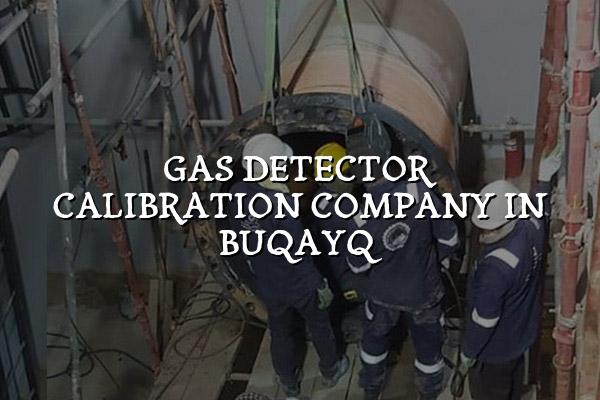
Gas detector calibration company in Buqayq support matters when your team depends on alarms that have to respond cleanly in live plant conditions. We help you keep fixed and portable gas detectors readable, traceable and ready for site use, so your maintenance logs and safety checks stay in order.
Buqayq sits close to high-risk oil and gas operations, and people there usually want practical service, not a long speech. Our work fits that need: onsite calibration where possible, controlled in-lab work when the instrument needs more care, and clear documentation that suits refinery, petrochemical and utility teams across Saudi Arabia and the wider Middle East.
What a Gas Detector Calibration Company in Buqayq Should Cover
When a gas detector is sent for calibration, you are not just checking a display. You are checking alarm response, sensor behaviour, battery condition, bump-test readiness, and whether the instrument is still giving you a trustworthy reading at the point you need it most. In refineries, tank farms, compressor stations and maintenance shutdowns, that matters because workers often rely on the instrument before they step into a confined or controlled area.
Fixed and portable detectors need different handling
Portable units usually move through daily use, exposure and transport, so their drift can show up in a very ordinary way: a detector that used to respond cleanly now needs longer to stabilise, or it fails a bump test without warning. Fixed detectors bring a different job. They sit in a process area, sometimes around flanges, loading bays or gas handling points, and their calibration needs to be checked against the installed condition, not just the unit on the bench.
Traceability is the part procurement teams ask about
Most QA and maintenance teams in Saudi Arabia want the same thing from a gas detector calibration company in Buqayq: traceable results, plain paperwork, and confidence that the work matches the plant's internal safety rules. That is where ISO/IEC 17025:2017 matters. It supports the discipline behind the measurement, and it gives your records a clean audit trail for internal reviews and contractor files.
- Receive and identify the instrument — we record the detector model, serial number and service condition before any work starts.
- Inspect the sensor and body — we check for damage, contamination, display issues, charging problems and worn accessories.
- Calibrate and verify response — the detector is checked against suitable reference conditions so the readings and alarms can be confirmed.
- Document the result — you get a report that supports your maintenance records, site file and audit trail.
- Ask for both calibration and bump-test support so your detector is ready for the next shift.
- Keep the detector model and gas type details together before booking service; it saves time on intake.
- Separate portable units from fixed systems when planning maintenance, since they rarely follow the same schedule.
- Use a provider that can work onsite in Buqayq or mobilize from Saudi Arabia for plant shutdown windows.
- Make sure the report is clear enough for HSE, QA and contractor files without extra explanation.
Common Gas Detector Service Needs in Buqayq
| Service need | Typical site use | What you should expect |
|---|---|---|
| Routine calibration | Portable detectors for daily plant work | Reading check, sensor response verification and a clear report |
| Bump-test support | Shift handover and pre-entry checks | Quick confirmation that the alarm and sensor respond as expected |
| Fixed detector verification | Process units, loading areas and utility zones | Assessment matched to installed condition and site safety needs |
| Control and documentation review | QA and HSE records | Traceable paperwork suitable for audits and internal maintenance logs |
Why Buqayq Sites Depend on Regular Gas Detector Checks
Gas detectors age in normal service. Sensors lose sensitivity, filters clog, batteries weaken and alarms can drift. In a place like Buqayq, where oil and gas activity demands a disciplined approach to safety, those small changes can turn into a real problem if nobody is watching them.
It helps shutdown teams and maintenance crews
We often see the same pattern: detectors are fine on paper, then a planned shutdown starts and the team discovers a unit that has not been checked properly for months. A current calibration record makes that conversation easier. It also helps contractors, plant supervisors and HSE staff work from the same facts instead of guessing from a worn label or an old sticker.
Built for refinery and industrial work
We support detectors used around petrochemical units, power facilities, construction sites, warehouses and cold-chain stores. If the instrument is sensitive, awkward to transport or better handled in a controlled environment, we can use our in-house laboratory and arrange pick-up and delivery when that makes sense for the job.
Onsite, Lab-Based, and Mobile Calibration Support
Not every detector needs the same path. Some instruments are best checked onsite inside Buqayq, especially when the plant wants a short service window and the detector can be handled without removing it from the area. Others are better brought to a controlled lab, where temperature and handling are steadier and the test setup stays tidy.
That mix is where Mayon Industrial Services fits well. We run a temperature-controlled in-house laboratory, and we also have a fully equipped mobile calibration lab for onsite work. For instruments that need special care, pick-up and delivery are available, which keeps the process practical for maintenance teams in Saudi Arabia and the Middle East.
What to Prepare Before Booking Calibration
Good booking details make the work smoother. If you send the detector model, gas type, quantity, site location and any special handling notes, the job starts cleaner and the report comes back aligned with what your team actually needs. That is especially useful for shutdown work, where several departments are waiting on the same instrument set.
For mixed fleets, we also recommend separating detectors by use case: portable personal protection units, process-area fixed units, and any special instruments kept for confined-space permits. The paperwork is easier to manage that way, and nobody ends up using the wrong certificate in the wrong folder.
- List the detector model numbers and serial numbers before pickup or onsite service.
- Note the gases being monitored, especially if the site uses multiple sensor types.
- Flag any units that have failed a recent bump test or shown unstable readings.
- Tell us if the detectors are part of a permit-to-work or confined-space procedure.
How Mayon Industrial Services Can Help
We support gas detector calibration through our ISO/IEC 17025:2017 calibration work, plus the kind of site support plants actually use: onsite service, mobile calibration, and controlled lab handling when the detector needs more care. Our team also works across mechanical services, inspection, electrical testing and commissioning, so if your shutdown plan includes more than one discipline, we can keep the conversation in one place.
For Buqayq and the wider Saudi industrial belt, that means fewer handoffs and cleaner records. If you need gas detector checks for fixed or portable units, start with us and we’ll help you map the next step.
Call +91 99447 80844 (India) or +966 59 633 8012 (Saudi Arabia), email services@mayonservices.com, or message us on WhatsApp.
Frequently Asked Questions
Honestly, the best fit is usually the company that can give you traceable calibration, a clear report and support that matches your site schedule. For Buqayq, that often means a provider with onsite capability and the option to handle instruments in a controlled lab when needed. We work that way for industrial clients across Saudi Arabia.
Yes, onsite work is often the easiest option for active industrial sites. It reduces transport handling and helps maintenance teams keep the detector within the plant workflow. If the unit needs special handling or a more controlled setup, we can move it to our lab path instead.
You should get a service record that identifies the instrument, the work carried out and the result. For QA and HSE use, that record needs to be easy to file and clear enough for audits or contractor reviews. We keep the paperwork practical so your team can use it without extra chasing.
That depends on the detector type, the gas service, the site procedure and how hard the unit works in the field. Many plants use a mix of routine bump tests, scheduled calibration and pre-entry checks. The safest route is to follow your site procedure and keep the calibration record current.
Yes, we support both. Portable units usually need careful intake, response verification and return to service, while fixed systems need a service approach that fits the installed location and plant conditions. If you have a mixed fleet, we can help you plan it in a way that keeps the records tidy.
Ready to put your detector records in order?
If your team needs calibration support in Buqayq, we can help you sort the next step with practical service and clear documentation.
Contact Mayon
For plant teams in Buqayq, gas detector calibration is one of those jobs that seems small until the day you need the instrument to behave properly. Keep the checks current, keep the records clean, and choose a team that understands industrial work in Saudi Arabia. That is the standard we try to bring to every job.