
Gas Detector Calibration Company in Dammam
Calibrate fixed and portable gas detectors for safer operations, better traceability and cleaner audit records in Dammam and across Saudi industrial sites.
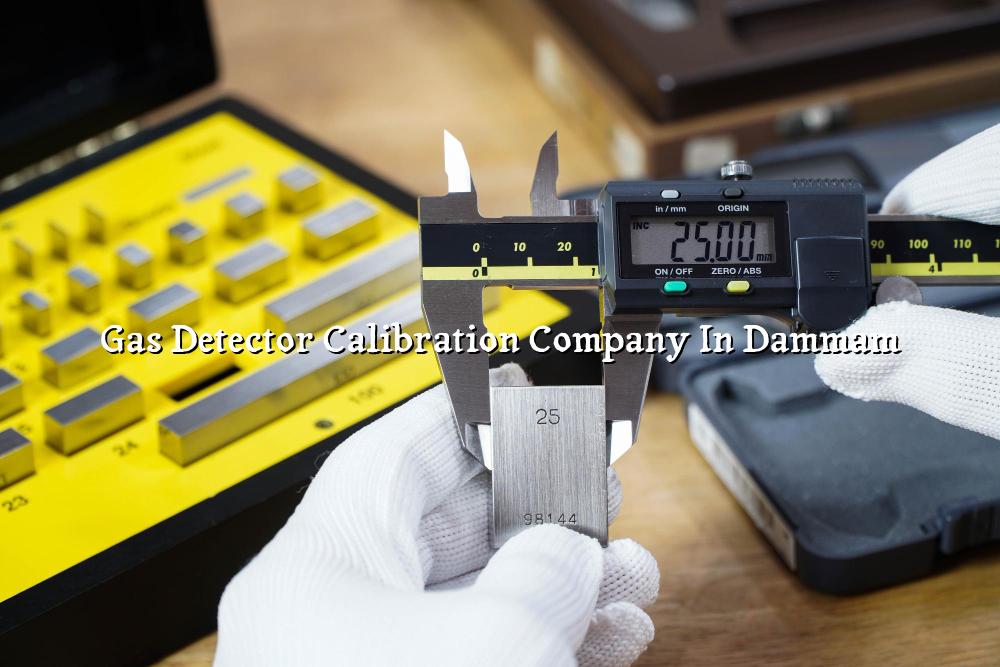
Gas detector calibration company in Dammam is the right search when your plant needs alarms that actually respond the way they should. We help you verify sensor response, zero and span settings, and documentation so your gas monitoring system supports real safety decisions.
In Dammam Industrial City 2 and nearby Saudi industrial zones, we see this need most often in oil & gas, petrochemical, power and maintenance shutdown work. Our team supports fixed detectors and portable units with ISO/IEC 17025:2017 traceability, onsite visits and in-house service when equipment needs controlled handling.
What a gas detector calibration company in Dammam should cover
A proper gas detector calibration company in Dammam should do more than press a few buttons and print a sheet. For industrial sites, the work needs to cover detector response, alarm actuation, sensor condition, test gas handling and a report that your maintenance or HSE team can stand behind during audits and internal checks.
Portable units and fixed systems need different handling
Portable detectors are often used by technicians during confined-space work, shutdowns and entry permits, so we check them with a practical field mindset. Fixed systems, on the other hand, are tied to plant protection, so the calibration approach has to respect line conditions, sensor location, access limits and the way alarms are connected to control systems.
Traceability matters in Saudi industry
In Saudi Arabia, many sites ask for records that line up with ISO/IEC 17025:2017 expectations because they need clean audit trails. We keep the work focused on the measurement chain, the instrument identity and the observed response, which is what maintenance managers usually need when they're reviewing gas safety records after a turnaround or inspection round.
- Identify the detector type — confirm the gas, range and whether it is portable, fixed or multi-channel.
- Check the condition first — look at the housing, filters, sensors, battery status and visible contamination before any test gas is introduced.
- Apply the right test method — use the correct gas mix, flow arrangement and response check for the detector model.
- Verify alarms and outputs — confirm sounder, beacon, relay or control signals react as expected.
- Record the result clearly — keep serial number, date, readings, observations and pass or fail status in the report.
- Calibrate before shutdowns, hot work or confined-space entry campaigns.
- Match the calibration gas and procedure to the detector's sensing technology.
- Keep portable detectors in service with battery, sensor and bump-test checks.
- Review alarm thresholds against site procedures, not just the instrument screen.
- Ask for documentation that can be filed with maintenance and HSE records.
Gas detector calibration and testing comparison
| Service | Typical use | What it checks |
|---|---|---|
| Portable gas detector calibration | Technicians, permit work and field rounds | Response, alarms, zero and span |
| Fixed gas detector calibration | Plants, tank farms and process areas | Sensor response, outputs and alarm action |
| Bump test | Daily or pre-use verification | Basic sensor reaction to test gas |
| Full calibration | Planned maintenance and audit cycles | Measured response, records and traceability |
Why calibrated gas detection protects more than equipment
When a detector drifts, the problem is bigger than a bad reading. A late alarm can slow evacuation, complicate permit control or leave maintenance teams uncertain about entry conditions, and that's why plants in Dammam and across the GCC keep calibration on a serious schedule.
Use the report, not just the sticker
The sticker tells you the date. The report tells you what was checked, what responded and whether the device was suitable to return to service. That record helps QA, HSE and maintenance teams keep their own files tidy, especially when several contractors have worked on the same unit over time.
Built for plant realities
Gas detectors live around dust, humidity, heat, washdowns and frequent handling. We plan around those conditions, whether the equipment comes to our temperature-controlled lab or needs onsite attention through our mobile calibration setup.
How we handle gas detector calibration work
We keep the job practical. First, we identify the detector model, gas type and asset number. Then we decide whether onsite service is the right move or whether the unit should come to us for a more controlled check. That decision usually depends on access, special storage needs and how critical the instrument is to the plant line.
For larger facilities, especially where detectors are spread across process units, control rooms and utility areas, our mobile calibration lab helps reduce unnecessary movement. For sensitive instruments, our in-house setup gives a cleaner environment for testing, and if an item needs special handling, we can arrange pick-up and delivery.
- Book the scope — tell us the detector type, quantity and site location.
- Inspect the unit — confirm physical condition, labels and serial numbers.
- Calibrate and verify — test the response against the required gas and functional points.
- Hand over the record — share results so your team can file them with maintenance logs and audit documents.
- Suitable for shutdown support and routine maintenance rounds.
- Works for fixed systems in process plants and portable detectors used by field teams.
- Supports ISO/IEC 17025:2017 traceability expectations.
- Helps you keep HSE documentation aligned with actual instrument status.
How Mayon Industrial Services Can Help
We calibrate gas detectors as part of a wider industrial service set that includes calibration, inspection, mechanical work and onsite support for plants across Saudi Arabia. If your team needs fixed or portable gas detector checks in Dammam, we can plan the work around your maintenance window and your site's safety requirements.
Our ISO/IEC 17025:2017 compliant approach, mobile calibration lab and in-house laboratory give you practical options for the job. Call +91 99447 80844 (India) or +966 59 633 8012 (Saudi Arabia), email services@mayonservices.com, or message us on WhatsApp.
Frequently Asked Questions
Most plants follow their own maintenance and HSE schedule, and we work to that plan rather than forcing a one-size-fits-all rule. The real trigger is usually site policy, detector use, exposure conditions and any change in sensor behavior during checks.
Yes, we can handle both. Portable detectors are usually easier to move to the test point, while fixed units may need onsite access and coordination with operations so alarms, relays and control signals can be checked properly.
You get a report showing the instrument details, test observations and pass or fail result. That's the piece maintenance and HSE teams usually want for plant files, audits and internal verification records.
Yes. We support onsite work in Dammam and surrounding industrial areas, and we also use our mobile calibration lab where that makes the job easier. For instruments that need special handling, we can arrange pick-up and delivery.
Because it helps show that the calibration work was done in a controlled way with proper measurement discipline. For industrial sites, that gives more confidence in the result and in the paper trail that follows the instrument back to service.
Ready to get your gas detectors checked?
If your Dammam site needs reliable calibration records and practical onsite support, talk to our team and we'll plan the next step with you.
Contact Mayon