
Gas Detector Calibration Company in Mecca
Traceable calibration support for portable and fixed gas detectors used in plants, workshops and field operations around Mecca.
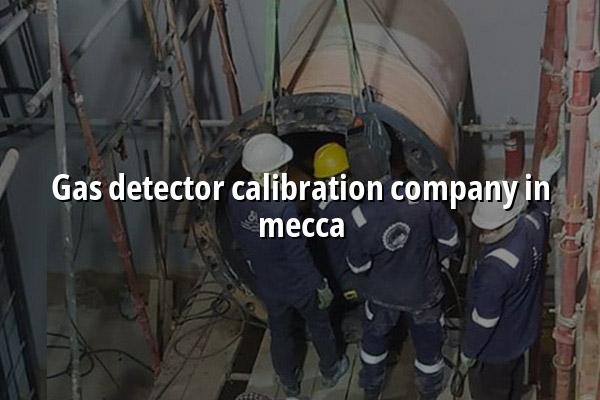
Gas detector calibration company in Mecca services matter when your team depends on accurate readings before anyone enters a confined space or starts hot work. If your alarm points drift, you want that caught early, not after a shift report or an incident review.
We support industrial users who need dependable gas detection for refineries, maintenance teams, utilities, workshops and contractors working around Mecca and the wider Western Province. Our work is built around traceability, practical field conditions and the kind of documentation HSE teams actually ask for.
What a gas detector calibration company in Mecca should deliver
When you search for a gas detector calibration company in Mecca, you're usually not looking for marketing copy. You need a team that can check instrument response, verify sensor behaviour, record results clearly and help you keep a clean calibration trail for audits and site permits. That applies to portable multi-gas detectors, single-gas units and fixed detection systems used across plant rooms, tank areas, loading zones and maintenance shutdowns.
Why calibration matters in real work
Gas detectors are exposed to dust, humidity, vibration and regular handling. In our experience, the biggest problems show up after long storage, battery neglect, sensor poisoning or repeated bump exposure without formal verification. A unit can still power up and still be wrong. That is why calibration and function checks need to sit inside your safety routine, not outside it.
What we check during service
We look at the instrument as a working safety device, not as a number on a label. That means checking zero and span response, confirming sensor output against known gas conditions where applicable, reviewing alarms and making sure the unit is fit for the task it is assigned to. For many site teams, the real need is simple: a detector that can be trusted when a confined-space permit is being signed.
- Receive and identify the device — we record the model, serial number, sensor type and current condition before any work starts.
- Inspect the unit — our team checks casing, buttons, display, filters, sampling path and any visible signs of wear or contamination.
- Calibrate and verify response — we use controlled methods to confirm the detector responds within the expected range for its application.
- Document the result — you get a clear service record so maintenance, HSE and procurement teams can track the instrument properly.
- Keep a log of bump tests and full calibration dates for every detector.
- Separate portable units used by contractors from fixed detectors in process areas.
- Check whether the sensor type matches the gas risk on your site, such as oxygen, H2S, CO or combustible gas.
- Remove units from service if the display is unstable, alarms are weak or the sample path is blocked.
Gas detector checks, service levels and common use cases
| Service item | Typical use | What the check tells you |
|---|---|---|
| Bump test | Daily or shift start verification | Confirms alarms and sensor response before entry work |
| Full calibration | Planned service interval | Checks response accuracy against controlled conditions |
| Functional inspection | Pre-use or incoming equipment review | Finds damage, contamination and sampling issues |
| Documentation review | Audit and permit support | Shows serial number traceability and service history |
How calibration supports permits, audits and safe access
For Mecca-based facilities, gas detection usually sits inside permit-to-work, confined-space entry and maintenance shutdown controls. That means the calibration record has to be clear enough for supervisors, safety officers and client auditors to review without guesswork. ISO/IEC 17025:2017 traceability is valuable here because it helps show the work was done under a controlled technical system, not just as a quick field check.
What your team should keep on file
We recommend storing calibration records, serial numbers, bump-test logs, sensor replacement notes and any deviation reports together. That habit saves time when a contractor changes, a detector is reassigned or an incident review asks for evidence from the last service cycle. It also helps during internal ISO 9001:2015 quality reviews where maintenance records are often the first thing inspected.
Built for plant environments
Mecca projects often involve mixed conditions: workshops, construction zones, storage yards and industrial support areas. We keep that in mind when we handle detectors that have been worn on-site, carried through dusty areas or stored between shutdown periods. The point is simple. If a detector is part of your control system, it should be treated like one.
Choosing the right service route for your detectors
Some detectors can be handled through our in-house laboratory workflow, while others are better suited to onsite support, especially when you have a mixed fleet across several work areas. If the instruments need special handling, we can arrange pick-up and delivery so they stay protected in transit. For teams with active operations, that makes it easier to keep safety checks moving without interrupting the whole site.
We also see a lot of variation in how companies use their detectors. A contractor may carry a unit daily, a maintenance supervisor may use one only during shutdowns and a plant may keep fixed systems running all year. The service plan should match that reality. One schedule for every instrument rarely works well in the field.
How Mayon Industrial Services Can Help
We support gas detector calibration alongside our broader calibration, inspection and industrial engineering work, so your safety instruments stay inside a proper maintenance system. If you also need mechanical support, onsite verification, lab setup or training for technicians, our team can handle that under one roof. For projects in Mecca, Dammam, Chennai and across the Middle East, we keep the work practical and traceable.
Call +91 99447 80844 (India) or +966 59 633 8012 (Saudi Arabia), email services@mayonservices.com, or message us on WhatsApp.
Frequently Asked Questions
You can work with Mayon Industrial Services for calibration support tied to industrial sites in Mecca and the wider Saudi market. We handle detectors as part of a controlled service process, with records that are easier for safety and maintenance teams to file. If you need onsite coordination or pick-up and delivery for protected handling, we can discuss that too.
That depends on the detector type, the gas risk and how harsh the working conditions are. Many sites pair regular bump tests with planned calibration intervals, then shorten those intervals if the instrument is exposed to dust, heat, heavy use or sensor contamination. Your site procedure and manufacturer instructions should both be part of the decision.
Yes, we support both portable instruments and fixed detection systems where the application fits our service scope. Portable units are often tied to confined-space entry and maintenance work, while fixed systems protect process areas and plant zones. The service approach is different for each, so we review the model and site use before starting.
You should keep the service record, serial number reference, calibration result and any notes about the unit's condition. Many safety teams also file bump-test logs and sensor replacement notes with the calibration report. That makes audits and permit checks much smoother later on.
Yes, we can arrange pick-up and delivery for instruments that need extra care or controlled handling. That's useful when you have sensitive equipment, a busy shutdown schedule or a mixed fleet that can't all be serviced the same way. We try to keep the process simple for site teams.
Our calibration work is set up for traceability and record keeping, which is what most audit teams need to see. We work under ISO/IEC 17025:2017 for calibration and testing competence and ISO 9001:2015 for quality management, so the paperwork is built with that mindset. If your site has a specific form or register, we can align the details with it.
Ready to keep your gas detection checks in order?
Send us your detector list, site location and service needs, and we'll help you plan the next step.
Contact Mayon