
Hydrotest Pressure Gauges Supplier in Uthmaniya
Source pressure gauges for hydrotesting with traceable calibration, practical support and service fit for field work in Uthmaniya.
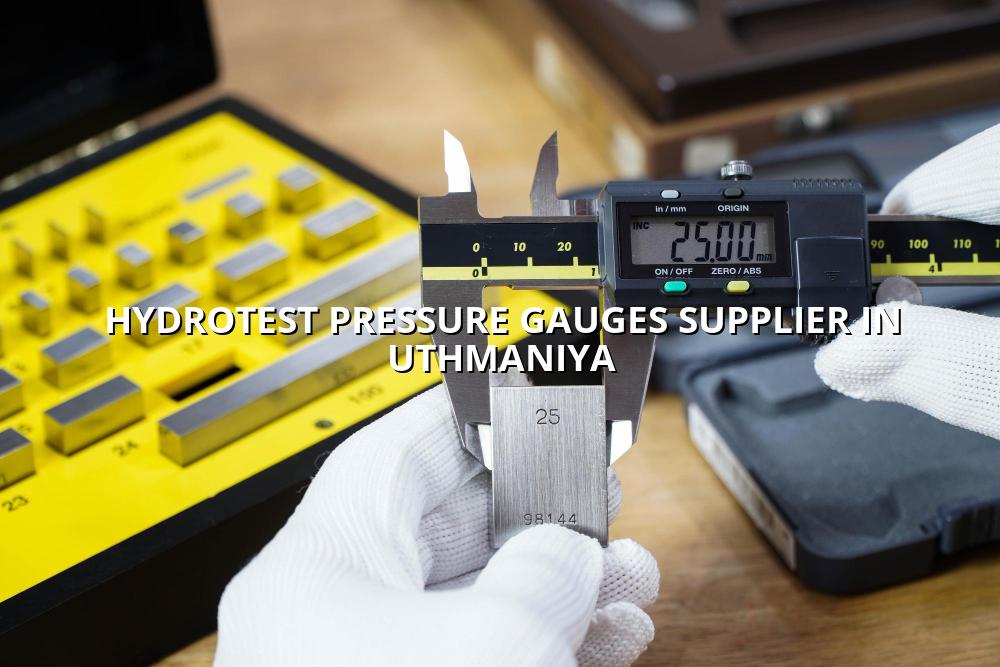
Hydrotest pressure gauges supplier in Uthmaniya is a search we hear from maintenance teams who need the right gauge, not just any gauge. You want clear readings, the right pressure range, and confidence that the instrument has traceable calibration before it goes near a pump skid, manifold or pressure test panel.
At Mayon Industrial Services, we support hydrotesting work across Saudi Arabia, India and the wider Middle East with calibrated pressure instruments, mobile-lab support and practical advice from people who know field conditions. Our team works with oil and gas crews, EPC contractors, shutdown planners and plant maintenance staff who need instruments that fit real job sites in Uthmaniya and nearby industrial areas.
Hydrotest Pressure Gauges Supplier in Uthmaniya for Real Site Work
Hydrotesting is unforgiving. If the gauge is poorly matched to the test range, has a worn dial, sticky pointer or missing calibration traceability, the whole setup becomes harder to trust. The teams that call us most often are testing piping, vessels, hoses, manifolds and pressure assemblies in oil and gas and petrochemical environments where the reading has to make sense to the operator and the QA file at the same time.
What a good hydrotest gauge should give you
A proper hydrotest gauge needs a readable scale, a range suited to the test, and a condition that lets the operator spot movement without guessing. In our experience, many field problems start when someone uses a gauge that looks fine from a distance but has no clear service history or sits too close to the upper limit during the test. That is risky, especially when pressure changes are small and the crew is trying to control a pump, isolate a section and watch for leaks.
Why calibration matters before the test starts
For hydrotesting, calibration is not paperwork for the shelf. It is the part that lets you defend the reading during handover, inspection or internal QA review. Mayon works to ISO/IEC 17025:2017 for calibration competence, and we also support customers who need traceability for quality systems aligned with ISO 9001:2015. In Saudi industrial work, that matters because the documentation often travels with the instrument between projects, subcontractors and plant teams.
- Confirm the test pressure — match the gauge range so the working point sits in the middle third of the dial where it is easiest to read.
- Check the process connection — make sure the thread, mounting style and sealing method match the hydrotest panel or manifold.
- Review the calibration status — verify the certificate details, serial number and due date before issue.
- Inspect the gauge body and pointer — look for cracked glass, bent needles, corrosion or any sign the gauge has been overloaded.
- Record it with the test pack — keep the instrument linked to the job file, so the reading can be traced later if a client asks.
- Choose a gauge range that keeps the test pressure away from the top end of the scale.
- Use one gauge for control and another for verification when the test package calls for it.
- Keep spare gauges on hand for shutdowns and field work in case a unit fails inspection.
- Ask for calibration traceability before the instrument leaves the store.
- For Uthmaniya and nearby sites, use a supplier who can support urgent field replacement without confusion.
Hydrotest Gauge Types and Where They Fit Best
| Gauge Type | Best Use | What to Check |
|---|---|---|
| Bourdon pressure gauge | General hydrotest panels and field manifolds | Range, dial size, connection size and calibration status |
| Glycerin-filled gauge | Vibration-prone pump skids and mobile test setups | Seal condition, pointer movement and case integrity |
| Dry gauge | Clean test benches and controlled shop environments | Needle stability, readability and storage condition |
| Test gauge with higher accuracy | QA sign-off, verification and critical acceptance checks | Accuracy class, certificate traceability and range match |
What Uthmaniya Buyers Usually Ask Before Ordering
Most procurement teams want to know three things: can the gauge survive the job, can it be traced back to a valid calibration record, and can the supplier support more than one location if the work shifts from workshop to field. For hydrotesting in Uthmaniya, those questions are sensible. Pressure work often moves between plant maintenance, shutdown activities and contractor handover, so the instrument has to be easy to issue, easy to document and easy to replace.
How we think about the job file
We advise customers to keep the gauge serial number, calibration reference and test purpose together in one record. That simple habit saves time during client audits, especially when the same gauge has been used on more than one line or skid. It also helps when the site team needs a quick review for a re-test after repair or commissioning.
Built for oil, gas and shutdown work
We support gauges and calibration services for pressure testing in refineries, petrochemical plants, utility installations and fabrication yards. If your crew is working with hydrotest pumps, manifolds, hoses or pressure comparators, the instrument choice should match the risk level, the test duration and the documentation requirement. That is where our practical experience helps.
How to Buy the Right Gauge Without Slowing the Job
Buying pressure gauges for hydrotesting should not turn into a paperwork chase. Start with the pressure range, then check the connection, dial size and mounting style. After that, look at the use case. A gauge for a fixed workshop bench is not always the best choice for a mobile test rig bouncing around plant roads in the Eastern Province or moving between contractor yards in the Middle East.
We also see a lot of trouble caused by over-specifying or under-specifying the instrument. If the gauge is too coarse, the operator cannot read the test point clearly. If it is too sensitive or too close to the maximum, the pointer sits where it is easy to misread. Good supply is about fit, not just stock.
Signs you should replace the gauge now
Replace it when the pointer no longer returns cleanly to zero, the lens is damaged, the body shows corrosion, or the last calibration record no longer covers the work in front of you. That is especially true for hydrotests tied to handover documentation. A cheap replacement is better than a failed reading during a shutdown.
- Identify the test package — confirm the line, vessel or hose system and the target pressure.
- Select the gauge family — choose a dry, filled or test gauge based on vibration, mobility and accuracy need.
- Verify traceability — match the serial number and calibration details to the job file.
- Issue and inspect — check the gauge again before it goes to the site crew.
- Use local support if your job is in Uthmaniya, Dammam or another Saudi industrial hub.
- Ask for calibration services that can handle field and lab work.
- Keep spare gauges for critical hydrotest schedules.
- Link each gauge to the test certificate and site record.
- Choose a supplier that also understands manifolds, comparators and hydrotest accessories.
How Mayon Industrial Services Can Help
We supply and support pressure gauges used in hydrotesting, along with calibration, pressure comparators and related field instruments. If your team in Uthmaniya needs a gauge checked, replaced or tied into a proper calibration record, we can help from our Saudi base through SMC Engineering Services / Sixfaces Maintenance Co and from our India head office as well.
We also support mobile calibration, pickup and delivery for instruments that need special handling, and we work across oil and gas, petrochemical, power and manufacturing sites. If you need a straight answer on gauge fit, documentation or service support, talk to us and we’ll sort the next step.
Call +91 99447 80844 (India) or +966 59 633 8012 (Saudi Arabia), email services@mayonservices.com, or message us on WhatsApp.
Frequently Asked Questions
Yes — you can source them through Mayon Industrial Services with support from our Saudi operation in Dammam Industrial City 2. We help customers choose the right range and connection, then tie the instrument back to a calibration record that fits the job file. That matters when the gauge is going straight into hydrotest work for plant or contractor teams.
Pick a range that puts the test pressure in the middle third of the scale. That makes the reading easier to see and helps the operator catch small changes without guessing. If the gauge is too near its top limit, the reading becomes harder to trust during the test.
In practice, yes, because the certificate gives you traceability for QA and handover. Our calibration services are aligned to ISO/IEC 17025:2017, so the instrument details can be linked back to a controlled process. That is useful for customers who need records for audits, shutdown packages or client inspection.
Yes, we support customers in Saudi Arabia from Dammam Industrial City 2 and in India from Medavakkam, Chennai. We also work with teams across the Middle East, especially where oil and gas, petrochemical and power work needs field-ready instruments. If the gauge has to move between workshop and site, we can plan for that.
Replace it before the test. A cracked lens, bent pointer or sticky movement can create a bad reading and hold up the job anyway. We advise keeping a spare gauge in the test kit for shutdowns and critical maintenance work, because a failed gauge at the wrong time is a small part that can stop a large package.
A Simple Check That Saves Trouble on Site
Before any hydrotest gauge goes out, we recommend a quick bench check: look at the zero position, inspect the body, confirm the range against the test plan and make sure the connection matches the panel or manifold. It sounds basic, but this is where many site delays start. Someone grabs a gauge from stores, assumes it is fine, and the job stops when the reading does not line up with the test requirement.
Why this works well in Uthmaniya
Uthmaniya jobs often sit inside larger project schedules, so there is not much patience for repeated setup errors. A clear gauge, a valid record and a supplier who knows hydrotest equipment can make the difference between a clean handover and a long afternoon of rework.
Built around field conditions
We see vibration, dust, transport knocks and rushed handovers all the time. That is why we focus on condition, calibration and the way the instrument will actually be used, not just the label on the dial. For hydrotesting, that practical view saves time and reduces avoidable calls later.
Ready to source the right hydrotest gauge?
Send us your pressure range, connection details and site location, and we’ll help you choose a gauge that fits the job and the record-keeping behind it.
Contact MayonFor hydrotest work, the best gauge is the one you can trust under pressure and trace in the file later. If you need a supplier who understands both the instrument and the job behind it, Mayon Industrial Services is ready to help.