
Hydrotesting Service Company in Buqayq
Onsite hydrotesting for Saudi industrial assets with traceable pressure control and practical field support.
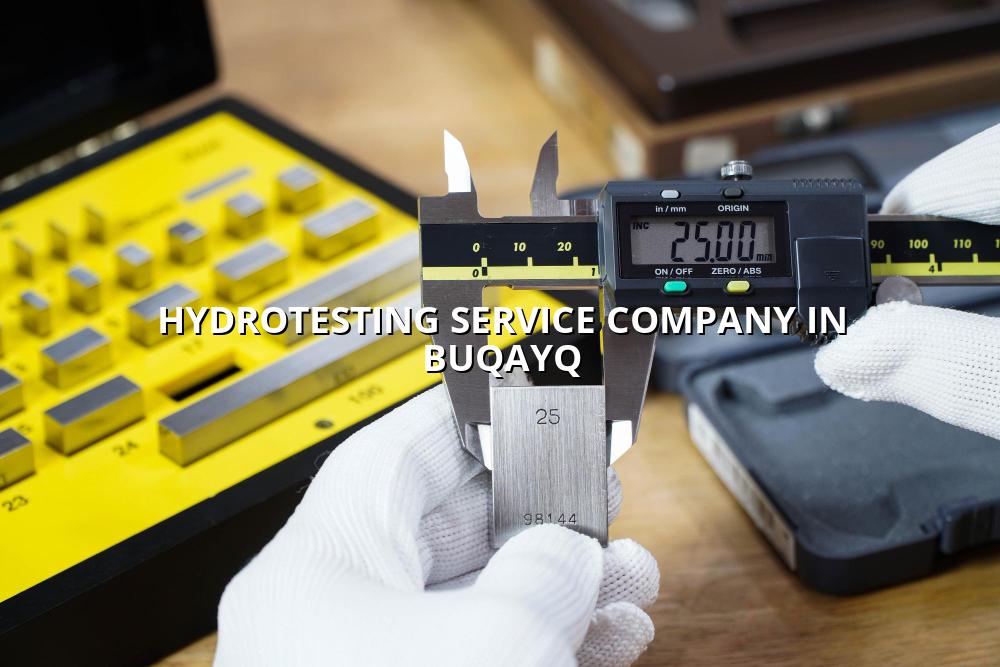
Hydrotesting service company in Buqayq searches usually come from people who need a pressure test done right, on site, with the paperwork to match. We help you verify that vessels, piping, hoses and related equipment can hold pressure safely before handover, recommissioning or maintenance close-out.
From Buqayq and the wider Eastern Province to industrial sites in Saudi Arabia and the Middle East, our team works with the kind of assets that keep oil & gas, petrochemical and utility plants moving. We bring mobile calibration support, practical mechanical experience and ISO/IEC 17025:2017 discipline to the job, so the test result is useful, traceable and easier for your QA and maintenance teams to trust.
Hydrotesting Service Company in Buqayq for Critical Assets
A hydrotesting service company in Buqayq needs more than a pump and a gauge. For pressure systems, the real work is in preparation, controlled pressurisation, leak observation, safe isolation and clear reporting. We see a lot of requests from plant teams who want proof that a line, manifold or vessel is fit to return to service after shutdown work. That proof has to stand up to internal review, contractor sign-off and, in many cases, customer or consultant scrutiny.
Where hydrotesting helps most
In Buqayq, the call is often about assets tied to oil & gas and petrochemical operations, but the same method is used for utility piping, skids, hydraulic circuits and fabricated assemblies. We also handle related pressure equipment such as hoses, manifolds, comparators and hydraulic components. If the item has a pressure boundary, you want the test procedure matched to the duty, the medium and the risk.
Why traceability matters on site
Pressure testing without traceable instruments can become a debate later. That is why our work links back to calibrated gauges, pressure controls and documented checks under an ISO/IEC 17025:2017 mindset. For many plants in Saudi Arabia, especially where shutdown windows are tight and contractor records are reviewed carefully, clean documentation makes the handover easier. It also helps when the same asset will be rechecked during future maintenance or audit activity.
- Review the asset and test scope — we confirm what is being tested, the medium to be used, access points and any isolation needs before a hose is connected.
- Prepare the system safely — the line or vessel is cleaned, vented, blinded or capped as required, then checked for obvious fit-up issues and weak points.
- Increase pressure in stages — pressure is raised in a controlled way, with holds at practical checkpoints so leaks, deformation or abnormal drop can be seen early.
- Record the result clearly — we document readings, observations and acceptance status so your team has a usable report for maintenance close-out and QA files.
- Use calibrated pressure gauges and control devices, not just whatever is available on the day.
- Match the test pressure and hold approach to the asset type and the client’s procedure.
- Confirm the boundaries, vents and drains before any pressure is applied.
- Keep the report simple enough for maintenance and QA teams to read without chasing the field crew.
- Plan for access, lifting and isolation work early, because pressure testing is rarely the only task on site.
Typical Hydrotesting Scope and Site Focus
| Asset type | Typical reason for test | What our team looks at |
|---|---|---|
| Process piping | Maintenance close-out or new installation verification | Joints, supports, isolation points and visible leakage |
| Pressure vessels | Pre-commissioning or repair validation | Shell condition, nozzles, fittings and safe filling method |
| Hydraulic hoses and manifolds | Service confirmation after repair or fabrication | Pressure rise behaviour, end connections and seepage |
| Skids and assemblies | Factory or site acceptance before handover | Component fit-up, instrumentation checks and report trail |
What Good Hydrotesting Looks Like on a Live Industrial Site
Good hydrotesting is steady, controlled and well documented. On a live site, that means the crew knows the sequence, the pressure source is stable, the gauges are readable and the area is managed so people stay clear. It sounds basic, but most bad outcomes start with rushed setup or unclear responsibility. In our experience, the best jobs are the ones where the site team and the test crew speak the same language before the first fill starts.
Keeping the test useful after the crew leaves
The report should tell the next person what was tested, under what conditions and what was found. If a defect showed up, the notes should point the maintenance team toward the right repair instead of leaving them to guess. For plants in Buqayq and Dammam Industrial City 2, that kind of clarity saves time during turnover, especially when the job sits between shutdown work, mechanical repair and final commissioning.
Field teams like predictable setup
When pressure testing is planned with the right boundary checks, clear access and calibrated instruments, the work moves with less friction. That matters on oil & gas, petrochemical and power projects where even a small delay can disrupt other trades. A clean test record also makes later inspections and maintenance reviews easier to defend.
How Mayon Industrial Services Can Help
We support hydrotesting with the wider work that usually sits around it: calibration of pressure instruments, mechanical isolation support, flange work, bolt torquing, testing and commissioning, and repair of related equipment. If you need an onsite crew in Buqayq or another Saudi industrial location, we can align the pressure test with your maintenance plan and the records your team expects. If the job needs special handling, our in-house laboratory and mobile calibration lab help keep the measurement side under control.
Call +91 99447 80844 (India) or +966 59 633 8012 (Saudi Arabia), email services@mayonservices.com, or message us on WhatsApp.
Frequently Asked Questions
We test pressure-retaining items such as piping, vessels, manifolds, hoses, skids and related fabricated assemblies. The exact scope depends on the asset, its operating duty and the site procedure. If the item has a pressure boundary, we look at how it behaves under controlled fill and hold conditions.
Yes, it’s commonly used before commissioning or return-to-service after maintenance. The test gives the site team evidence that the pressure boundary is holding as expected. In practice, it also flushes out issues with fittings, welds or seals before the plant is handed over.
We support onsite work and can also handle instruments or components that need pick-up and delivery under special conditions. For many industrial jobs, onsite testing is the practical option because the asset is too large or too fixed to move. Our mobile calibration lab helps with the measurement side when the site setting is the right place to work.
Because the test result is only as good as the instrument behind it. If the gauge or pressure control is off, the reading can mislead the crew and the client. We use calibration discipline so your pressure data is easier to trust during internal review, commissioning and later audits.
Yes. Buqayq is part of a very active industrial belt, and we regularly work around oil & gas, petrochemical and related maintenance scopes in Saudi Arabia. We can coordinate with your shutdown team, mechanical contractor or QA lead so the pressure test fits the job instead of slowing it down.
Ask for the test record, the identified asset scope, the instrument details and the acceptance or rejection status. If repairs were made, keep those records with the test file. That way your maintenance and QA teams have a proper trail if the same asset is reviewed again later.
Ready to put pressure testing on solid ground?
If you need hydrotesting support in Buqayq or elsewhere in Saudi Arabia, talk to our team and get the job planned with the right instruments, setup and records.
Contact Mayon