
Lifting Equipment Inspection Company in Hail
Independent lifting gear checks for Hail worksites, yards and maintenance teams that need clear reports and practical action.
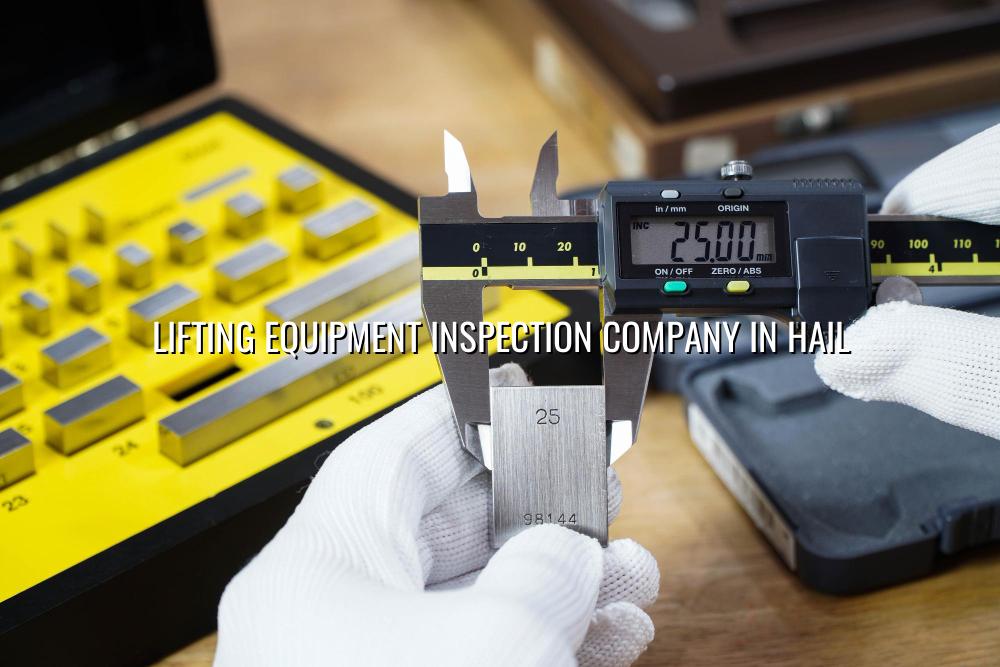
Lifting equipment inspection company in Hail is the phrase people usually search when a crane, sling, shackle or beam clamp has to stay compliant and keep work moving. If that's your case, this page shows how we inspect, test and document lifting gear so your team can make decisions with less guesswork.
We work with industrial yards, contractors and maintenance crews across Hail and the wider Saudi market, where lifting plans often sit beside pressure systems, fabrication work and shutdown schedules. Our focus is simple: check the equipment, record the findings clearly and help you act before a small defect becomes a site problem.
What a lifting equipment inspection company in Hail should check
A proper lifting inspection is more than a quick visual look. We check identification, SWL markings, wear, deformation, corrosion, cracks, hooks, pins, shackles, chain condition, wire rope damage and any signs that the item has been overloaded or stored badly. For many Hail sites, the real issue is mixed gear from different jobs, so traceability matters just as much as the physical condition.
Where Hail sites usually need the most attention
We often see lifting gear used around warehouses, fabrication areas, tank farms, maintenance bays and construction plots where dust, heat and repeated handling speed up wear. That is why we look closely at items used with cranes, hoists, forklifts and below-the-hook accessories, then separate safe items from those that need repair, retest or removal from service.
What makes the report useful to your team
A report should help a supervisor act, not sit in a folder. We write findings in a way that maintenance, QA and HSE teams can actually use, with clear pass or fail status, visible defects and practical notes on what to watch next. If your purchasing team needs evidence for auditors or internal approvals, that documentation trail saves a lot of back-and-forth.
- Identify each item — we record model, serial number, capacity marking and any existing tag so the inspection stays tied to the exact asset.
- Inspect the physical condition — we look for cracking, bent parts, missing pins, distorted hooks, corrosion and rope or chain damage.
- Check functional points — moving parts, locking features and safety latches are verified where the design allows it.
- Issue the result — you get a clear record that shows pass, fail or attention-needed items, plus the next action for your team.
- Keep lifting gear tagged by unique ID, not by job name alone.
- Remove bent hooks and visibly stretched slings from service at once.
- Separate everyday site gear from items used only for critical lifts.
- Recheck equipment after impact, overload suspicion or poor storage.
Lifting gear checks: common items and what we look for
| Equipment | Main Inspection Focus | Why It Matters |
|---|---|---|
| Wire ropes | Broken strands, corrosion, crushing and kinks | Damage here can change how the rope carries load |
| Shackles | Pin fit, throat opening, wear and deformation | Small distortion can affect safe connection |
| Slings | Cutting, heat damage, stitching and tag legibility | Textile and chain slings need clear condition records |
| Hooks and attachments | Latches, bends, twist, cracks and seating | These parts are often the first point of failure |
Why Hail contractors ask for third-party lifting inspection
Most teams ask for an external check when they need a neutral view, especially before a shutdown, project handover or internal audit. That matters in sectors like construction, manufacturing, logistics and oilfield support, where lifting gear may move between stores, workshops and field locations with little warning.
BS EN-based inspection discipline
We follow BS EN standards for lifting and inspection work, so the process stays anchored to accepted practice rather than site habit. If an item fails, we don't dress it up. We tell you why, mark the result clearly and leave the decision path simple for your supervisors.
Built for working sites, not office shelves
Our team understands the rough side of industrial work: dust, heat, rushed handovers and equipment that has already seen more than one project. That experience helps us spot practical problems early, especially on gear that has been stored outdoors or moved between subcontractors.
How Mayon Industrial Services Can Help
We support lifting equipment inspection with the same practical mindset we bring to calibration, mechanical work and industrial testing. If your site also needs related services such as NDT support, condition monitoring, torque work, testing and commissioning, or lab setup, we can coordinate those jobs around your shutdown or maintenance window.
Call +91 99447 80844 (India) or +966 59 633 8012 (Saudi Arabia), email services@mayonservices.com, or message us on WhatsApp.
Frequently Asked Questions
We check the condition and identification of lifting gear such as slings, shackles, hooks, chains and wire rope assemblies. The aim is to spot damage, distortion, corrosion and missing markings before the item goes back into service. If something looks unsafe, we flag it clearly so your team can remove it or send it for repair.
Yes, we can support onsite work for sites in Hail and across Saudi Arabia. That helps when equipment is already installed, hard to move, or part of a larger shutdown. If the item needs special handling or lab-style conditions, we can discuss the best approach with you.
Yes, the report is part of the job. We document what was checked, what condition the item was in and whether it passed or failed. That gives your HSE, QA and maintenance teams a record they can keep with asset files or site documentation.
We commonly see demand from construction, manufacturing, maintenance contractors, logistics yards and industrial support teams. In Saudi projects, lifting gear also turns up around petrochemical, power and fabrication work, where traceable checks are expected before equipment is used.
Take it out of use and keep it separate from approved gear. If the item can be repaired and rechecked, we can advise on the next step based on the defect. If not, it should stay removed so it doesn't get mixed back into service by mistake.
Ready to put your lifting gear back under control?
If you need a lifting equipment inspection company in Hail that speaks plainly and documents what matters, send us the details and we'll take it from there.
Contact MayonGood lifting inspections keep work moving, but they also keep people protected. If you need a partner in Hail who understands site pressure, documentation and practical engineering, Mayon Industrial Services is ready to help.