
Mass Instruments Calibration Company in Al Hasa
Traceable mass calibration for weighing systems, test weights and related instruments used in plants across Al Hasa, Saudi Arabia, and nearby industrial sites.
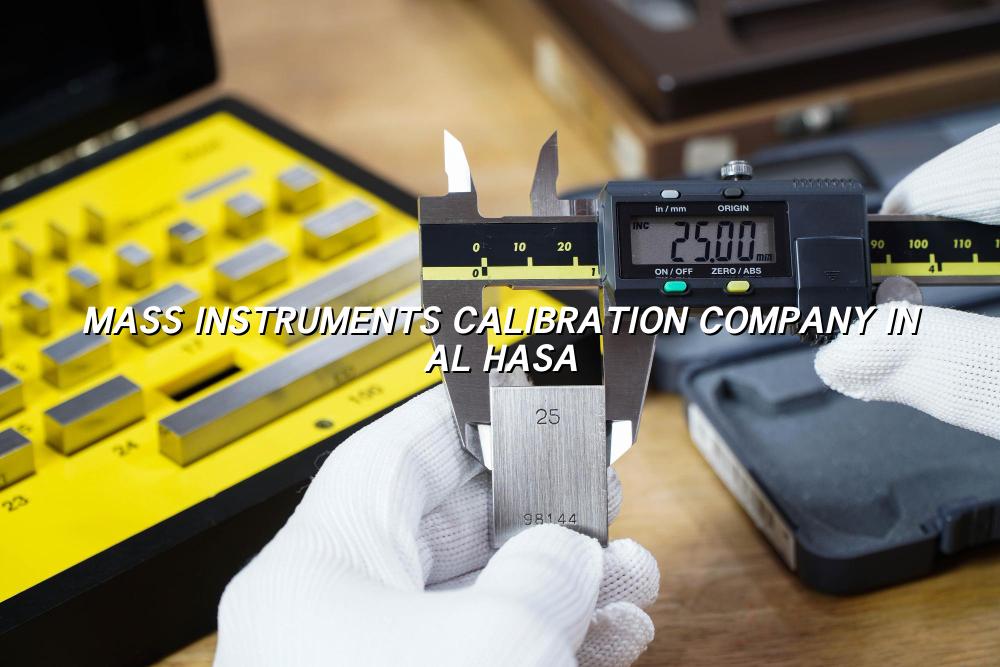
Mass instruments calibration company in Al Hasa support is usually needed when a plant wants clean weighing results, fewer batch errors, and proof that the numbers behind a filling line or process scale are trustworthy. That’s the practical gain here: stable measurements you can show to QA, production, and auditors without second-guessing the reading.
We work with industrial teams in Saudi Arabia, including Al Hasa and nearby Eastern Province sites, where load cells, platform scales, bench balances, and test weights all have to hold up under real production pressure. Our work follows ISO/IEC 17025:2017 practice, and we use an in-house lab plus mobile calibration support when the instrument can’t be moved easily.
Mass instruments calibration company in Al Hasa for plant accuracy
In a typical Al Hasa facility, mass instruments calibration can touch a lot more than one floor scale. You may be checking a truck scale at the gate, a bench balance in the QC room, test weights used for verification, or load cells tied into a batching process. If any one of those drifts, the problems show up fast: rejected batches, disputed deliveries, and operators trying to work around bad readings. Our team handles calibration for mass and volume instruments within a controlled traceability chain, and we keep the work aligned to the instrument’s real use, not just a paper checklist.
Where the biggest errors usually come from
Most of the calls we get are not because an instrument stopped working. They come after small issues start stacking up. Dust, vibration, poor leveling, overloading, worn load cells, and rough handling during cleaning can all shift a result just enough to matter. In food, pharma, and manufacturing sites around Al Hasa, even a small drift in a weighing device can change fill quantities or process decisions. That’s why we look at condition, installation, and use pattern before we calibrate.
What we check during the job
We don’t treat every mass instrument the same way. A balance in a laboratory needs careful repeatability checks. A floor scale in a warehouse needs verification under practical load points. A production scale tied to a batching process needs attention to the way operators actually use it. We can also support related systems through repair and maintenance work when the problem is mechanical rather than metrological, which saves time when a unit needs more than a simple calibration.
- Identify the instrument and use case — we confirm what the weighing device does, where it sits, and whether it stays in the plant or comes to the lab.
- Inspect the condition first — leveling, cleanliness, visibility of damage, and signs of overload are checked before any reading work starts.
- Apply suitable test points — we use the right weights or references for the capacity and operating range of the instrument.
- Record the results and deviations — readings are compared against the expected performance so your team can decide on use, adjustment, or repair.
- Keep the scale or balance on a stable surface with no rocking before booking calibration.
- Send the instrument with its accessories, pans, indicators, or remote display if they affect the reading.
- If your process uses fixed weighing points, tell us the normal load range so we can match the test setup.
- For outdoor or warehouse units in Al Hasa heat, note any temperature swings or airflow issues around the installation.
Reference table for mass calibration needs in Al Hasa
| Instrument type | Typical site use | Main calibration focus |
|---|---|---|
| Bench balance | QC labs, pharma, small production rooms | Repeatability, linearity, zero stability |
| Platform or floor scale | Warehouses, packing lines, dispatch areas | Corner performance, load response, zero check |
| Load cell system | Tanks, batching, process skids | Signal consistency, mounted condition, applied load behavior |
| Test weights | Verification and routine checks | Condition, identification, traceable reference use |
Why traceability matters for weighing work
For Saudi industrial sites, especially in oil and gas, petrochemical, cold-chain, and manufacturing settings, mass readings often sit inside quality records, dispatch papers, or batch sheets. If the reference chain is weak, the whole decision chain gets shaky. That’s why ISO/IEC 17025:2017 matters so much here: it supports a disciplined method, documented evidence, and a result you can trust when someone asks how the check was done.
Onsite or in-lab, depending on the instrument
Some units are better handled where they stand. Others are safer in our temperature-controlled lab, especially when the item needs careful handling or the environment is affecting the reading. We can also arrange pick-up and delivery when the instrument should be moved under special conditions. That helps keep the work practical for maintenance managers who don’t have time to stop a line for long.
Built for industrial weighing realities
We see the same pattern again and again: a scale works well in the morning, then readings drift after loading, cleaning, vibration, or a hot afternoon in the yard. A good calibration visit looks at all of that, not just the final number on the sheet. That’s the difference between a document and a useful result.
How Mayon Industrial Services Can Help
We support mass instruments calibration with the kind of field experience that matters in real plants, not just on paper. If your weighing system needs calibration, adjustment, inspection, or a related mechanical check, we can handle the job with ISO/IEC 17025:2017 discipline and the right site approach for Al Hasa operations. Our team also helps with condition monitoring, repair and maintenance, and lab setup when the weighing environment needs more than one service visit.
Call +91 99447 80844 (India) or +966 59 633 8012 (Saudi Arabia), email services@mayonservices.com, or message us on WhatsApp.
Frequently Asked Questions
Honestly, the best fit is the team that can handle your actual site conditions, not just the instrument itself. For industrial scales and balances in Al Hasa, you want traceable methods, proper testing equipment, and support for onsite or lab work depending on the unit. That’s what keeps the result useful for QA and production.
Yes, for many units we can. Onsite work is useful for floor scales, fixed load-cell setups, and instruments that are awkward to move. If the environment is affecting the result or the item needs special handling, we may suggest lab-based work instead.
We handle balances, platform scales, floor scales, load cell systems, and related test weights used for verification. If the weighing device is part of a broader process or maintenance issue, we can look at the mechanical condition as well. That helps avoid repeating the same fault after calibration.
Yes. Our calibration work is structured around ISO/IEC 17025:2017 practice, which is what many industrial clients in Saudi Arabia expect for traceability and confidence in the result. It’s especially useful when the instrument output sits inside quality records or customer-facing documentation.
Send the unit with accessories, adapters, pans, or remote displays that affect the reading. If possible, give us the normal load range and where the device is used, because that helps us match the test points to the real application. Clean, level equipment always gives a better starting point.
Ready to keep your weighing results under control?
If your plant in Al Hasa needs a calibration partner who understands industrial weighing, we’re ready to help with the right method and the right equipment.
Contact Mayon