
NDT Services Company in Hail
Site-ready NDT support for welds, piping, structures and equipment across Hail and the wider Northern Region.
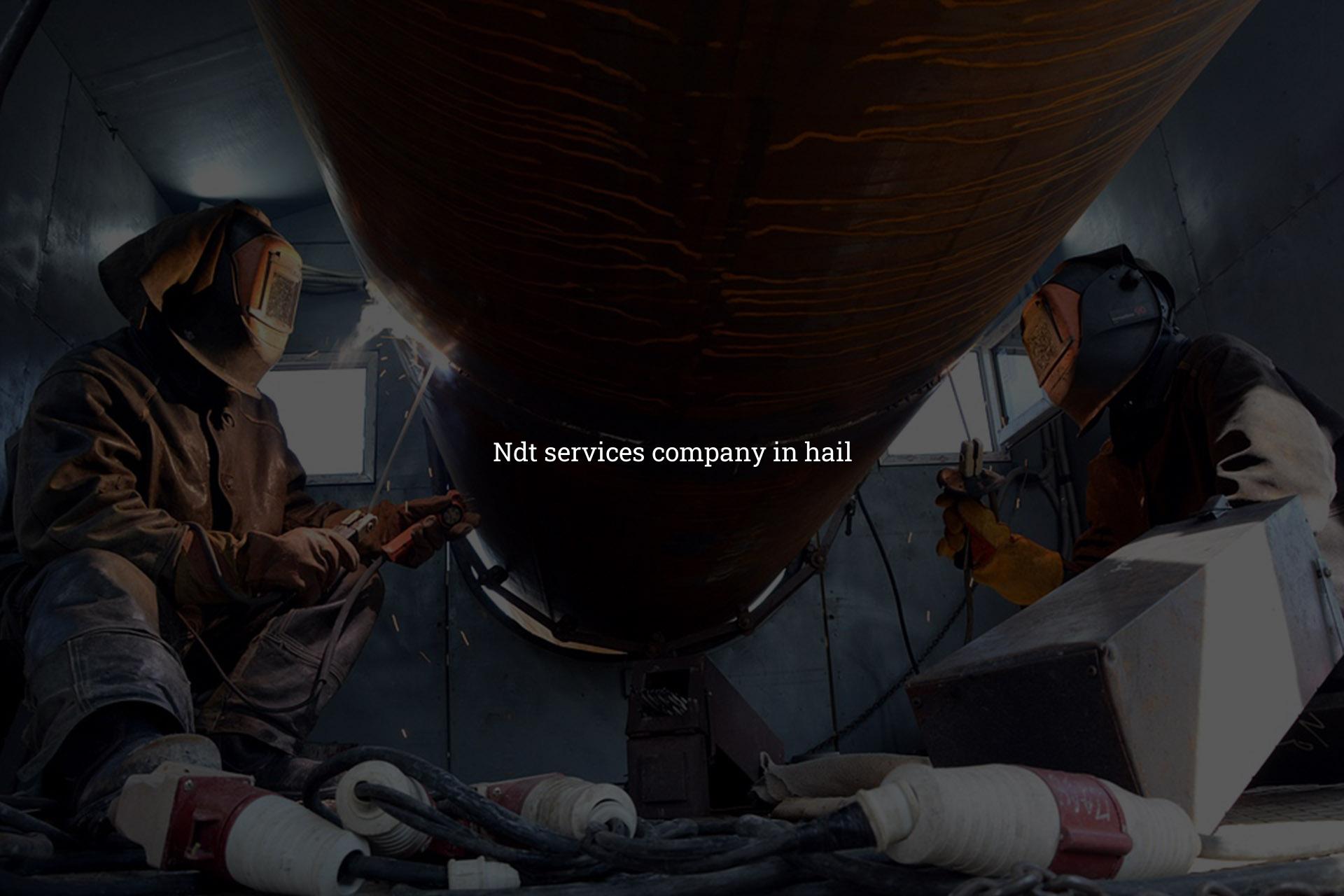
NDT services company in Hail is the right search when you need reliable inspection on welds, piping, tanks or structural steel without taking equipment out of service. We help you find defects early, document findings clearly, and keep maintenance decisions tied to evidence rather than guesswork.
Our team works with industrial clients who need practical testing on site, often in tight shutdown windows or under live project pressure. In Hail and across Saudi Arabia, that usually means clear reports, traceable methods and technicians who can handle the real conditions at a plant, yard or construction site.
What an NDT services company in Hail should cover
A proper NDT services company in Hail should give you more than a technician with a kit. You need a team that can match the method to the material, the defect type and the access you actually have on the job. For weld inspection, that may mean visual checks first, then ultrasonic testing, magnetic particle testing or dye penetrant work depending on the joint and the acceptance criteria you’re using.
Where these inspections are used
We see the strongest demand from oil and gas sites, fabrication yards, construction work, utilities and maintenance shutdowns. Hail has a mix of industrial activity and field work, so the job often shifts from neat workshop conditions to dusty, outdoor and high-temperature environments. That affects setup, surface prep and how your report should read.
Why method selection matters
Wrong method, wrong result. It sounds obvious, but people still ask for one test to cover everything. A surface crack on a plate is not the same as a lack-of-fusion indication inside a weld, and a coating can make the difference between a clean magnetic particle result and a wasted visit. The right sequence saves time and avoids rework.
- Review the job scope — we start with the material, joint type, thickness, access points and the standard or client specification you’re working to.
- Pick the right method — ultrasonic, magnetic particle, dye penetrant, visual testing or radiography is selected based on the defect you need to catch.
- Prepare the area — surface condition, lighting, couplant or contrast paint are checked so the inspection data is worth trusting.
- Test and document — findings are recorded clearly, with location, indication size where relevant, and a report you can use for repair or release decisions.
- Ask for traceable reporting that matches your weld map, tag numbers or asset list.
- Keep coating, rust and scale under control before testing begins.
- Use NDT on new fabrication and also during planned shutdowns, not just after a failure.
- Make sure the team can work around hot, dusty or crowded site conditions common in Saudi industrial areas.
Method comparison for inspection planning
| Method | Best for | Typical site use |
|---|---|---|
| Visual Testing | Surface condition, fit-up, weld profile and obvious defects | First pass on almost every job |
| Magnetic Particle Testing | Surface and near-surface cracks on ferromagnetic materials | Welds, brackets, lifting points and repairs |
| Dye Penetrant Testing | Surface-breaking flaws on many non-porous materials | Stainless steel, non-magnetic parts and fine surface checks |
| Ultrasonic Testing | Internal discontinuities, thickness checks and weld soundness | Pipe spools, plates, pressure parts and structural welds |
What you should expect from the report
A good inspection report should help your QA team, your maintenance lead and your client rep make the same decision. That means the findings must be tied to the item inspected, the location on the component and the method used. In industrial work around Hail, people often need this for repair approval, handover, or to decide whether a part stays in service.
How we keep it practical
We keep the language plain and the structure easy to read. If you hand the report to a superintendent or a shutdown planner, it should make sense without a long explanation. That matters when you’re dealing with piping spools, tank welds, beams, or lifting points that need a clean decision before the next stage starts.
Site work that fits the job
We support fabrication yards, maintenance shutdowns and field inspections where access is limited and schedules are tight. The aim is simple: find defects early, keep the evidence clear, and help you move the job forward with confidence.
NDT in Hail for welding, fabrication and maintenance
Hail projects often need inspection on weld repairs, skids, structural frames and field piping where the metal has already seen service. The problem is rarely the method alone; it’s the job conditions. Heat, wind, dust and surface contamination can all affect results if the inspection is rushed or the area is not prepared properly.
That’s why clients usually want one team that can arrive, assess the site, choose the method and keep the work moving. If the piece is ferromagnetic and the issue is likely at the surface, magnetic particle testing is a strong choice. If you’re checking internal integrity in a pipe or pressure part, ultrasonic testing may be the better fit. For certain weld or surface checks, dye penetrant still has a place because it can show fine surface-breaking indications very clearly.
We also see requests tied to commissioning and repair verification. A weld that looked fine after fabrication may still need recheck after grinding, rework or transport damage. That’s normal. Industrial work is full of second checks, and the second check is often the one that saves the client from a repeat shutdown.
- Use NDT before coating, where possible, so surface indications are easier to find.
- Keep a clear weld map or asset tag list ready for the inspection crew.
- Plan access for ladders, platforms or lifts before the team arrives.
- Separate acceptance decisions from inspection findings so the report stays objective.
Why teams ask for an NDT services company in Hail
Most buyers are not just looking for a test. They want a supplier who can fit into their quality system and produce records that stand up in audits, handover packs and client reviews. For that reason, the documents, marking and traceability matter almost as much as the inspection itself. If a project team is already working to ISO 9001:2015 controls or a site procedure, the inspection partner needs to stay aligned with that structure.
For lifting gear, structural items and many site inspection tasks, BS EN-based requirements may come into play. For electrical calibration or related measurement work, EURAMET CG-15 is a relevant reference where applicable. We don’t throw around standards just for show. We use the ones that match the task and the records the client actually needs.
That practical approach helps in Hail, and it helps even more when the work is linked to the wider Saudi industrial corridor. A report that reads well in the plant office in Hail should also make sense to the engineering team in Dammam, the client in the Eastern Province, or a contractor supporting a Middle East project package.
- Match the inspection method to the defect type, not the other way around.
- Ask for method statements and clear reporting before the job starts.
- Keep calibration and test equipment records with the inspection file.
- Choose a team that can work across fabrication, maintenance and commissioning jobs.
How Mayon Industrial Services Can Help
We support industrial clients with inspection, calibration, mechanical services and equipment verification when the work has to be done properly the first time. If your job in Hail needs NDT for welds, piping, lifting points or maintenance checks, our team can help with the method, the site setup and the reporting that follows.
Call +966 59 633 8012 (Saudi Arabia) or +91 99447 80844 (India), email services@mayonservices.com, or message us on WhatsApp.
Frequently Asked Questions
An NDT team checks materials and welds without damaging them. That usually means finding surface cracks, internal flaws, thickness loss or weld defects before they grow into a failure. On real jobs, this helps you decide whether the item can stay in service, needs repair, or should be replaced.
It depends on the weld and the defect you’re worried about. For surface flaws on magnetic materials, magnetic particle testing is common. For internal checks, ultrasonic testing is often the better fit. Many jobs start with visual testing and then move to a second method if the scope calls for it.
Yes. Most industrial inspection work is done on site because the equipment, welds and structures are easier to inspect where they stand. That’s useful for shutdowns, fabrication yards and field maintenance, especially when moving the item would cost more time than the inspection itself.
Yes, we prepare reports that are meant to be used by QA teams, maintenance teams and project managers. The key is clear identification, method details and findings that are easy to trace back to the item inspected. That keeps handover smoother and cuts down on back-and-forth later.
Oil and gas, petrochemical, power, construction, manufacturing and cold-chain projects all use NDT in different ways. In Hail, we often see requests tied to welding, structural inspection, repair verification and maintenance planning. Those are the jobs where finding a flaw early saves real effort later.
Ask what methods they can actually perform, how they document findings, and whether they understand industrial site conditions. If the team can work on site, read your scope properly and produce reports that match your QA process, that’s usually a good sign. Experience matters, but practical site discipline matters just as much.
Need inspection support you can trust?
If you need clear NDT results, site-ready reporting and a team that understands industrial work in Hail, we’re ready to help.
Contact MayonA good inspection partner should make your job easier, not heavier. If you need an NDT services company in Hail that can work cleanly on site and keep the paperwork useful, Mayon Industrial Services is ready to step in.