
Onsite Flow Meter Calibration Company in Hail
Traceable flow meter calibration at your Hail site, backed by mobile-lab support and practical reporting for plant teams.
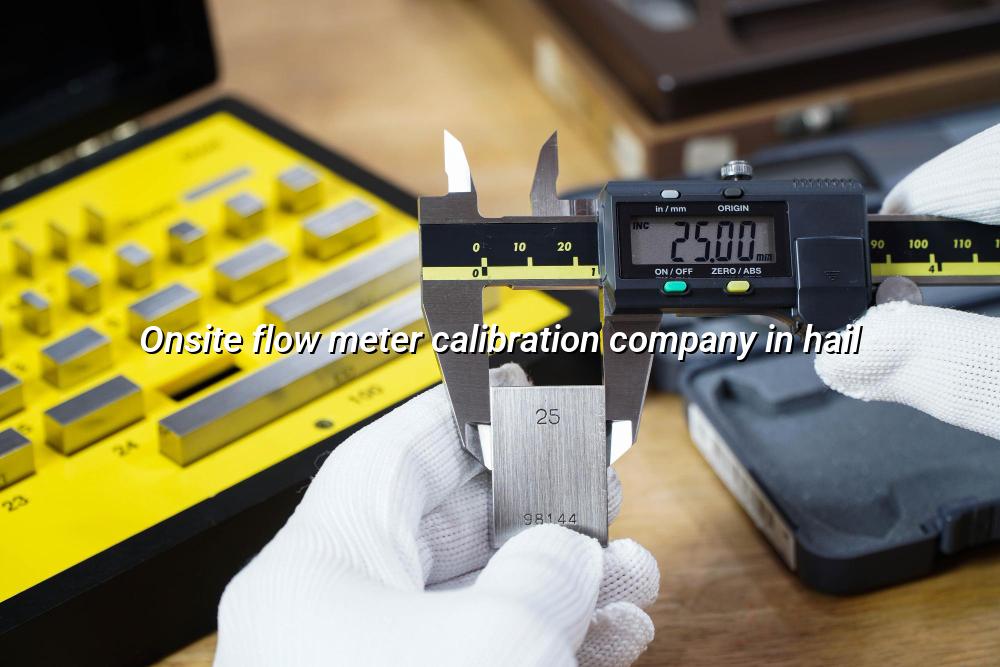
Onsite flow meter calibration company in Hail is the service you need when production, custody checks, or utility balancing can’t wait for instruments to be shipped away. We come to your plant, test the meter where it runs, and give you a clear, traceable result that fits real maintenance work.
That matters in Hail’s industrial plants, water systems, food lines, and utility sites where a small flow error can throw off batch control, pump performance, or energy records. Our team uses a mobile calibration lab and ISO/IEC 17025:2017 discipline, so your checks are handled with the same care we use in our temperature-controlled in-house lab.
What an onsite flow meter calibration company in Hail should deliver
When a plant manager asks for onsite flow meter calibration, the real need is usually simple: keep the process running and prove the meter is reading within a known range. That can mean checking a magnetic flow meter on a cooling loop, a turbine meter on a transfer line, or a DP-based flow instrument tied to a critical utility service. We plan the visit around the site, not the other way round.
Why onsite beats pulling the meter out
Many meters are installed in lines that are awkward to isolate, and some can’t be removed without upsetting the whole system. Onsite work lets us verify the meter in its actual operating position, review upstream and downstream conditions, and spot issues such as bad grounding, air entrainment, worn sensing parts, or a transmitter problem that looks like a mechanical fault. In Hail, where production teams often juggle planned shutdown windows tightly, that practical approach saves a lot of back-and-forth.
What we check during the visit
We look at the meter type, its range, the process fluid, installation layout, and the reason the reading matters. A meter used for batching doesn’t get judged the same way as one on a line feeding utilities or cooling water. The job is to build confidence in the number you’re relying on, not just to tick a box.
- Review the application — we confirm the meter type, line size, medium, and why the reading matters to your team.
- Inspect the installation — we check orientation, straight-run conditions, wiring, grounding, and any obvious site issues.
- Run the calibration check — we compare the meter response against the right reference setup for that service.
- Record the result — we document as-found data, adjustment notes if needed, and the final reading status.
- Hand over the report — your maintenance or QA team gets a practical record for internal control and audit use.
- Onsite checks reduce downtime on lines that are hard to isolate.
- Mobile-lab support suits meters that need controlled handling and careful transport.
- ISO/IEC 17025:2017 traceability supports QA teams asking for documented evidence.
- We can coordinate with shutdowns, maintenance windows, and vendor inspections.
- The same team can also handle related calibration, mechanical, and inspection tasks.
Onsite vs in-lab flow meter calibration for Hail facilities
| Service mode | Best fit | Typical site benefit |
|---|---|---|
| Onsite calibration | Installed meters on active or hard-to-isolate lines | Less disturbance to production and utility operations |
| In-lab calibration | Instruments that can be removed safely for controlled checks | Controlled environment and easier bench verification |
| Mobile-lab visit | Sites needing a mix of field work and portable reference support | Faster coordination for plant teams and maintenance crews |
| Pick-up and delivery | Special-condition instruments or sensitive devices | Safer handling when transport needs extra care |
How to keep flow data trustworthy after calibration
Flow meters don’t stay accurate by wishful thinking. They need the right installation, the right operating range, and a maintenance team that watches for drift. In Hail, that often means checking the meter after process changes, pump work, line cleaning, or any event that may have disturbed the flow profile.
Four habits that help
We usually tell clients to keep the meter tag visible, record the service condition before each calibration, note any alarms or unusual behaviour, and keep the latest report with the asset file. If the meter is used in a process tied to quality or inventory, that paper trail matters almost as much as the test itself.
Field realities we see often
Loose grounding, poor straight-run layout, partial pipe fill, air pockets, or a transmitter that has been left unverified for too long. None of these are exotic problems. They’re the sort of things that show up on working sites in Saudi Arabia, and they’re usually easier to correct once someone has documented the actual condition on the ground.
What happens before the technicians arrive
Good onsite work starts before the truck leaves. We ask for the meter type, tag number, line media, process temperature range, and any access notes that may affect the job. If the meter sits in a tight rack or a plant area with permit controls, we plan around that early instead of wasting your window on-site.
The same goes for documents. If your team has old certificates, P&IDs, or installation notes, those help us decide the right approach. In our experience, the first hour is usually where the real differences show up: a site with clean records moves faster, while a site with missing details often needs a little more discussion before the testing even begins.
Good sites usually share these details
Meter make and model, whether the line is liquid or gas, the operating pressure, and whether the meter has shown drift, fouling, or communication errors. Small details like these can change the test method completely. That’s why a quick call upfront is worth more than a long email chain after the crew arrives.
- Share meter tags and access notes before the visit.
- Keep previous certificates and asset records ready.
- Tell us if the line is liquid, gas, or mixed-service.
- Flag permits, shutdown limits, or confined access early.
Questions Hail plant teams ask before booking calibration
Usually it’s maintenance, QA, or operations teams that can’t afford to stop the line just to remove a meter. We see requests from manufacturing, utilities, food plants, and process sites where the flow reading affects production or records. If the meter is tied to a critical line, onsite work is often the better starting point.
Yes, many can. The exact method depends on the meter type, installation, and the process conditions around it. Onsite verification is often used when the meter is installed in a live system and the owner wants a practical check with less disruption.
Keep the certificate or report, the meter tag, the date of service, and any notes on adjustment or as-found condition. If your site works to a quality system, file the result with the asset history so audits and internal checks are easier later. That simple habit saves time when someone asks why a reading changed months down the line.
Yes. We support Saudi sites from Dammam Industrial City 2 through SMC Engineering Services / Sixfaces Maintenance Co, and we also serve clients in India and the wider Middle East. The mobile calibration lab helps us handle onsite work where transporting equipment would be inconvenient or risky.
Onsite testing can point to installation faults, transmitter issues, grounding problems, air entrainment, partial pipe fill, or wear in parts that influence the reading. Sometimes the meter is fine and the process conditions are the real issue. That’s why field observation matters as much as the test result itself.
How Mayon Industrial Services Can Help
If you need an onsite flow meter calibration company in Hail, we can support the meter, the installation, and the wider maintenance picture around it. Our team works across calibration, mechanical services, inspection, temperature-controlled laboratory work, and related plant support, so you’re not chasing separate vendors for every problem. That makes life easier for shutdown planners and QA teams.
Call +91 99447 80844 (India) or +966 59 633 8012 (Saudi Arabia), email services@mayonservices.com, or message us on WhatsApp.
Ready to check the meters that keep your site honest?
When flow readings start to matter, you want a team that can show up, test properly, and give you a clear result without wasting your plant time. Mayon Industrial Services is set up for that kind of work in Hail, across Saudi Arabia, and for clients who need practical industrial support in India and the Middle East.
Use the contact page to start the conversation, and we’ll help you plan the right onsite approach for your meter, your site, and your maintenance schedule.
Need flow meter checks at your Hail site?
Send your meter details, access notes, and process context, and we’ll help you map the next move.
Contact Mayon