
Onsite Flow Meter Calibration Company in Red Sea
Field calibration for flow measurement systems at ports, plants and marine-linked industrial sites across the Red Sea corridor.
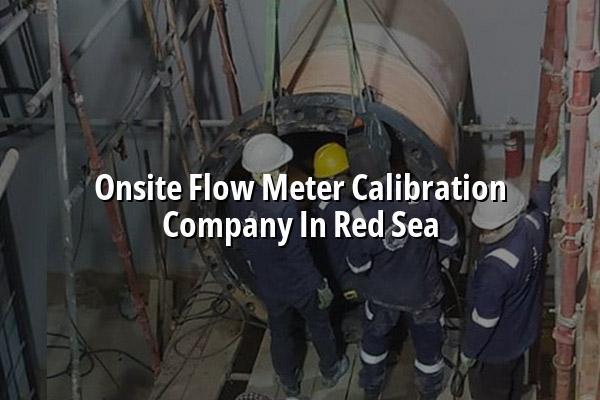
Onsite flow meter calibration company in Red Sea searches usually come from teams that can't afford guesswork in custody transfer, batching, dosing, or utility monitoring. We help you verify flow instruments where they're installed, so your readings stay tied to real operating conditions and traceable calibration records.
For plants near ports, desalination units, tank farms, and marine-connected facilities across the Red Sea corridor, a field visit often makes more sense than pulling every instrument out of service. Our mobile calibration lab and site-ready team are built for that kind of work, with the discipline expected under ISO/IEC 17025:2017 and the practical approach industrial sites need.
Onsite flow meter calibration company in Red Sea for real site conditions
Flow meters behave differently once they're installed in a live line. Pressure changes, air entrainment, valve position, pipe runs, vibration, temperature drift, and upstream disturbances all affect what you read at the control room. That is why Red Sea operators often ask for onsite calibration instead of sending the instrument away for a lab-only check. The point is simple: verify the meter in the condition that matters to production, quality, and reporting.
Where onsite flow calibration helps most
We usually see the strongest need in oil and gas terminals, petrochemical units, power plants, water systems, and food or cold-chain facilities handling process fluids. Some sites need verification after maintenance on pumps or manifolds. Others want periodic checks because a meter has started drifting, totals no longer match tank dips, or the QA team needs evidence before closing a deviation.
What we check during a field visit
Depending on the meter type and access, we can review installed conditions, compare readings against a reference arrangement, check signal output, inspect sensors and wiring, and confirm whether the installation itself is causing the error. We also look at records, seal status, and any process changes since the last calibration. In our experience, the issue is not always the meter. A poor run length, a dirty strainer, or a tired transmitter can create the problem.
- Site review — we confirm the process line, meter tag, range, fluid type, and access constraints before starting work.
- Safety and isolation — your team prepares the area, isolates the line if required, and clears the permits for the job.
- Reference check — we connect the appropriate field equipment and compare the meter response with known inputs or a suitable reference method.
- Adjustment and verification — if the result calls for it, we fine-tune the instrument, then repeat the checks to confirm stability.
- Field work reduces downtime for critical process lines.
- Mobile calibration is useful where instruments are fixed, oversized, or tied into production.
- Traceability matters for quality records, audits, and internal approvals.
- Red Sea plants often need support for ports, marine utilities, and export-linked operations.
- A site visit can expose installation faults that a bench test would miss.
Choosing the right onsite flow meter calibration approach
| Site situation | Typical focus | Why it matters |
|---|---|---|
| Custody transfer or billing line | Reading accuracy, repeatability, traceable records | Small errors can affect commercial reconciliation and audit questions. |
| Process line after maintenance | Signal check, installed condition, zero stability | Maintenance work can change alignment, wiring, or flow profile. |
| Utility or water service meter | Range check, drift review, instrument health | Utility totals must stay believable for planning and usage tracking. |
| Batching or dosing application | Response behavior, output consistency, setpoint comparison | Incorrect flow readings can affect product quality and waste control. |
Why Red Sea sites ask for traceable flow calibration
Industrial teams in Saudi Arabia and nearby Red Sea operations usually want more than a quick pass/fail note. They want the meter checked against a known reference chain, clear as-found and as-left results where applicable, and paperwork that stands up during internal reviews. That's especially common in oil and gas, power, and process manufacturing, where a meter feeds production numbers, utility accounts, or customer-facing reports.
Installed systems are not the same as bench tests
A meter can look fine on the bench and still misbehave in service because the pipe run is short, the fluid is aerated, or the sensor is mounted where vibration is constant. That's why we pay attention to the system around the meter, not just the unit itself. When needed, our team can also support related mechanical work, electrical testing, or repair and maintenance so the root cause gets handled, not just the symptom.
Onsite support with mobile lab capability
We can bring field-ready calibration support to operational sites across the Red Sea industrial belt, including locations tied to ports, marine logistics, and process plants that can't easily shut down. If the instrument needs special handling, pick-up and delivery are available for controlled in-lab work in our temperature-controlled facility.
What our onsite flow meter calibration company in Red Sea can handle
Installed verification
We work on meters already in service, which helps when line shutdowns are expensive or difficult to schedule.
Reference and signal checks
Depending on the meter and process, we inspect output, response, and any sign of drift against known inputs or a suitable field method.
Follow-up actions
If the result points to installation or maintenance issues, we can help you map the next steps through repair, alignment, or commissioning support.
How Mayon Industrial Services Can Help
We support Red Sea clients with onsite calibration, in-house calibration, mechanical services, inspection, and electrical testing when a flow issue is tied to the wider system. If you need meter verification on a live line, a mobile visit, or controlled handling through our lab, we can plan the work around your site conditions and records. Reach out and we will discuss the best route for your instrument and process.
Call +91 99447 80844 (India) or +966 59 633 8012 (Saudi Arabia), email services@mayonservices.com, or message us on WhatsApp.
Frequently Asked Questions
Yes. We handle onsite flow meter calibration for industrial sites where removing the meter would create too much downtime or where the installation needs to be checked in its real operating condition. The exact method depends on the meter type, the process fluid, and how much access we have around the line.
We often find installation issues, signal drift, dirty or disturbed flow paths, wiring faults, or wear that only shows up in service. Sometimes the meter itself is fine and the real issue is the process setup around it. That kind of check is exactly why field work is valuable.
We work within an ISO/IEC 17025:2017 compliant environment for calibration services, and that traceability mindset carries through our field jobs too. If a meter is better suited to controlled in-lab handling, we can manage that route through our temperature-controlled facility and mobile-lab workflow.
Oil and gas, petrochemical, power, water, manufacturing, and cold-chain operations are the most common. We also get calls from plants tied to ports, marine logistics, and utility networks where meter accuracy affects process control or commercial records. Those sites usually prefer field verification because shutting down a line is expensive.
Honestly, that happens a lot. If the trouble comes from vibration, alignment, pipe condition, or a maintenance change, we can look at the broader system and support the follow-up work through our mechanical, electrical, or repair teams. That saves time because you're not guessing where the fault started.
Ready to keep your flow readings trustworthy?
If you need a field visit in the Red Sea region, we'll help you plan the right calibration route and keep the paperwork straight.
Contact Mayon