
Onsite Flow Meter Calibration Company in Uthmaniya
Field calibration for custody, process and utility flow meters with traceable control, practical reporting and less downtime.
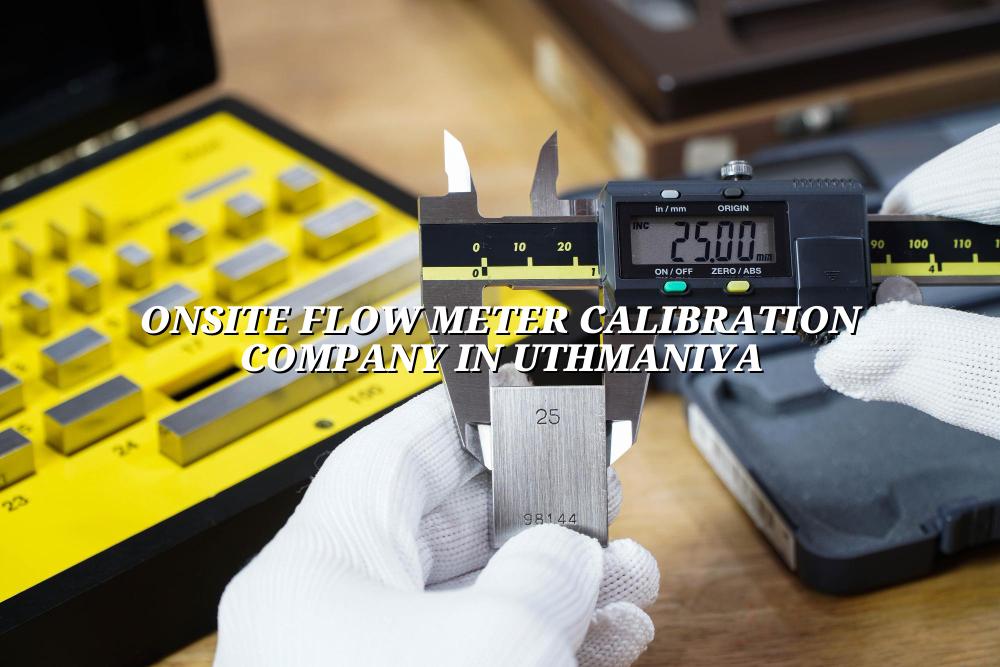
Onsite flow meter calibration company in Uthmaniya is usually the search people make when production can’t wait for instruments to be removed from the line. That’s exactly the problem we solve: we come to site, check the meter in place, and help you keep process data believable.
For oil and gas, utilities, process plants and facilities around Saudi Arabia and the wider Middle East, field verification matters because a meter that looks fine on paper can still drift under real operating conditions. Our team works with a mobile calibration lab, ISO/IEC 17025:2017 traceability and practical field procedures that fit shutdown windows, maintenance plans and QA requirements.
Onsite flow meter calibration company in Uthmaniya for real plant conditions
When clients ask for onsite flow meter calibration, they usually want one of three things: proof the meter is still reading within tolerance, a clean calibration record for audits, or a quick way to decide whether the meter can stay in service. We handle that with field checks, comparison methods where suitable, and instrument handling that respects the process environment instead of forcing it into a lab-only routine. Uthmaniya sites often deal with continuous flow, tight access, and limited downtime. That’s where onsite work saves a lot of disruption.
Why field calibration works better than removing every meter
Not every flow meter should be pulled from service. On a busy plant, removing a meter can mean extra isolation steps, reinstallation risk, and a second round of verification after the unit goes back in. Onsite service reduces that churn. It also gives your maintenance or instrumentation team a chance to see the meter under actual piping, temperature and operating constraints, which is often where problems show up first.
What our team checks during a site visit
We look at the meter’s condition, installation orientation, indication stability, and any signs of fouling, drift or signal noise. If the application allows it, we compare readings against a reference setup and document the result in a way your team can use for internal records. In our experience, the strongest value is not only the certificate. It’s the plain-language note that tells you whether the instrument needs adjustment, maintenance or re-test planning.
- Review the meter tag and service history — we confirm the meter type, range, location and the reason for calibration before work starts.
- Prepare the line or skid — your team isolates the meter if needed, and we make sure the site conditions are safe for the selected method.
- Set up the mobile calibration equipment — reference instruments and supporting tools are arranged for the meter class and application.
- Run the field check and record results — we capture readings, note deviations and document anything that affects repeatability.
- Hand over findings and next steps — you get practical feedback for maintenance, repair or scheduled replacement planning.
- Suitable for process, utility and service flow meters across industrial plants.
- Helps reduce downtime by avoiding unnecessary removal and reinstallation.
- Supports internal QA files with traceable field documentation.
- Works well for Saudi operations that need practical onsite support from a regional team.
Which flow meter check suits your application?
| Meter situation | Typical onsite method | What you gain |
|---|---|---|
| Stable process line with access for setup | Field comparison against a suitable reference | Quick decision on accuracy and serviceability |
| Meter showing drift or unstable readings | Inspection plus calibration check and diagnostics | Finds whether the issue is installation, wear or instrument error |
| Shutdown window is short | Mobile-lab supported onsite work | Less disruption to plant operations |
| Audit or QA record is needed | Documented traceable calibration result | Better support for ISO/IEC 17025-based internal control |
How we keep the job practical on a live site
Good onsite calibration is part measurement, part planning. The actual reading matters, of course, but the work also has to fit your plant rules, permit system and access limits. That’s why we stay focused on the method that makes sense for the meter and the site rather than forcing the same routine everywhere.
Common reasons plants call us
Some teams call after a routine inspection finds inconsistency in flow totals. Others want support before an internal audit, a shutdown, or a maintenance campaign tied to pumps, skids or transfer lines. We also get calls from managers who suspect the meter is not wrong all the time, just wrong at certain operating points. That kind of issue needs field judgment, not just a certificate.
What a strong field report should tell you
It should identify the meter, the site, the method used, the result and any observation that affects service. If the meter needs follow-up, the note should be direct enough for your maintenance team to act on without chasing extra clarification.
Simple things that make onsite calibration smoother
The smoothest visits usually happen when the plant team has already checked a few basics. It saves time and avoids confusion at the gate, at the rack and at the instrument location. A little preparation helps us focus on the meter instead of chasing missing details.
For Uthmaniya and nearby industrial sites, access control and permit coordination are often part of the challenge. If those steps are ready before the appointment, the work tends to move in a much steadier way.
- Share the meter tag, range and process line details in advance.
- Confirm isolation, bypass or shutdown steps with operations.
- Make space for the mobile calibration setup and safe access.
- Keep prior certificates or service records ready for comparison.
What happens if the meter needs more than calibration?
Sometimes the meter itself is only part of the story. A bad install, worn parts, air entrapment, dirty lines or signal instability can all affect the reading. If that happens, we can guide you toward repair and maintenance, inspection support or a follow-up plan that fits your shutdown window.
We also support connected plant work
Because our team handles mechanical services, condition monitoring and electrical testing too, we can keep the conversation practical when the issue sits around the meter rather than inside it. That helps maintenance leaders avoid bouncing between too many vendors for a single problem.
Typical follow-up paths
Depending on what we find, your next step may be repair, re-verification, replacement planning or a broader inspection of the process loop. We keep the discussion grounded in what the site actually needs.
How Mayon Industrial Services Can Help
We support flow meter work with onsite calibration, mobile lab capability and the kind of documentation industrial teams can actually use. If your meter sits in a plant, utility network, cold-chain line or process skid, we can help you decide whether it needs field verification, repair support or a planned in-lab check. Our team also handles related calibration, inspection, electrical testing and mechanical work, so you don’t have to split one issue across four vendors.
Call +91 99447 80844 (India) or +966 59 633 8012 (Saudi Arabia), email services@mayonservices.com, or message us on WhatsApp.
Frequently Asked Questions
Plants that can’t afford to remove meters from service are the main users. That includes oil and gas, petrochemical, utilities, manufacturing and facilities with critical process or utility lines. Onsite service lets the meter be checked where it works, which is often the best way to see real operating behaviour.
Yes, in many cases we can. The exact method depends on the meter type, the process arrangement and site safety rules. Some meters are better suited to field comparison or in-situ checks, while others may need a controlled removal or a follow-up lab verification.
We most often hear from oil and gas, petrochemical, power, manufacturing and cold-chain teams. Those sites tend to care about traceability, stable readings and minimal interruption. In practice, the need is often tied to maintenance shutdowns, audit preparation or a suspected drift in totals.
Have the meter tag, range, location and service history ready. If the line needs isolation, bypass or a permit, coordinate that with operations before the visit. Good access and clear paperwork make the visit smoother and help us focus on the meter instead of waiting around for approvals.
Yes, we document the work and provide findings that your team can file with internal QA records. Where the job calls for it, we keep the report aligned with traceable practice under ISO/IEC 17025:2017. The goal is a record that your maintenance and quality teams can actually use later.
Then we can talk through the next step with you. Depending on the issue, that may mean repair and maintenance, inspection support, or a scheduled re-check after the meter is serviced. We try to keep the decision practical so you don’t waste time guessing.
Ready to check your flow meter on site?
If you need a field team that understands industrial calibration, plant access and traceable documentation, we’re ready to help.
Contact Mayon