
Onsite Pipeline Hydrotesting Service Company in Turaif
Field hydrotesting for pipeline systems, skids and related pressure equipment with proper traceability for Saudi industrial work.
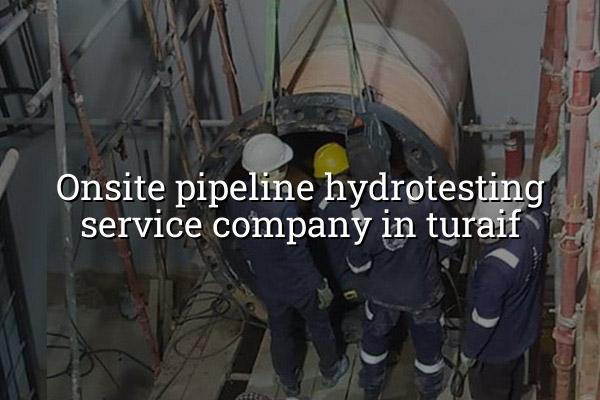
An onsite pipeline hydrotesting service company in Turaif should do more than bring a pump and a gauge. We help you verify pressure integrity, spot weak joints before start-up and keep the test record clean enough for client review, handover or internal QA. That matters when a line is feeding an industrial plant, a utility system or a package skid in Saudi conditions.
Our team works with field crews, QA managers and maintenance supervisors who need pressure testing done where the asset already stands. In Turaif and nearby northern Saudi project sites, that usually means tight schedules, limited shutdown windows and equipment that cannot be moved without risk. We bring the hydrotest setup to you and keep the process practical.
What an onsite pipeline hydrotesting service company in Turaif should deliver
For pipeline hydrotesting, the real job is simple to say and harder to do well: fill, vent, pressurise, hold, inspect and document without shortcuts. We see this most often on process lines, utility headers, short tie-ins, skids, spool pieces and fabricated assemblies that need proof of strength and leak tightness before commissioning. A proper field setup should use calibrated pressure instruments, controlled isolation and a test plan that matches the line size, material and service conditions.
Why field testing beats moving the asset
Many systems around Turaif are welded in place, connected to other equipment or supported on site foundations. Taking them apart just to test would add risk and delay. Onsite testing keeps the assembly in its real installation condition, which is useful when weld quality, gasket seating and flange alignment all matter. It also helps when you need client witnesses, contractor sign-off or a pressure test certificate tied to the actual location.
What we check before pressurising
We don’t start a hydrotest until the basic field checks are in place. That means line identification, test boundaries, vents, drains, blinds or spades where needed, and the right pressure instruments. For stainless or carbon steel pipelines, we also look at the surrounding arrangement so the crew can work safely and reach the test points without improvising on the day.
- Review the line and scope — we confirm the test segment, service, allowable pressure and the documents the client expects.
- Prepare the system — the line is isolated, vented, drained and fitted with the correct test accessories and calibrated gauges.
- Fill and raise pressure slowly — we bring the system up in controlled stages, watching for leaks, abnormal movement or trapped air.
- Hold, inspect and record — the crew checks joints, flanges and fittings during the hold period, then records the results for handover.
- Use calibrated pressure gauges and record numbers that match the test sheet.
- Keep vent points high and drains low so air does not hide in the line.
- Protect nearby instruments, valves and electrical items from water exposure before testing starts.
- Let one responsible person control the pressurisation pace and stop the test if anything shifts.
- Plan for witness points if your client, contractor or inspector needs to sign the record.
Hydrotesting checkpoints for field pipeline work
| Checkpoint | What it means on site | Why it matters |
|---|---|---|
| Isolation | Test section is separated from live equipment with proper blinds, spades or boundary valves. | Prevents damage to connected systems and keeps the test boundary clear. |
| Air removal | Vents are opened and the line is filled in a way that drives out trapped air. | Reduces false pressure movement and gives a steadier hold. |
| Instrument traceability | Pressure gauges and related devices are checked against valid calibration records. | Supports ISO/IEC 17025:2017 style traceability expectations for controlled work. |
| Leak observation | Flanges, fittings, welds and drains are watched during the hold period. | Confirms whether the assembly is ready for further commissioning steps. |
Why project teams in Turaif ask for onsite hydrotesting
Project teams usually want field testing because the pipeline is already installed, the workfront is limited and transport could create a new problem. In mining, power, industrial plant and utility jobs, a failed pressure boundary can affect more than one trade. Onsite hydrotesting helps you see the condition of the line in its final position, which is the only position that really counts.
Where it fits in the job sequence
Hydrotesting often sits near the end of fabrication or mechanical completion. It may follow flange tightening, weld inspection, flushing or related mechanical checks, and it often comes before commissioning. If your team also needs flange facing, bolt torquing, testing and commissioning or hydrotesting pumps on the same site, we can coordinate the work so the steps make sense instead of fighting each other.
Field setup that stays practical
Our crews are used to working around live projects, access limits and weather exposure. We bring the pressure testing gear, set the field layout and keep the test area organised so the client team can watch what matters. That helps on short shutdown windows and on remote Saudi sites where rework costs time you do not have.
Common problems we prevent during pipeline hydrotesting
Most pressure test problems are ordinary ones. Air left in the line, a weak gasket, a loose drain, the wrong gauge range or a rushed crew can spoil an otherwise good job. In our experience, the hardest part is not the pump work. It is the discipline to prepare the line properly and stop the team from skipping small steps that matter later.
That is why we keep the test process visible. We want the client, contractor and QA person to understand the boundary and the sequence. If a pipeline segment is built with mixed materials, has multiple flanged joints or includes small-bore branches, we take a slower approach and document each stage. It saves arguments after the test is complete.
What makes a clean handover record
A clean record usually includes the line identification, test medium, pressure values, observations and the final result. When the paperwork matches the actual field work, handover becomes easier. That matters to owners in Saudi Arabia who want a tidy file for internal review, as well as to contractors who need to close out mechanical completion without repeated queries.
- Define the boundaries — mark the exact section being tested and isolate everything outside it.
- Check the instruments — confirm the gauges and related devices are suitable for the target pressure range.
- Run the pressure hold — maintain the agreed test pressure while the line is watched for movement or seepage.
- Close out the file — compile results, site notes and any witness remarks for the job dossier.
- Keep spares ready for fittings, seals and gauge connections.
- Use a barrier around the test zone so water spray does not reach other crews.
- Make sure the test medium and disposal method fit the site rules.
- Confirm who signs the result before the crew starts pressurising.
When hydrotesting is part of a wider mechanical package
Many clients do not need hydrotesting alone. They need a mechanical package that includes flange work, cold cutting, bolt torquing and pressure test preparation. On some jobs, we also support generators, pumps, hydraulic equipment and hydrotest manifolds so the project team has one point of contact instead of chasing several vendors.
That approach helps when the site is busy and every delay affects the next trade. If the piping team finishes late, the hydrotest crew should not have to wait for another contractor to sort out basic accessories. We work with a practical site mindset and keep the handoff between fabrication, testing and commissioning as straight as we can.
How Mayon Industrial Services Can Help
We handle onsite pipeline hydrotesting, mechanical support and the test documentation that sits behind a clean handover. If your job in Turaif needs pressure testing as part of a broader package, our team can also help with flange work, bolt torquing, testing and commissioning, inspection and related field services. We work across Saudi Arabia, India and the Middle East with the same practical approach: arrive prepared, test properly and leave you with records you can use.
Call +91 99447 80844 (India) or +966 59 633 8012 (Saudi Arabia), email services@mayonservices.com, or message us on WhatsApp.
Frequently Asked Questions
We do, through Mayon Industrial Services and our Saudi operating partner network. The work is set up for field conditions, so the crew comes to the site with the pressure testing plan, instruments and support gear needed for the line being tested. That saves you from moving large assemblies just to confirm integrity.
Hydrotesting checks whether the pipeline holds pressure without leaks or obvious weak points. It helps you spot problems around welds, flanges, fittings and branch connections before the line is put into service. In practice, it gives the project team a clearer picture of the system's readiness.
Yes, that is exactly the kind of work we handle. Installed pipelines, skids and connected assemblies are often best tested where they stand, because that is how they'll run in service. Our team works with site access, isolation and field documentation so the test can be carried out in a controlled way.
Yes. We can bring the field setup needed for hydrotesting, including pressure measurement and the practical accessories required to run the test. If your job also needs calibrated support for related instruments, we can align that with our calibration services so the record set stays consistent.
Start with the test boundary, isolation and vent points. Then confirm the line is clear, the correct blinds or spades are installed and the pressure instruments are suitable for the test range. If you want, we can walk your team through the field checklist before the crew starts filling the line.
Yes, and that is often the cleaner way to run a job. We can support flange facing, bolt torquing, testing and commissioning, plus related mechanical work, so the same team can stay with the package from prep through to handover. That cuts down on coordination gaps between contractors.
Need pressure testing done on site in Turaif?
If your pipeline, skid or connected system needs a proper hydrotest, we'll help you plan it, carry it out and close it out with the right records.
Contact Mayon