
Orbital Welding Service Company in Dammam
Automated TIG welding support for pipe and tube work across Dammam, Eastern Province and the wider Saudi industrial belt.
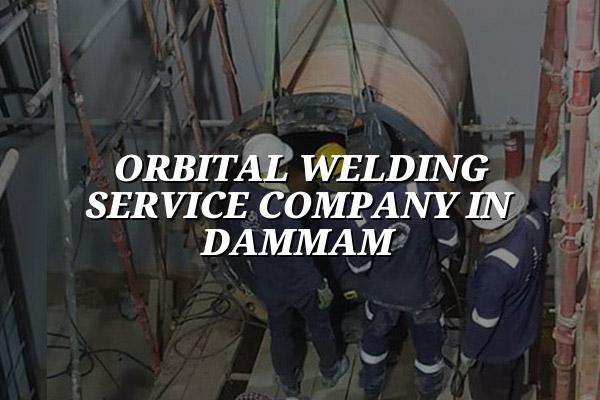
Orbital welding service company in Dammam searches usually come from teams that need clean, repeatable welds on pipe and tube systems, not guesswork. If you’re sourcing work for a plant, skid package or stainless line, this page shows where orbital welding fits, what to check before you order it, and how Mayon supports jobs in Saudi Arabia.
We work with industrial clients who care about weld consistency, joint preparation, and traceable execution. In Dammam Industrial City, that often means pressure piping, utility lines, process skids and sanitary tube work where a manual weld can introduce variation the client really doesn’t want.
Orbital welding service company in Dammam for repeatable weld quality
Orbital welding uses an automated TIG, or GTAW, process around the pipe or tube circumference. The torch moves on a programmed path, so each pass follows the same travel speed, arc time and heat input pattern. That matters when your fabrication has tight fit-up, corrosion-resistant alloys, or a project team that needs the weld sequence to stay consistent across many joints.
Where orbital welding makes the most sense
We see the strongest demand on stainless pipe, hygienic tube runs, utility manifolds and small-bore process lines. In Saudi plants, the usual reason is quality control. The weld profile needs to be uniform, and the client wants less variation from one welder to the next. Orbital welding also helps when access is awkward, such as around racks, skids, or compact process modules where hand movement is limited.
Why Dammam buyers ask for it
Dammam sits close to heavy oil and gas, petrochemical and power activity, so the local expectation is simple: the work has to hold up. Procurement teams often want a welding partner who understands piping cleanliness, joint preparation, purging, documentation and the coordination that comes with shutdown or tie-in work. That’s where a specialist orbital welding service company in Dammam becomes useful instead of just another contractor name on the list.
- Review the joint package — confirm pipe size, material grade, wall thickness and the weld location before any setup starts.
- Prepare the ends properly — clean bevels, consistent root face and correct alignment save time and reduce rework.
- Set purge and program parameters — shield the weld zone, then match travel speed and current settings to the job.
- Run and inspect the pass — check bead shape, penetration and traceability before the line goes back into service.
- Better repeatability on multiple identical joints
- Useful for stainless and high-integrity tube systems
- Suits skids, racks and tight-access industrial layouts
- Supports cleaner documentation for QA and inspection teams
- Reduces dependence on variable hand technique
Orbital welding versus manual TIG on project-critical pipework
| Job factor | Orbital welding | Manual TIG welding |
|---|---|---|
| Repeatability | Very consistent when the program and fit-up are controlled | Depends more on individual welder technique |
| Best use | Small-bore pipe, tube bundles, hygienic lines and repeat joints | Fabrication with frequent changes, repairs and awkward access |
| Quality focus | Uniform bead profile, clean root and controlled heat input | Flexible for field adjustments, but more variation is possible |
| Project fit | Skids, process packages, pharma, food, utility and stainless work | General fabrication, field modifications and mixed-site repairs |
What a good orbital welding package should include
A proper orbital welding package is more than the machine. You need the right tooling, clean pipe ends, the correct clamp or head size, and a purge plan that suits the material and joint geometry. For stainless systems, especially in pharma, food, cold-chain support lines or clean utility runs, even small contamination issues can show up later in service.
What our team looks at first
We start with pipe specification, joint preparation and access. Then we check whether the weld is part of a new install, a repair, a tie-in, or a repeat production run. That helps us decide if the job needs orbital TIG, supporting mechanical work, inspection, or a blend of services. In our experience, this saves a lot of back-and-forth once the crew reaches site.
Common Dammam project settings
Process skids, compressor packages, utility headers, stainless tube racks, test loops and maintenance work during shutdowns. These jobs usually need neat welds, coordination with QA, and a contractor who can work around the site’s permit and access rules without creating delays.
From site survey to finished weld: the usual workflow
Most projects begin with a site check or a drawing review. That’s where we confirm the pipe material, the number of joints, the access conditions and any inspection requirements. If the job is in Dammam or nearby industrial zones, we also look at mobilization needs, permit timing and whether the work is best handled with onsite equipment or a staged setup.
How the sequence usually runs
Once the plan is clear, the crew prepares the joint, installs the orbital head or clamp, carries out purge setup and runs the programmed weld path. After that comes visual check, any required inspection steps and handover notes for the client. For many Saudi industrial buyers, that structure matters as much as the weld itself.
When orbital welding is not the first choice
There are jobs where manual TIG or a different mechanical method is the better route. Corroded pipe, badly misaligned ends, broken supports or major fabrication changes may need repair work before orbital welding can even start. We’d rather say that plainly than force a process that doesn’t fit the condition on the ground.
- Confirm material grade before tool selection
- Match purge method to pipe size and alloy
- Keep weld records and job notes together
- Use inspection early, not after the whole line is finished
- Plan around shutdown windows and access restrictions
Inspection, documentation and the standards mindset
Clients asking for an orbital welding service company in Dammam usually want more than a finished bead. They want a job that can be checked, signed off and defended in front of their QA or project consultant. That’s why we keep documentation clear and align work with the project’s own quality requirements, while staying within the standards we actually support, including ISO/IEC 17025:2017 for calibration competence, ISO 9001:2015 for quality management, BS EN standards for lifting and inspection, and EURAMET CG-15 for electrical calibration where relevant.
Why this matters to plant owners
Good records help when a line is audited, a repair is questioned, or a commissioning team wants to see how the work was carried out. In practice, that means less time arguing over what happened and more time putting the line back into service.
What we can coordinate around the weld
Condition monitoring, mechanical support, electrical testing and commissioning, inspection services, temperature mapping and calibration services. Many jobs in Saudi Arabia move faster when one team can handle the related work instead of splitting it across several vendors.
How Mayon Industrial Services Can Help
We support orbital welding jobs alongside the mechanical and inspection work that usually comes with them. If your project in Dammam needs pipe or tube welding, site coordination, fit-up support, testing, or related commissioning help, we can step in with the right mix of services instead of forcing a one-size-fits-all setup. That’s often the simplest way to keep the job moving without cutting corners.
Call +91 99447 80844 (India) or +966 59 633 8012 (Saudi Arabia), email services@mayonservices.com, or message us on WhatsApp.
Frequently Asked Questions
We handle automated TIG welding for pipe and tube work where repeatability matters. That usually includes setup, fit-up checks, purge control, programmed weld runs and coordination with inspection or supporting mechanical work. Clients in Dammam often use it for process lines, skids and stainless systems.
For many stainless pipe and tube jobs, yes, especially when you need the same result across multiple joints. The process gives better control over travel speed and heat input, which helps keep welds consistent. Manual TIG still has its place, but orbital welding is often preferred for repeatable industrial work.
Yes, it can be used onsite when access, joint condition and project planning are suitable. We often look at the site layout, shutdown timing and the client’s permit process before deciding how to mobilize. Some jobs need a mix of welding and mechanical preparation first.
We see it most in oil and gas, petrochemical, power, manufacturing, food and beverage, pharmaceutical and cold-chain related systems. Those sectors want neat welds, traceable work and fewer surprises during commissioning or inspection. Dammam and the Eastern Province have a lot of that kind of demand.
We can support related inspection, mechanical and commissioning needs around the weld package. That can include the practical checks the project team wants before handover. If the job also needs calibration, electrical testing or temperature mapping, we can coordinate those services too.
Ready to line up your orbital welding work in Dammam?
If you need pipe or tube welds handled with proper fit-up, purge control and project discipline, speak to Mayon Industrial Services and get the right team involved early.
Contact Mayon