
Orbital Welding Service Company in Fadhili
Automated pipe and tube welding support for refinery, utility and plant work in Fadhili and nearby industrial sites.
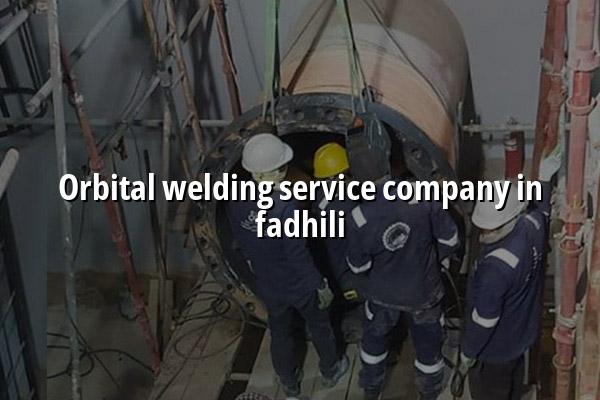
Orbital welding service company in Fadhili searches usually come from teams that need clean, repeatable welds on pipe and tube lines, without the headache of inconsistent manual work. That is exactly the use case we handle. We set up around your site conditions, keep the weld path controlled, and help you get joints that are easier to review, document and trust.
In Fadhili, the work often sits inside gas processing, utilities, shutdown packages and brownfield tie-ins. We know the rhythm of that work. Our team supports industrial clients across Saudi Arabia and the Middle East with automated TIG welding, mobile-lab discipline where needed, and the kind of practical coordination maintenance managers expect when the job has to move.
What an orbital welding service company in Fadhili should deliver
When people ask for orbital welding, they usually want more than a welding machine and an operator. They want joints that stay consistent from one spool to the next, sensible setup for stainless or other high-integrity lines, and a weld record that fits plant QA. In our experience, the biggest risk is not the arc itself. It is poor prep, poor fit-up, or a rushed handover from one shift to the next.
Where the process helps most
Orbital TIG welding is a strong fit for pipe and tube work where uniform root control matters. That includes process lines, utility piping, instrument tubing, and other fabrications where repeatability is part of the quality plan. The method gives you a controlled travel path, steady heat input and a cleaner result than most manual fixes can achieve on tight tolerance work.
What our team checks before a weld starts
We look at fit-up, material condition, access, cleanliness and the practical side of site work. If the line needs a better prep method, we say so. If the spool layout makes the weld awkward, we flag that early. It saves time, and more than that, it saves arguments after the first bead is laid.
- Review the line and joint type — we confirm the pipe size, material, access limits and whether the work is shop-based or onsite.
- Prepare the joint properly — bevel, fit-up, cleanliness and clamp alignment are checked before any welding starts.
- Set the orbital head and program — the torch path, heat input and travel speed are matched to the job.
- Run the weld and monitor it — the operator watches the cycle, gas coverage and consistency, then records the result for QA.
- Better repeatability on pipe and tube welds than ad hoc manual work
- Useful for stainless and other high-integrity lines with tighter visual expectations
- Cleaner handover for QA teams, inspectors and commissioning engineers
- Strong fit for refinery, gas plant, utility and process package work in Saudi Arabia
- Easier coordination with shutdown windows, brownfield tie-ins and planned maintenance
Orbital welding versus manual TIG for site pipe work
| Work factor | Orbital welding | Manual TIG |
|---|---|---|
| Repeatability | Very consistent once the joint is prepared correctly | Depends heavily on operator skill and shift conditions |
| Best fit | Pipe and tube joints that need uniform weld quality | Repairs, complex access points and mixed fabrication tasks |
| QA review | Easier to document and trace for controlled work packs | Can vary more from joint to joint, so review takes longer |
| Site efficiency | Good for repeated joints and planned packages | Flexible, but slower to standardize across a batch |
Why controlled welding matters on Fadhili projects
Fadhili jobs often sit inside larger industrial systems where one poor weld can slow testing, delay commissioning, or trigger unnecessary rework. That is why controlled orbital welding is so valuable. It gives the project team a more predictable way to handle critical joints, especially when the piping package must pass through inspection, pressure testing or staged handover.
Where standards mindset helps
We do not invent extra badges or fancy claims. We work with the quality discipline clients expect on industrial projects and keep our process aligned with the practical traceability and inspection culture that applies to Saudi plants and GCC maintenance work. If your package needs structured records, sensible job cards and disciplined execution, that's the lane we work in.
Built for real plant conditions
Some jobs look simple on paper and turn messy on site. Access is tight, the schedule shifts, the line is not as clean as the drawing suggests, and the team has to work around live plant rules. We are used to that. Our setup approach is practical, not theatrical, and that matters when the weld window is short.
Where clients usually ask for orbital welding support
Process piping
Repeated welds on controlled pipe runs where the client wants a stable, inspectable result.
Instrument tubing
Small-bore tubing that needs careful heat control and cleaner repeatability than hurried manual work.
Shutdown packages
Time-sensitive tie-ins where the weld sequence has to support the overall maintenance plan.
Brownfield modifications
Changes inside active plants where access, cleanliness and coordination matter as much as the weld itself.
Questions that separate a real welding partner from a casual crew
Ask who is handling fit-up, what inspection support is available, and how the work will be documented. You should also ask whether the team can adapt to live plant conditions, because that is where many jobs get stuck. If you are working around Fadhili or other Saudi industrial locations, you want people who understand site discipline, not just welding theory.
Practical signs of a ready team
Clear scope notes, sensible equipment selection, and a plan for setup and cleanup are all good signs. So is a team that asks questions back. If they do not ask about pipe size, access, joint prep or the inspection route, they probably have not thought through the job properly.
Useful checks before mobilisation
Confirm the material, joint count, site access, working window and any inspection steps the client will expect. If the line is part of a larger package, share the package sequence early. That small step helps us plan the right crew, the right setup and the right approach from the start.
How Mayon Industrial Services Can Help
We support orbital welding work with the same practical mindset we bring to calibration, inspection and mechanical jobs. That means clear scope, controlled setup and a team that understands industrial sites in Saudi Arabia and the Middle East. If your Fadhili package needs automated TIG welding, related inspection or support around commissioning, talk to us and we will help you shape the right plan.
Call +91 99447 80844 (India) or +966 59 633 8012 (Saudi Arabia), email services@mayonservices.com, or message us on WhatsApp.
Our wider service set also helps when the job needs more than welding alone. We can coordinate calibration, inspection, repair and maintenance support around the same project so your team is not dealing with five vendors for one package. For plant managers, that makes the handover easier. For QA teams, it keeps the paperwork tidier.
Frequently Asked Questions
We handle controlled TIG welding for pipe and tube joints, usually where repeatability and clean fit-up matter. That can include setup, welding execution and support for the documentation the client needs after the work is done. In plant work, that practical control is often the difference between a clean handover and a long rework loop.
Yes, it is commonly used for stainless lines where the client wants controlled heat and a more uniform weld path. The real key is good joint prep and the right setup for the pipe size and access conditions. If either of those is weak, the machine will not save the job.
Yes, we support industrial clients in Saudi Arabia, including work around major plant and maintenance environments. We are used to site rules, access control and job sequencing, so we plan with that in mind. Fadhili work often needs that kind of realism, especially when shutdown windows are tight.
If the job has repeated joints, strict visual expectations, or a need for consistent records, orbital welding is often the better fit. Manual TIG still has a place for repairs and awkward access, but it is harder to keep perfectly consistent across many similar joints. The best choice depends on the pipe size, location and quality plan.
Share the pipe or tube size, material, number of joints, site location, access limits and any inspection steps already planned. If the work is part of a shutdown or commissioning package, tell us the sequence too. That lets us plan the crew and setup properly instead of guessing.
No, Fadhili is one important location, but we work across Saudi Arabia and the wider Middle East, as well as India through our head office in Chennai. That matters when a project has multi-site needs or when a client wants one team that understands both onsite work and broader industrial support. We keep the scope within the regions we actually serve.
Need reliable orbital welding for Fadhili work?
Send us the job details and we will help you plan a practical welding approach that fits your site, your schedule and your QA needs.
Contact Mayon