
Orbital Welding Service Company in Petro Rabigh
Automated TIG welding support for refinery, petrochemical, and utility piping work in Petro Rabigh and nearby Saudi industrial zones.
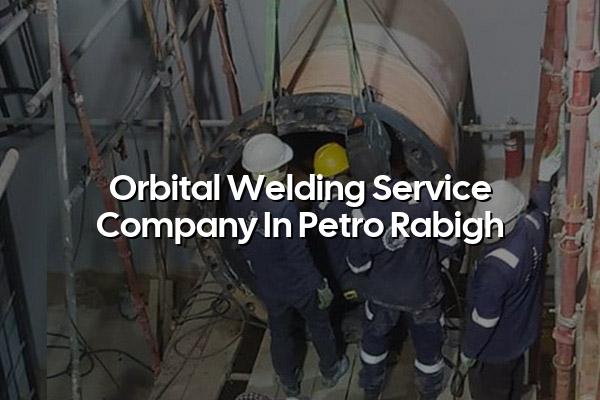
Orbital welding service company in Petro Rabigh is the search most teams use when they need clean, repeatable pipe welds for critical lines without wasting time on rework. If you're handling stainless steel tubing, small-bore process piping, or high-integrity utility lines, this page shows how we approach the work and what you should ask for before you release a job.
We work around the realities of Saudi industrial sites, where shutdown windows are tight, QA sign-off matters, and weld consistency can't be left to chance. Our orbital TIG work fits the kind of refinery and petrochemical jobs common in Petro Rabigh, with a focus on traceable process control, practical site coordination, and the kind of finish engineers can inspect with confidence.
What you should expect from an orbital welding service company in Petro Rabigh
Good orbital welding is not just about the machine. The real value sits in the preparation, the joint fit-up, the purge control, the weld program, and the records that tell your QA team what happened on each joint. In Petro Rabigh, that matters because many projects sit close to operating units, so a loose process creates more pressure than a bad bead ever will.
Where orbital TIG makes the most sense
We usually recommend orbital GTAW for stainless steel pipe and tube work, hygienic lines, instrument tubing, and any service where uniform weld geometry is important. It is a strong fit for petrochemical plants, utilities, and associated engineering packages where the same weld quality has to be repeated many times. The method gives you steady travel, controlled heat input, and a cleaner result than hand welding on many small-diameter lines.
Why project teams ask for it early
Most delays happen before the torch ever starts. If the schedule, access, purge setup, and consumable plan are not clear, the weld crew ends up waiting while everyone else chases permits or materials. In our experience, the teams that call early get better coordination, fewer surprises, and easier closeout with their inspection files.
- Review the line list — we check material grade, diameter, wall thickness, and service duty before we set up.
- Confirm the joint prep — fit-up, end cleanliness, and alignment are checked so the head can run cleanly.
- Set purge and program parameters — shielding gas, travel speed, and current profile are matched to the joint.
- Weld, inspect, and record — the work is completed with traceable notes so your team can review the result.
- Ask for procedure control, not just welding manpower.
- Keep the pipe ends clean and properly cut before mobilization.
- Plan access for the orbital head and the purge gear.
- Make sure inspection hold points are agreed before work starts.
- Use the same crew structure across repeated joints for better consistency.
Common orbital welding job factors for Petro Rabigh projects
| Job factor | What the team checks | Why it matters |
|---|---|---|
| Pipe material | Grade, weldability, and cleanliness of the tube or pipe end | Sets the program, purge needs, and acceptance risk |
| Joint size | Diameter, wall thickness, and access around the weld zone | Determines head selection and setup time |
| Service type | Process line, utility line, or instrumentation connection | Helps define inspection depth and documentation |
| Site condition | Live plant constraints, work permits, and nearby equipment | Shapes mobilization, isolation, and work sequencing |
How orbital welding supports cleaner closeout and fewer weld repairs
For Petro Rabigh work, one of the biggest advantages is repeatability. Once the weld program is set correctly, the process helps reduce variation from one joint to the next, which makes inspection easier and keeps the handover package cleaner. That is useful for refinery maintenance, skid fabrication, and plant upgrades where the engineer reviewing the file wants proof, not promises.
Inspection and documentation around the weld
We keep the job aligned with the inspection routine that the client has set, and we make sure the records match what was actually done on site. If a package needs supporting details for QA, maintenance, or contractor review, we build that into the workflow instead of treating it as an afterthought. That's the part many crews miss, and it's usually the part that costs time later.
Built for Saudi industrial work
Petro Rabigh sites often need disciplined execution, short setup windows, and welds that hold up under inspection. Our orbital welding support is shaped for that reality, with practical mobilization and a process that fits refinery, petrochemical, and utility environments.
Other services that often sit beside orbital welding
Mechanical preparation
Cold cutting, flange facing, bolt torquing, hydrotesting, and flange weld testing often happen before or after the weld scope. When those parts line up, the shutdown runs smoother.
Electrical and commissioning work
For package units and connected systems, testing and commissioning across LV, MV, HV, and EHV can sit alongside the piping scope. That helps the project team close more than one punch list at once.
Inspection and condition checks
NDT, lifting-equipment inspection, vibration checks, and infrared thermography are common companions on industrial turnarounds. They give the site a better picture of what still needs attention.
How Mayon Industrial Services Can Help
We support clients who need orbital welding tied to real plant work, not just workshop talk. Our team can pair the welding scope with mechanical services, inspection, and related QA support, and we work across India, Saudi Arabia, and the Middle East with the same practical approach. If your Petro Rabigh job needs disciplined pipe welding and clear coordination, talk to us and we'll help you plan the next step.
Call +91 99447 80844 (India) or +966 59 633 8012 (Saudi Arabia), email services@mayonservices.com, or message us on WhatsApp.
Frequently Asked Questions
We set up automated TIG welding for pipe and tube joints that need steady quality and repeatable results. That usually includes preparation checks, purge setup, weld programming, execution, and the records your QA team wants to see. For Petro Rabigh jobs, the big win is consistency under site pressure.
Yes, it is one of the best uses for the method. Stainless steel process piping and tubing benefit from controlled heat input and consistent travel around the joint, which helps reduce variation. The fit-up and purge still have to be right, though, so the setup work matters just as much as the weld head.
It can, especially when the scope includes repeated small-bore joints or lines that need a uniform finish. Shutdown work is usually tight on access and timing, so a controlled welding method helps the site team keep the sequence moving. We see that in refinery and petrochemical maintenance work quite often.
Send the material grade, diameter, wall thickness, line service, site location, and any inspection or documentation needs. If you have drawings or line lists, that helps a lot. The more complete the picture, the easier it is to plan the weld setup and avoid back-and-forth later.
We can support the broader job as well. Our team also covers calibration, mechanical services, inspection, electrical testing and commissioning, and related industrial engineering work. That helps when the welding scope is part of a larger package and you want one team coordinating more than one part of the job.
Ready to put the weld plan on solid ground?
If Petro Rabigh is waiting on clean, repeatable orbital welds, send us the scope and we'll help you shape the next move.
Contact Mayon