
Pneumatic Testing Service Company in Safaniya
Safe pressure testing for oilfield and industrial equipment, backed by ISO/IEC 17025:2017 discipline and mobile onsite support.
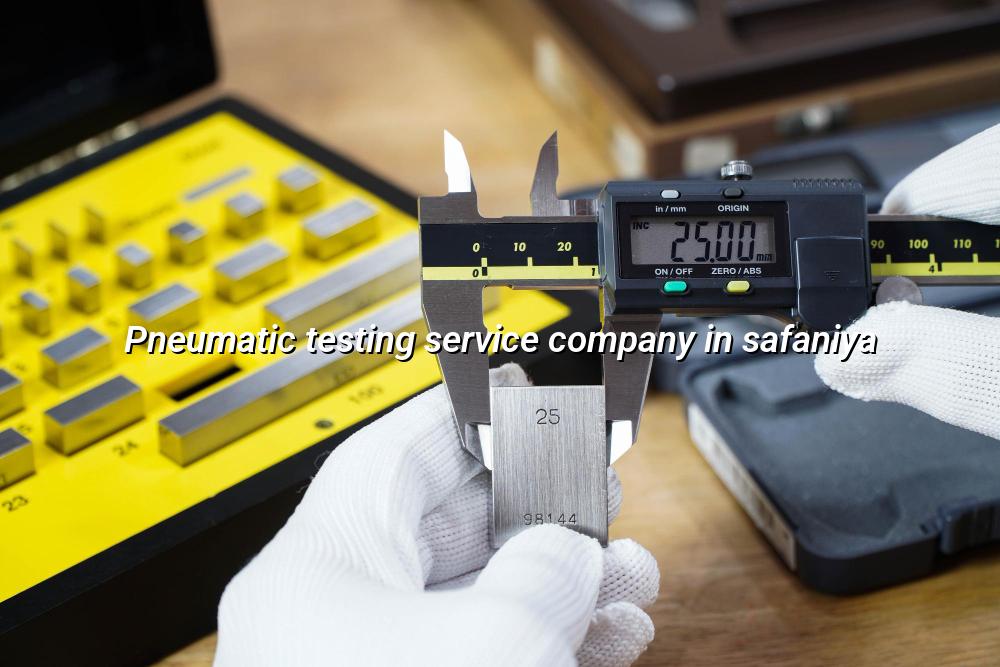
Pneumatic testing service company in Safaniya is the phrase people usually search when they need a team that can check pressure integrity without guesswork. If you're dealing with air, nitrogen, or gas-based test requirements, we help you confirm that equipment holds pressure, leaks are found early, and your site team has a clear record before work moves forward.
We support industrial and offshore operations across Saudi Arabia with onsite testing, mobile-lab capability, and practical engineering support that fits real field conditions. Safaniya work often involves tight schedules, exposed equipment, and safety checks that must be handled carefully, so we keep the process controlled, traceable, and aligned with the standards your QA and maintenance teams expect.
Pneumatic testing service company in Safaniya for critical equipment
In Safaniya, pneumatic testing is often requested for piping, vessels, manifolds, skids, repaired assemblies, and systems where hydrostatic filling is not practical. We treat every job like a real production risk check: isolate the item, confirm the test medium, verify gauges and fittings, then hold the pressure while watching for decay, leaks, or unstable joints. That approach matters in oil and gas work, especially where a small leak can create a delay, a permit issue, or a repeat visit to site.
Where pneumatic testing fits best
We usually see it used after fabrication, repair, tie-in work, or maintenance shutdowns when the team wants a controlled pressure integrity check. Offshore and nearshore jobs around the Eastern Province often need disciplined prep because the equipment may be part of a larger train, a utility line, or a package that can't be flooded. In those cases, the real value is not just passing the test. It is knowing the result can be trusted by operations, QA, and the client representative.
What our team checks before the test starts
Before pressure is applied, we look at the nameplate data, design intent, isolation points, and the condition of the connections. We also confirm that the gauges, hoses, regulators, and safety barriers are fit for the job. That sounds basic, but in field work around Safaniya and the wider Saudi industrial belt, the details decide whether the test runs smoothly or turns into a stop-start exercise that keeps everyone waiting.
- Review the equipment and scope — we confirm what needs to be tested, why it needs pneumatic testing, and what acceptance criteria the client wants to see.
- Prepare and isolate the system — lines are segregated, blind points are checked, and the test section is made safe before any pressure is introduced.
- Set up calibrated instruments — gauges, regulators, and test fittings are verified so the reading you see is the reading you can stand behind.
- Pressurise in stages — pressure is raised slowly, with checks at each step to catch leaks, weak joints, or unstable behavior before the full test point is reached.
- Hold, inspect, and record — we monitor the test period, inspect critical joints, and document the outcome for your maintenance or QA file.
- Pneumatic testing needs tighter safety control than a simple visual check, so the barricade and exclusion zone matter.
- Gauge selection should match the test range; a badly chosen gauge makes the reading hard to trust.
- Small leaks often show up at flanges, valves, threaded joints, and temporary test fittings, so those points deserve close attention.
- If the item has been repaired, the weld area and nearby joints should be inspected before pressure is applied.
- A clean written record helps later when the same asset is opened for maintenance or handover.
How pneumatic testing compares in the field
| Test item | Why it is chosen | Typical field concern |
|---|---|---|
| Piping spool | Checks welds, flanges, and joints after fabrication or repair | Leak points at temporary caps and gasket faces |
| Manifold or skid | Confirms integrity before commissioning or re-start | Mixed connections and tight access around instrument fittings |
| Small pressure vessel section | Useful where hydrostatic filling is awkward or not preferred | Need for slow pressurisation and careful monitoring |
| Utility line or branch | Helps verify isolated sections after maintenance work | Isolation quality and clear test boundaries |
Why pressure control and documentation matter
Pneumatic tests store energy, so we don't treat them casually. The pressure rise is controlled, the area is managed, and the team stays focused on the test boundaries from start to finish. For owners in Safaniya, that matters because site rules, permit systems, and client audits can all hinge on how well the test was planned and how clearly it was documented. Our work is built around that reality, not a generic checklist.
Traceable records help later
When a line comes back into service, people rarely remember the details unless the test record is clean. We keep the essential information straight: what was tested, what instruments were used, what the reading was, and who carried out the work. That makes handover easier for project teams, and it gives maintenance staff a stronger base when the asset needs to be opened again months later.
Built for oil, gas, and industrial sites
Safaniya jobs often involve offshore or nearshore workflows, plus surrounding Eastern Province facilities that need practical field support. We work with maintenance and commissioning teams who need clear pressure-test control, not loose promises. That is why we bring the right test gear, the right pace, and a proper paper trail.
What usually sits beside pneumatic testing on site
On many jobs, pneumatic testing is only one part of the work. The same site may also need flange work, hydrotesting support, bolt torquing, leak checks, or testing and commissioning for nearby electrical equipment. That mix is common in Saudi oil and gas facilities, where one maintenance window has to cover several disciplines at once.
We also see related needs in inspection and calibration. If gauges, indicators, or pressure-related instruments need checking, our calibration capability helps keep the testing chain more reliable. It is a better setup than using borrowed instruments with no clear traceability.
How Mayon Industrial Services Can Help
We support pneumatic testing with the same field discipline we use across calibration, mechanical services, inspection, orbital welding, and lab setup. If your Safaniya project needs pressure checks before handover, maintenance re-start, or repaired equipment release, our team can plan the job, bring the right setup, and keep the work documented in a way your engineers can use.
Call +91 99447 80844 (India) or +966 59 633 8012 (Saudi Arabia), email services@mayonservices.com, or message us on WhatsApp.
Frequently Asked Questions
It is used when a client needs pressure integrity checked with air, nitrogen, or another gas medium. We usually see it on piping, manifolds, repaired sections, and package skids where the team needs a controlled leak check before handover or restart.
Yes, when it is planned and controlled properly. The key is slow pressurisation, clear isolation, a defined exclusion area, and the right gauges and fittings. We handle it that way because pressure energy needs respect, especially on Safaniya and Eastern Province sites.
We often test piping sections, manifolds, skids, small vessel sections, utility lines, and repaired assemblies. If the item is better suited to gas-based verification than hydrostatic filling, pneumatic testing is often the practical choice.
Yes, we support onsite work in Safaniya and across Saudi Arabia from our Eastern Province operating base. Our mobile capability helps when the asset can't be moved, which is common in oilfield and industrial settings.
Yes, we can support calibration needs alongside the testing job. That helps if your site wants the gauges used for the test to sit within a traceable calibration workflow rather than relying on equipment with unclear history.
Ready to check pressure integrity with confidence?
If you need pneumatic testing in Safaniya, we can help you plan the job, control the risks, and give your team a proper result to work with.
Contact MayonFor Safaniya projects, the right test partner makes a real difference. We bring pressure-testing discipline, practical field experience, and the kind of documentation engineers want to keep on file, so your team can move forward without uncertainty.