
Pressure Calibration Company in Dammam Industrial City 2
Traceable pressure calibration for plants, workshops and shutdown teams working in Dammam Industrial City 2.
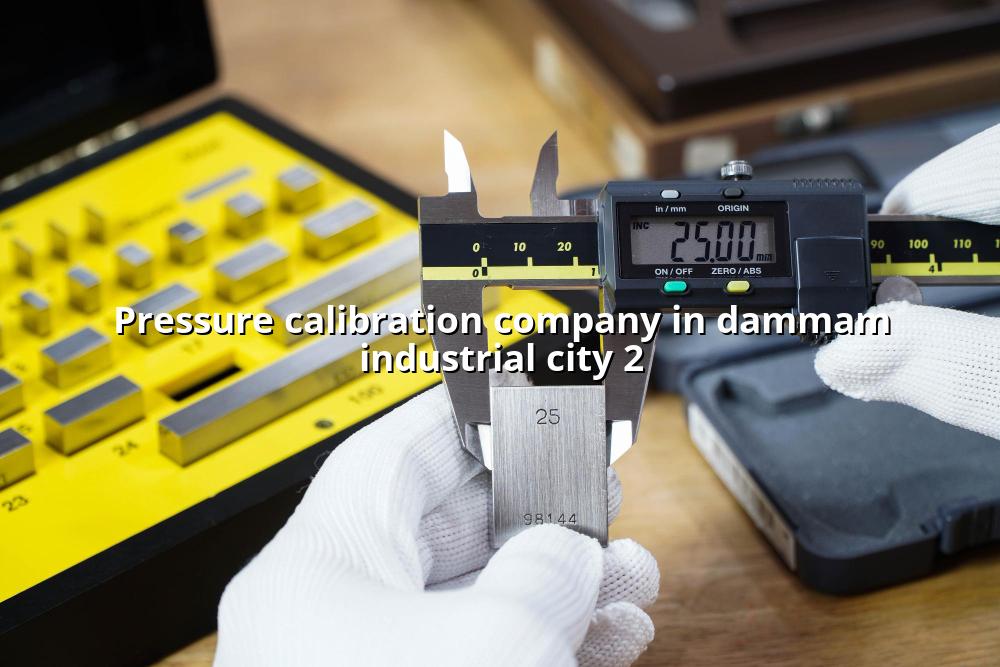
Pressure calibration company in Dammam Industrial City 2 is the search most maintenance teams make when gauges, transmitters or test rigs need traceable results and less guesswork on the floor. We help you keep pressure instruments accurate so your loops, safety checks and production decisions stay dependable.
From our Saudi operation in Dammam Industrial City 2, we support plants that need onsite work, lab verification and careful handling for sensitive devices. If your team runs oil & gas, petrochemical, power, manufacturing or cold-chain operations, we’ll match the method to the instrument and the site conditions.
Pressure calibration for Dammam Industrial City 2 operations
Pressure work in Dammam Industrial City 2 is rarely just about a gauge on a bench. You may have process pressure gauges on skids, transmitters on tank farms, pressure switches on compressors, or test manifolds used during shutdowns. Each one needs a different setup, and the right setup starts with the range, the medium, the connection type and the tolerance you’re trying to hold.
Where the calibration fit matters most
We often see instruments pulled from service because someone suspected drift, yet the real issue was vibration, overrange exposure or bad installation. In our experience, a pressure calibration check is most useful when it’s tied to a real job: pre-commissioning, maintenance after isolation, periodic QA checks, or return-to-service after repair. That keeps the results useful to your supervisors instead of becoming a paper exercise.
Why traceability matters here
Saudi industrial sites, especially around Dammam, expect records that can stand up to audits and internal reviews. Our work is carried out with ISO/IEC 17025:2017 discipline, and we keep the process practical: correct reference selection, stable test conditions and clear documentation. If your team needs pressure calibration to support ISO 9001:2015 procedures, we can align the job with your site file without adding clutter.
- Identify the instrument and range — confirm whether you’re dealing with a gauge, transmitter, switch or comparator and note the full scale.
- Check the process condition — tell us whether the item came from oil, water, hydraulic service, air or another application.
- Select the right method — we choose onsite or in-lab work based on access, condition and accuracy needs.
- Run the pressure points — the test points are checked against the reference and recorded cleanly.
- Review the result with your team — we flag drift, damage or anything that should go back for repair.
- Use onsite calibration when the instrument is hard to remove or tied to shutdown timing.
- Choose in-lab calibration when the device needs a controlled setting or careful handling.
- Ask for pickup and delivery if the instrument needs special conditions during transport.
- Match the reference equipment to the pressure range you actually use on site.
- Keep a record of before-and-after readings for repeat problem instruments.
- Link the certificate to the tag number, asset list or work order so your QA file stays tidy.
What to compare before you book the job
| Instrument type | Typical site use | Best service mode |
|---|---|---|
| Pressure gauge | Pumps, compressors, test manifolds and utility lines | Onsite or in-lab, depending on removal and condition |
| Pressure transmitter | Process loops, controls and monitoring systems | Onsite when live access matters; lab when handling needs care |
| Pressure switch | Trips, alarms and interlocks on rotating equipment | Onsite during maintenance windows or shutdowns |
| Hydraulic test equipment | Fabrication, commissioning and repair work | In-lab or mobile-lab support for stable verification |
How pressure calibration supports safer operations
Accurate pressure readings protect more than a report. They affect pump protection, vessel monitoring, compressor control, leak checks and the decisions your operators make during live work. In oil & gas and petrochemical plants around Dammam, a small error can lead to unnecessary shutdowns or missed warning signs, and neither one helps your schedule.
Why teams keep a regular interval
We usually recommend a planned interval based on the service severity, the instrument history and the environment. High-vibration areas, outdoor skids and instruments exposed to moisture or temperature swings need closer attention than a clean indoor bench. That’s common sense, but it also keeps your maintenance plan from becoming too loose.
Built for plant reality
We work across pressure gauges, transmitters, comparators, manifolds and related test gear, and we understand that your equipment may be tied into a live system, a shutdown package or a commissioning punch list. Our mobile calibration lab helps when site removal is impractical, while the in-house laboratory is there for instruments that need controlled conditions. That balance matters in Saudi industrial zones, where time on site and confidence in records both count.
Onsite, in-lab and pickup options for pressure instruments
Onsite calibration
Best for fixed assets, shutdown work and devices that are awkward to disconnect. It keeps your loop or system closer to its real operating condition.
In-house laboratory
Used when the instrument needs a stable setting, careful bench work or closer handling of delicate parts. That suits higher-control checks well.
Pickup and delivery
Handy for items that need extra care in transit or when your team wants to keep the calibration flow moving without sending someone off-site.
How Mayon Industrial Services Can Help
If you need a pressure calibration company in Dammam Industrial City 2, we can support the work from first inspection to final handover. Our team handles pressure calibration alongside mechanical services, testing and commissioning, repair support and lab setup, so you don’t have to split the job across too many vendors. We also support related instruments and test gear when the bigger maintenance scope needs more than one service line.
Call +91 99447 80844 (India) or +966 59 633 8012 (Saudi Arabia), email services@mayonservices.com, or message us on WhatsApp.
Frequently Asked Questions
Yes — Mayon Industrial Services supports Dammam Industrial City 2 through our Saudi operation in Dammam Industrial City 2. We can handle onsite work for fixed assets or collect instruments that need more controlled handling. That makes it easier for plant teams that don’t want to send sensitive devices across the city without a plan.
We do. Pressure gauges, transmitters and switches are all common items in plant maintenance, and each one needs the correct setup and test points. If you send us the tag list, we can advise whether onsite, in-lab or pickup support fits the job best.
Yes. Our pressure calibration work follows ISO/IEC 17025:2017 discipline, which is what many QA teams want when they review certificates and records. It helps when your site files must stay clean for audits or internal checks under ISO 9001:2015.
Yes, where the system and safety conditions allow it. Onsite work is often the better choice for shutdown jobs, hard-to-remove instruments and equipment that should be checked in its installed position. We’ll look at access, process condition and your maintenance window before deciding.
We work with oil & gas, petrochemical, power, construction, manufacturing, healthcare, pharmaceutical and cold-chain operations. In practice, that means everything from compressor rooms and utility lines to process skids, hydraulic systems and test rigs. The common thread is simple: the pressure reading has to be trustworthy.
Ready to put pressure readings back on solid ground?
Send the instrument list, tell us where it’s installed, and we’ll help you choose the right calibration path for your site.
Contact Mayon