
Pressure Gauge Calibration Company in Dammam
Traceable pressure gauge calibration for plants, utilities and contractors working in Dammam and the wider Eastern Province.
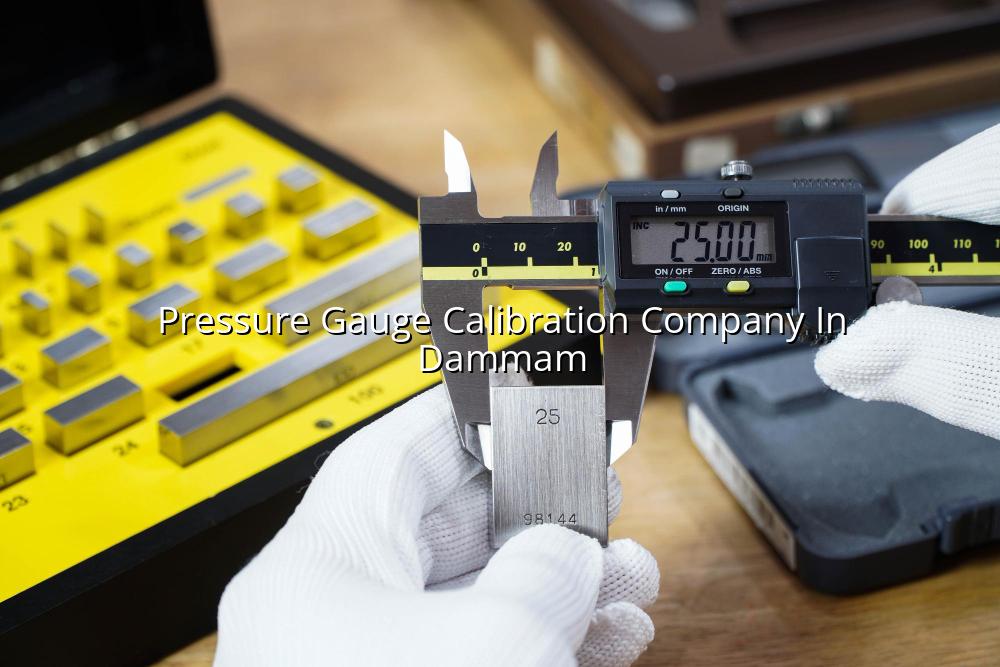
Pressure gauge calibration company in Dammam services matter when a plant needs readings it can trust on the first shift, not after a maintenance headache. We help you keep gauges, transmitters and related pressure instruments traceable, readable and ready for use.
Our team works with industrial clients across Dammam Industrial City 2, the Eastern Province and nearby GCC projects. We support onsite work, in-house calibration and pick-up for instruments that need special handling, with the sort of paperwork QA teams expect from ISO/IEC 17025:2017 aligned service.
Pressure Gauge Calibration Company in Dammam for Industrial Plants
Most of the calls we get are simple: a gauge is drifting, a contractor needs verification before handover, or a maintenance manager wants one vendor who can handle both site work and controlled-lab checks. In those jobs, the real issue is not just the needle position. It’s traceability, range coverage and making sure the instrument still supports safe operation in oil & gas, petrochemical, power and manufacturing sites around Dammam.
What we check during calibration
We compare the indication against a suitable reference, note error across the working range and confirm whether the gauge stays within tolerance. If the instrument is used on hydraulic systems, compressors, pumps or process lines, we also look at connection condition, dial readability and any sign of mechanical damage that could affect confidence in the reading.
Why Dammam clients ask for onsite service
Onsite work saves you from pulling a critical gauge out of service when the line can’t wait. Our mobile calibration lab is useful for pressure gauges on skids, utility stations, compressor rooms and field installations where removing the device would cost more time than the check itself. For delicate or unusual items, we can collect and return them after controlled-lab calibration in a temperature-managed environment.
- Identify the instrument — confirm the gauge type, range, dial size, connection and any special marks on the body.
- Check condition first — inspect the pointer, window, case, threads and seal before applying pressure.
- Measure across the range — compare the reading at practical test points so the result reflects how the gauge is really used.
- Record traceable results — issue calibration data that your QA or maintenance team can file with the asset history.
- Useful for Bourdon tube pressure gauges used on pumps, skids and utilities.
- Supports preventive maintenance plans where drift needs to be caught early.
- Helps you keep critical instruments aligned with ISO/IEC 17025:2017 traceability expectations.
- Works for site shutdowns, commissioning jobs and routine calibration rounds.
Pressure Gauge Checks: Common Scenarios and What We Look For
| Scenario | Typical Risk | What the Check Focuses On |
|---|---|---|
| Process line gauge | Drift from vibration or wear | Reading error across the working range and physical condition |
| Hydraulic system gauge | Pressure spikes and mechanical stress | Pointer stability, case integrity and connection condition |
| Commissioning gauge | New install needs verification | Range match, mounting fit and baseline calibration result |
| Maintenance spare gauge | Stored instruments can age or damage | Visual inspection, zero check and usable range confirmation |
Why traceable calibration matters for pressure gauges
In a plant environment, a gauge that reads a little high or low can affect routine checks, alarm settings and operator confidence. That’s why buyers in Saudi Arabia and across the Middle East usually want documentation that shows a real measurement chain, not just a sticker on the dial. We work within ISO/IEC 17025:2017 practices, and for electrical or mixed-instrument jobs we can support broader site calibration planning too.
What QA teams usually ask us for
They want the gauge identity, the result set, the test range and a clear pass or fail outcome against the agreed tolerance. In many cases they also need the instrument status tied back to asset records so the next inspection or shutdown can be planned without guesswork. That’s especially common in oil & gas and petrochemical projects where documentation gets reviewed twice.
Built for field reality
Pressure gauges don’t fail in neat office conditions. They sit near heat, vibration, moisture and handling damage. We keep that in mind when we recommend onsite calibration, lab transfer or replacement planning for instruments that are past sensible recovery.
More than a gauge check
Some jobs are bigger than the gauge itself. A pressure indicator may be part of a hydrotest manifold, a compressor package, a dead weight tester setup or a custom hydraulic skid. When that happens, our mechanical services team can support flange work, hydrotesting, bolt torquing and testing & commissioning so the instrument is not the only thing verified.
We also see pressure gauges used alongside products and systems that need periodic care, such as comparators, testers, accumulators and hydraulic power packs. If you’re running a cold-chain facility, a refinery utility block or a manufacturing line in Dammam, it helps to keep the whole chain of measurement under control, not just one dial on a panel.
How Mayon Industrial Services Can Help
If you need a pressure gauge calibration company in Dammam that can handle onsite work, controlled-lab checks and practical field support, we’re set up for that. Our team also covers related calibration disciplines, inspection, mechanical services and lab setup, so you’re not juggling three vendors for one plant issue. Send us the list, the range and the site location, and we’ll talk through the best way to handle it.
Call +91 99447 80844 (India) or +966 59 633 8012 (Saudi Arabia), email services@mayonservices.com, or message us on WhatsApp.
Frequently Asked Questions
We support Dammam and the wider Eastern Province with onsite and in-lab calibration options. If your gauge is installed on a live system, onsite service is often the cleaner choice. If it needs controlled conditions or special handling, we can arrange pickup and lab work.
The interval depends on how the gauge is used, how much vibration it sees and how critical the reading is. Plants with harsh service, frequent pressure cycling or shutdown planning usually review calibration more often than static utility gauges. Your QA or maintenance plan should set the interval, and we can help you review the instrument condition during each visit.
Yes, onsite work is a big part of what we do. Our mobile calibration lab helps when the gauge is part of a critical line, skid or utility system and you don’t want to remove it. We also support instruments that need to be brought into a temperature-controlled environment.
We regularly support oil & gas, petrochemical, power, construction, manufacturing and engineering clients. Those sites often use gauges on compressors, pumps, hydraulic systems, process lines and test manifolds. The main need is the same across all of them: readings that can be trusted during operation, maintenance and handover.
Yes, we provide calibration results that are meant to sit comfortably inside your maintenance and quality files. Teams usually want the instrument details, test points, reading error and pass or fail status. That information helps during internal audits, shutdown planning and asset reviews.
Need pressure readings you can stand behind?
If your site in Dammam needs gauge calibration, pick a team that understands field conditions, traceability and industrial paperwork. Mayon Industrial Services is ready to help with the instrument, the system and the job around it.
Contact Mayon