
Pressure Gauge Calibration Company in Mecca
Traceable pressure gauge checks for plant, utility and maintenance teams working in Mecca and nearby industrial sites.
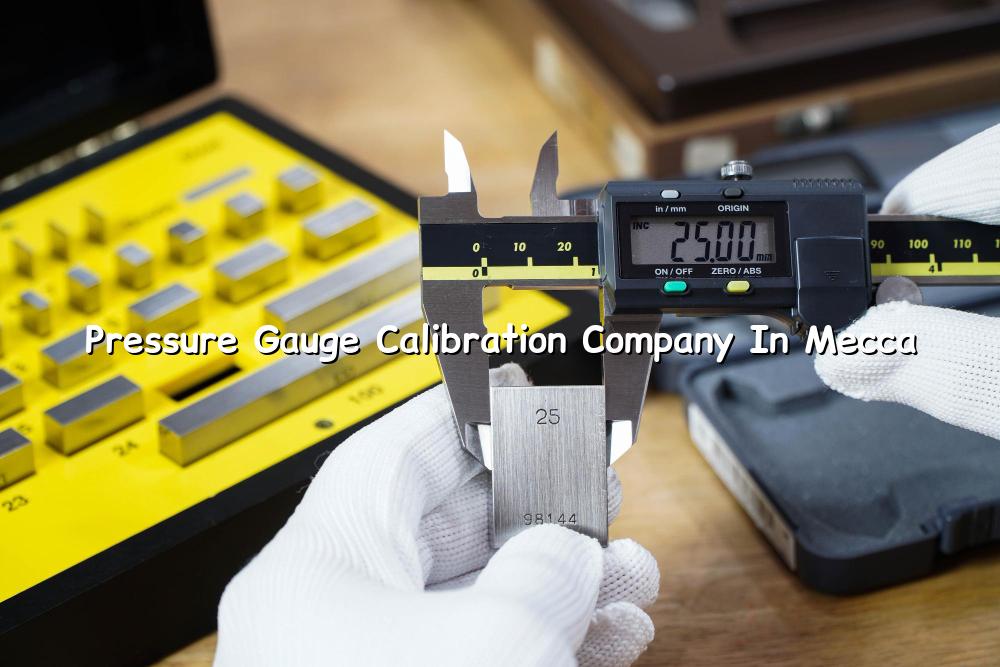
Pressure gauge calibration company in Mecca is the kind of search people make when a reading starts looking doubtful and the line can’t wait. If you need traceable checks, clear records and a team that understands plant pressure work, this page tells you what to look for and how we handle it.
We support maintenance managers, QA teams and contractors who need reliable pressure gauge calibration in Mecca for utilities, process skids, water systems, HVAC, packaged equipment and field jobs. Our work fits the way industrial sites actually operate: onsite when that makes sense, in-house when the instrument needs a controlled setup, and with pick-up and delivery for items that need special care.
What a Pressure Gauge Calibration Company in Mecca Should Actually Do
When people ask for pressure gauge calibration, they usually want two things: proof that the gauge is trustworthy and a process that won’t waste the maintenance crew’s time. A good provider should verify the gauge across its working range, compare it against traceable reference standards, record as-found and as-left data where needed, and return a result you can file with your quality records. For ISO/IEC 17025 work, the traceability chain matters just as much as the reading itself.
Onsite work versus in-house checks
On many Mecca jobs, onsite calibration is the practical route because pulling gauges out of service can slow down a whole line. That works well for panels, manifolds, compressors, pumps and packaged systems, as long as the instrument is accessible and the surrounding conditions are stable enough for a proper check. If a gauge needs cleaning, repair, a tighter setup or special handling, our temperature-controlled laboratory is the better place to do it.
What engineers usually look for
Most calls we get are not about a brand-new gauge. They’re about a gauge that has drifted, taken a hit, or started giving awkward readings on the edge of the scale. In those cases, the question is not just “does it read?” It’s “is it still safe to trust on this line, for this fluid, at this pressure, with this process risk?” That’s the real job of calibration in oil and gas, petrochemical, power, construction and manufacturing sites across Saudi Arabia and the wider Middle East.
- Identify the gauge and its range — confirm the pressure unit, dial range, connection type and whether it’s a dry, liquid-filled or specialty gauge.
- Inspect the condition first — check lens damage, pointer movement, case integrity, corrosion and any signs of overpressure or leakage.
- Compare against reference standards — use suitable pressure comparators and traceable standards to test points across the working range.
- Record the result clearly — note as-found data, adjustment details if any, and the final calibration status for QA and maintenance files.
- Check gauges before shutdown work so you’re not correcting a problem after the line is already in trouble.
- Separate process gauges from safety-critical gauges; they may need different handling and documentation.
- Ask for onsite service when the gauge is fixed in a panel, skid or compressor train.
- Use in-house service for instruments with contamination, damage or special environmental requirements.
- Keep serial numbers and tag numbers ready; it saves time and cuts mix-ups on busy maintenance days.
Pressure Gauge Checks: Typical Job Scenarios and What We Review
| Job scenario | What we check | Why it matters |
|---|---|---|
| Compressor or pump panel | Range, pointer return, connection fit and visible condition | Helps catch drift before it affects operations |
| Process skid or manifold | Reading points across the scale and physical damage signs | Supports safe process control and maintenance planning |
| Utility or HVAC service | Consistency, scale legibility and suitable reference comparison | Useful for routine plant checks and troubleshooting |
| Calibration record review | Identification, result status and traceable documentation | Gives QA teams a file they can audit with confidence |
Why Traceability Matters in Mecca and the GCC
Industrial sites in Mecca and across Saudi Arabia expect more than a “looks fine” check. They need calibration that can stand up to QA review, maintenance audits and vendor scrutiny. That usually means traceable standards, clean documentation and a clear statement of what was tested, how it was tested and whether adjustment was needed. For electrical and process teams, that kind of record helps during shutdowns, commissioning and routine inspection rounds.
Where pressure gauge work fits into a wider program
Pressure gauges don’t live on their own. They sit alongside transmitters, relief systems, pumps, compressors and test rigs, so their calibration schedule should match the risk and the process they support. In our experience, the sites that stay out of trouble are the ones that keep pressure instruments on a sensible cycle, separate damaged gauges from service stock, and keep a clean register by tag number and asset location.
Built for plant reality
We work with shutdown teams, contractors and maintenance leads who need the gauge back in service without guesswork. That means the process is practical, the result is documented, and the work fits the way your site operates in Saudi Arabia, India or the wider Middle East.
How We Handle Pressure Gauge Calibration Jobs
For a pressure gauge calibration company in Mecca, the service model should be flexible. Some gauges are easy to move and suit bench calibration. Others are part of a live system and should be checked onsite with minimal interruption. When a gauge needs special handling, our mobile calibration lab and pick-up-and-delivery option help keep the work controlled without forcing the site to improvise.
We also see plenty of mixed requests. A team might need pressure gauge checks, a few dimensional instruments, a torque tool verification and perhaps a thermometer or thermal device review in the same visit. That’s where a broader industrial service partner helps. Instead of splitting the job across multiple vendors, you can keep the calibration and maintenance work under one coordinated plan.
Good records make future work easier
People often think calibration is only about the moment the gauge is tested. In practice, the record is what saves time later. A clean certificate or report helps you decide whether to keep the instrument in service, repair it or replace it. It also makes planning easier when you’re preparing for audits, commissioning, or a scheduled shutdown at a plant in Makkah Province or elsewhere in Saudi Arabia.
- Bench calibration for removable gauges and shop stock.
- Onsite calibration for fixed panels, skids and utility systems.
- Controlled handling for gauges needing special condition checks.
- Documentation that supports QA, maintenance and procurement decisions.
How Mayon Industrial Services Can Help
If you need a pressure gauge calibration company in Mecca that understands plant pressure work, we can help with onsite checks, in-house calibration, related mechanical support and the documentation your team needs. We also support condition monitoring, electrical testing, inspection, orbital welding, lab setup and training, so you’re not starting over with a new vendor for every job. Tell us what’s on site, and we’ll help you choose the right route.
Call +91 99447 80844 (India) or +966 59 633 8012 (Saudi Arabia), email services@mayonservices.com, or message us on WhatsApp.
Frequently Asked Questions
Look for a provider that can handle onsite and in-lab work and issue traceable records. For plant sites, you want someone who understands gauges on pumps, compressors, skids and utility systems, not just bench instruments. That’s the difference between a quick check and a useful calibration record.
Yes. Onsite work is often the best choice when the gauge is part of a live process or fixed in a panel, manifold or skid. It keeps downtime lower and avoids unnecessary removal, as long as the site conditions allow a proper test.
Send the gauge range, connection type, quantity, location and any known issues like sticking pointer, broken lens or suspected drift. If you have tag numbers or asset references, include those too. That helps us plan the job and choose the right setup from the start.
Yes. Some gauges are better handled in our controlled lab environment, especially when contamination, damage or setup sensitivity is involved. We also support pick-up and delivery for instruments that shouldn’t be moved casually.
It matters because it shows the calibration process is built around competence, traceability and documented control. For QA and maintenance teams, that gives more confidence in the result and makes audit conversations much easier. It’s especially useful when instruments support regulated or safety-sensitive work.
Need pressure gauge checks you can trust?
Send us the gauge details and we’ll help you choose the right onsite or in-lab route for your site in Mecca or elsewhere in the region.
Contact MayonIf your pressure gauge is tied to production, safety or commissioning work, don’t leave it to guesswork. Mayon Industrial Services gives you a practical way to keep gauges documented, traceable and ready for the next job, with support that fits the way industrial teams work in Mecca and across Saudi Arabia.