
Pressure Gauge Calibration Company in Petro Rabigh
Traceable gauge calibration support for Petro Rabigh teams that need reliable readings, clear certificates and practical onsite service.
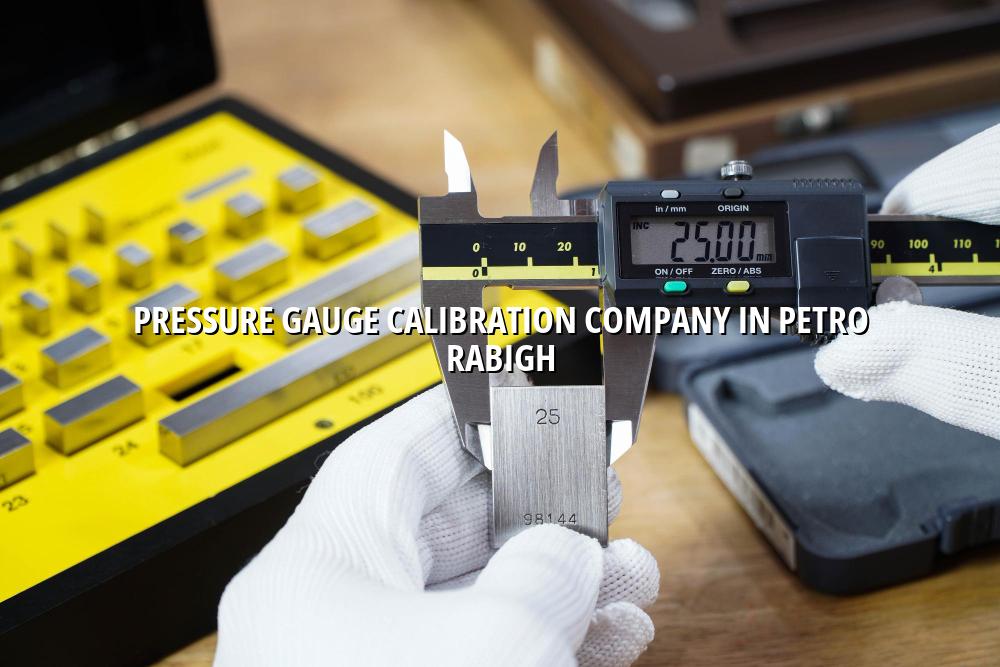
Pressure gauge calibration company in Petro Rabigh is exactly what maintenance and QA teams search for when a gauge starts drifting or a shutdown window is closing. We help you get trustworthy readings back into service with traceable calibration, practical advice and certificates you can file without chasing extra paperwork.
At Petro Rabigh, the day-to-day reality is simple: pumps, skids, process lines and test benches all depend on gauges that tell the truth. Our team works with oil & gas, petrochemical and power customers across Saudi Arabia, using our ISO/IEC 17025:2017 approach, mobile calibration capability and pick-up support when special handling is needed.
Pressure gauge calibration company in Petro Rabigh for plant reliability
When a pressure gauge is off, the problem usually shows up somewhere else first: a test result that doesn't match, a system that won't stabilize, or a technician who has to repeat the same check twice. That is why gauge calibration is not just a lab task. It affects commissioning, preventive maintenance, safety decisions and handover records. We calibrate pressure gauges alongside related instruments such as pressure switches, transducers, dead weight testers and pressure comparators, so the numbers in your plant stay aligned with the equipment you actually use.
Onsite service for active Petro Rabigh work areas
Some gauges can come off the line. Others can't. For field units, panel-mounted gauges and equipment that is awkward to remove, our mobile calibration lab is the cleaner option. It reduces handling, saves your team from unnecessary dismantling and keeps the gauge in the same environment where it operates. That matters in Saudi heat, in compressor rooms, and in process areas where vibration and temperature swings can affect readings. If an instrument needs special conditions, we also offer pick-up and delivery.
What traceable calibration should give you
A proper calibration visit should leave you with more than a sticker. You need as-found and as-left results where applicable, sensible pass/fail decisions, and a certificate that reflects the instrument's actual condition. Our work is built around ISO/IEC 17025:2017 competence, ISO 9001:2015 quality management, and the kind of traceability industrial clients in Saudi Arabia and the Middle East expect. We keep the conversation plain. If a gauge is fine for service, we'll say so. If it needs repair, rework or replacement, we'll tell you that too.
- Identify the gauge and range — confirm the scale, connection type, process medium and expected operating pressure before the instrument comes in.
- Check condition and safety — look for damaged pointers, broken windows, leaking seals, corrosion or signs of overpressure.
- Calibrate against a known standard — compare the gauge with traceable reference equipment across the required test points.
- Review results and release — record the error, decide pass or fail, and issue the calibration certificate for your asset file.
- Use onsite calibration when removal would interrupt a running process.
- Recalibrate after overload, impact, repair or a failed inspection.
- Match the standard's accuracy to the gauge's tolerance band.
- Keep certificates linked to serial numbers, tag numbers and asset records.
Pressure gauge calibration checks and what changes from one case to the next
| Scenario | What we review | Typical outcome |
|---|---|---|
| Routine plant gauge | Range, readability, zero error, pointer smoothness | Pass, adjust or recommend replacement |
| Post-repair gauge | Body condition, seal integrity, drift after service | Recalibrate before return to duty |
| Onsite gauge in a skidded system | Access, operating pressure, isolation points, safety | Mobile lab verification without full removal |
| Critical test gauge | Traceability, required test points, certificate record | Detailed report for QA and maintenance files |
Why Petro Rabigh maintenance teams keep gauge control tight
Pressure gauges look simple, but they sit inside decisions that cost real money if the reading is wrong. A small offset can send a compressor test off course, make a hydraulic check look better than it is, or trigger needless troubleshooting. In process plants, the same gauge may be used by operations in the morning, maintenance in the afternoon and inspection at shift handover. That is why serial tracking, calibration history and sensible intervals matter.
What usually causes drift
In our experience, the common causes are physical shock, vibration, overpressure, contamination and rough handling during shutdown work. Dirty impulse lines and moisture ingress can also confuse the reading, especially where gauges are mounted outdoors or near washdown points. Once a gauge has been opened, repaired or suspected of sticking, it should be checked again before you rely on it in service.
Built for plant people, not paperwork
We keep the process practical. You send the gauge details, we review the range and application, then we plan either onsite work or lab handling. For Saudi clients in Petro Rabigh, Dammam Industrial City 2 and other industrial zones, that means less time explaining the basics and more time getting the instrument back under control.
How Mayon Industrial Services Can Help
We support Petro Rabigh clients with calibration for pressure gauges and related pressure instruments, plus mechanical services, inspection support and commissioning work when your maintenance scope is wider than one device. If your gauges are installed in a tight rack, a running utility line or a location that is hard to isolate, our mobile calibration lab is a practical fit. For special handling cases, we can arrange pick-up and delivery through our Saudi Arabia operations in Dammam Industrial City 2.
Call +91 99447 80844 (India) or +966 59 633 8012 (Saudi Arabia), email services@mayonservices.com, or message us on WhatsApp.
Frequently Asked Questions
Honestly, the right choice is the one that can handle your gauge range, your site conditions and your documentation needs without making the job harder. For Petro Rabigh, that usually means a team that can work onsite, support special handling and issue traceable records for QA and maintenance. We do that for pressure gauges and related pressure instruments.
Yes, onsite work is often the better option when the gauge is mounted on active equipment or hard to remove. Our mobile calibration lab is set up for industrial field work, so you can keep disruption down and avoid unnecessary dismantling. If the instrument needs controlled handling, we can also plan pick-up and delivery.
You should expect a calibration certificate that identifies the gauge clearly and shows the measured results. For many plant teams, the key detail is whether the instrument passed, failed or needs attention before it goes back into service. We keep the report format practical so it fits your asset files and maintenance records.
The right interval depends on how the gauge is used, how harsh the environment is and how critical the reading is to your process. Gauges exposed to vibration, pressure spikes or outdoor conditions usually need closer attention than bench instruments. Most teams set the interval from their risk and maintenance plan, then adjust it if drift shows up early.
Yes. Our Saudi Arabia base is in Dammam Industrial City 2, and we support industrial clients across Saudi Arabia and the wider Middle East. That setup helps us handle gauge calibration, inspection and related mechanical work without making the process feel remote or slow.
Ready to put your pressure gauges back on a traceable track?
Send the details, tell us where the gauges are installed, and we'll help you plan the right calibration route for Petro Rabigh or nearby industrial sites.
Contact Mayon