
Temperature Calibration Company in Khafji
Traceable thermal calibration for chambers, freezers, ovens and process instruments with onsite and in-lab support for Khafji projects.
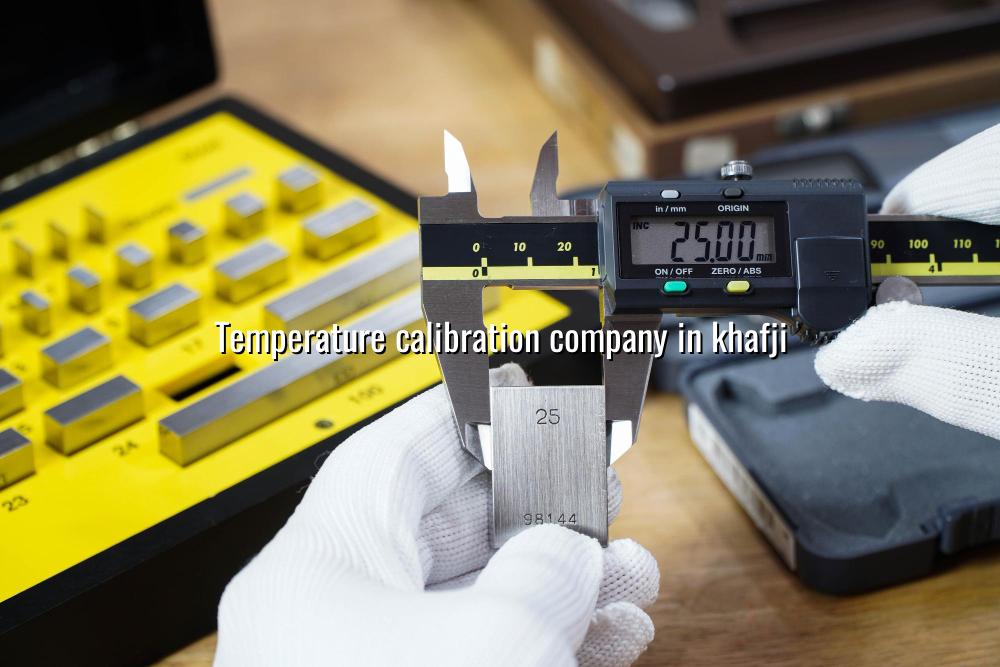
Temperature calibration company in Khafji support matters when your freezer logs, chamber readings or process sensors have to hold up under audit. We help you get believable numbers on paper and, just as important, keep the equipment tied to a traceable calibration path.
For teams working around Khafji, the practical need is usually simple: keep production, storage and testing equipment within limits without losing time shipping instruments far from site. We bring ISO/IEC 17025:2017 discipline to thermal work, with onsite service, in-lab checks and a mobile calibration lab for instruments that need controlled handling.
What a temperature calibration company in Khafji should cover
In Khafji, temperature work is rarely limited to one device type. A plant may need checks for ovens, freezers, walk-in cold rooms, reefer vehicles, data loggers and process indicators in the same shutdown window. The right provider should understand how thermal drift, sensor placement, loading pattern and ambient heat affect the reading you see on site.
Where thermal readings usually go wrong
The biggest issues are simple ones. A probe sits in the wrong spot, a chamber is tested before it has stabilised, or a logger is used outside the range it was meant for. We see the same pattern in cold-chain stores, maintenance shops and pharma support areas: the instrument itself may be fine, but the reading is not representative of the process.
Why traceability matters for audits
When a client asks for proof, they usually want more than a sticker. They want a certificate, measurement uncertainty where relevant, a clear indication of status and a trail back to recognised calibration practice. That is why ISO/IEC 17025:2017 and EURAMET CG-15 matter in electrical and thermal workflows. They give QA teams a way to defend the result instead of guessing at it later.
- Review the instrument list — confirm what you have on the floor, from chambers and thermostatic baths to handheld loggers and display units.
- Check the operating range — match the calibration points to the real process range, not just a nominal label on the asset tag.
- Stabilise the setup — let the equipment settle so the reading reflects actual performance, not a start-up swing.
- Measure and compare — record readings against suitable references, then note any drift, offset or repeatability issue.
- Document the result — issue a report that your maintenance and QA teams can use for the next review or audit cycle.
- Use onsite calibration for fixed assets that are costly to move or need the actual room conditions.
- Use in-lab calibration when the instrument needs tighter environmental control or special handling.
- Ask for pickup and delivery if the device needs protected transport or temperature-sensitive packing.
- Keep calibration records together with maintenance logs, especially for cold-chain and pharma sites.
- Recheck any instrument that shows unstable drift after service or relocation.
Common temperature calibration jobs and what they need
| Asset type | Typical use | What to check |
|---|---|---|
| Cold room | Food, pharma and vaccine storage | Mapping points, uniformity, sensor location and door-opening impact |
| Freezer | Deep-chill storage and sample holding | Setpoint accuracy, stability and recovery after load changes |
| Oven or heater | Drying, curing and process heating | Temperature offset, overshoot and distribution across the chamber |
| Reefer vehicle | Transport in cold-chain operations | Recording accuracy, probe placement and route-condition effects |
The checks that keep your thermal records believable
A clean calibration record starts with the right reference and the right point selection. For some instruments, a three-point check is enough. For others, especially process equipment with wider operating bands, you need a more careful spread so the result reflects how the asset is actually used. That is the part many teams miss when they only want the quickest ticket closed.
For plant and cold-chain teams
We usually recommend pairing calibration with a quick visual inspection of the asset, because a damaged gasket, loose sensor lead or poor airflow can make a good instrument look bad. In oil & gas support areas, petrochemical units, healthcare stores and food facilities, this saves repeat visits and gives maintenance teams a clearer picture before the next run.
Built for real sites, not clean brochures
Khafji projects often sit in heat, dust and tight shutdown windows. That means the calibration plan has to fit the site, the instrument and the people using it. Our mobile calibration lab helps when the asset should stay where it is, and pickup and delivery work better when special conditions are needed.
Why Khafji teams call us for more than one instrument
Most customers do not need a one-off calibration and nothing else. They need a supplier who can cover thermal instruments, mechanical checks and inspection work without creating three separate vendor tracks. That is where our wider service line helps: calibration, condition monitoring, electrical testing, inspection, orbital welding, repair and lab setup all sit under one industrial team.
For Saudi Arabia and the wider GCC, that matters because shutdowns and compliance reviews move fast. A team that already understands documentation discipline, onsite work and controlled handling is easier to deal with than a long chain of specialists. It also helps when a freezer, a pressure device and a protection relay all need attention in the same scope.
- Thermal chambers, cold rooms and freezers
- Temperature loggers and display indicators
- Industrial and laboratory process instruments
- Pickup, delivery and special-handling jobs
How Mayon Industrial Services Can Help
We support Khafji customers with ISO/IEC 17025:2017 calibration, thermal checks for cold-chain and process equipment, and practical site work when instruments can't be moved easily. If you need help with chambers, loggers, freezers or a wider maintenance scope, our team can plan the work around your shutdown or inspection window. We also handle related mechanical, inspection and lab-support tasks, so your team deals with fewer vendors.
Call +91 99447 80844 (India) or +966 59 633 8012 (Saudi Arabia), email services@mayonservices.com, or message us on WhatsApp.
Frequently Asked Questions
We can support onsite thermal calibration for fixed assets like cold rooms, freezers and some chamber systems, depending on access and operating conditions. Onsite work is usually the better choice when moving the equipment would interrupt storage or production. If the item needs more controlled handling, we can arrange in-lab support instead.
For many QA and audit-driven environments, yes, traceable calibration is expected and ISO/IEC 17025:2017 is the benchmark people ask for. It helps with documentation, confidence in the reading and consistency across sites. That matters in cold-chain, pharma support, food and industrial storage work where recorded temperature is part of the compliance trail.
Yes. Pickup and delivery make sense when the instrument needs protection from heat, vibration or rough handling, or when the customer wants the item calibrated in a temperature-controlled lab. We use that route for instruments that should not be left in the back of a vehicle or moved casually between sites.
We usually see demand from oil & gas, petrochemical, power, healthcare, food and beverage, manufacturing and cold-chain operators. Each one uses temperature in a different way, but the common thread is the same: they need stable readings they can trust during inspection, storage or process control.
If the unit shows unstable temperature, uneven results across the load, repeated alarms or obvious physical wear, we usually look at both the instrument and the equipment condition. A damaged gasket, fan issue or controller fault can make calibration results misleading. In those cases, repair and maintenance may need to come before the final verification.
Yes. Many customers bring us in for calibration and then ask us to support inspection, mechanical work, electrical testing or lab setup as the project unfolds. That reduces coordination time and helps keep the scope under one technical team instead of several disconnected vendors.
Ready to keep your temperature records under control?
If you need a reliable partner for thermal calibration in Khafji, we’re ready to plan the job around your site conditions and documentation needs.
Contact MayonA good temperature calibration company in Khafji should make your work easier, not add another layer of paperwork. That is the standard we work to at Mayon Industrial Services, and it’s the reason customers call us back when the next shutdown, audit or cold-chain check comes up.