
Thermal Mapping and Validation Company in Neom
Traceable temperature studies for cold-chain spaces, chambers and controlled storage across Neom and the wider Saudi market.
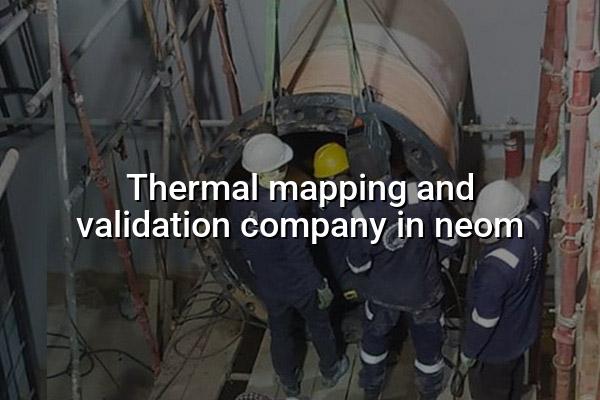
Thermal mapping and validation company in Neom searches usually come from a simple need: you have a cold room, freezer, reefer space or chamber, and you need proof that temperatures stay inside the required band. We help you get that proof in a way QA teams can stand behind.
Our work fits the way projects run in Saudi Arabia. Neom contractors, warehouse operators and pharma or food teams often need traceable temperature data, tidy reports and practical advice on load patterns, air circulation and sensor placement. That is exactly the kind of job our team handles from Dammam Industrial City 2 and across the Middle East.
Why thermal mapping in Neom needs a disciplined method
Thermal mapping is not just about placing a few loggers and printing a chart. For Neom projects, the bigger question is whether the space performs consistently under real operating conditions: door openings, product loading, ambient heat, power fluctuations and airflow from evaporators or fans. A proper study gives you a clear picture of hot spots, cold spots and recovery behaviour, which is what warehouse managers and quality teams actually need.
What we look at during a study
We examine the room or equipment as it will really run, not as it looks on paper. That means sensor placement across the usable volume, study duration that reflects the operating cycle, and clear checks for stability after loading or disturbance. In cold-chain work, people often focus only on the set point, but the uniformity across the space matters just as much.
Validation reports that hold up in audits
Validation work should leave you with evidence, not just data. We build reports around the study layout, instrument details, mapped results, deviations if any, and practical observations that your maintenance or QA team can use. For regulated storage in food, pharma or healthcare, that sort of record keeps internal reviews simpler and gives auditors a clear trail.
- Survey the controlled area — we check room size, product arrangement, door use, evaporator location and whether the space is empty or loaded.
- Place calibrated loggers — sensors are distributed across the floor, middle and upper zones so the study shows the full temperature profile.
- Run the mapping cycle — the room is monitored through the planned operating period, including normal disturbances where relevant.
- Review the data and issue findings — we identify hot spots, cold spots, recovery patterns and any corrective actions that make sense.
- Useful for cold rooms, freezers, reefer vehicles and thermal chambers.
- Helps QA teams show traceability during internal reviews and third-party audits.
- Supports product safety where temperature drift can spoil stock or affect shelf life.
- Fits Neom projects that need onsite work without moving the asset off location.
Common thermal validation targets for Neom facilities
| Asset or space | What is checked | Why it matters |
|---|---|---|
| Cold room | Temperature spread, door effect, recovery after loading | Protects stock held in active storage |
| Freezer | Cold spot location, compressor cycling, uniformity | Reduces the risk of over-freezing or uneven storage |
| Reefer vehicle | Air distribution, loading pattern, set-point stability | Supports cold-chain movement between sites |
| Thermal chamber | Control stability, chamber uniformity, mapped deviations | Helps qualify test or storage conditions for QA use |
What good validation gives your team
A sound mapping exercise gives you decisions you can act on. If the warmest point in the room sits near the door or the highest shelf, you can change pallet layout, revise loading practice or adjust maintenance on fans and seals. If the coldest point sits too low, you can spot a product risk before it turns into a complaint or a write-off.
Why Neom teams ask for onsite work
Most teams don't want to remove equipment from service just to study it. Onsite mapping is faster for planning, easier for operations staff and better for getting a true picture of the installation. That matters in remote or fast-moving project sites, where access windows can be tight and the room has to keep running.
Practical fixes, not just numbers
We often see the same issues in cold-chain spaces: blocked airflow from overstacking, door seals that need attention, poorly placed probes, and shelves that create dead zones. When the data points to a problem, the next step is usually a small operational change rather than a large redesign.
How we plan a thermal mapping and validation study
Every site starts a little differently, but the planning questions are familiar. What is the exact use of the room? Is it storage, transport, a process chamber or a mix of all three? Are you trying to prove compliance for a new installation, revalidate an existing asset after maintenance, or support a periodic review? Once that is clear, the study can be set up in a way that matches the real operating risk.
Typical planning checks before the study
We confirm the operating range, expected loading pattern, number of access points, and any product sensitivity that matters. Then we agree on the logger layout and the run duration. If the space is part of a larger cold-chain flow, we also look at how it connects with receiving, staging and dispatch, because a good room can still fail if the workflow around it is poor.
- Define the scope — decide if the study is for storage, transport, qualification or revalidation.
- Check the operating conditions — confirm set points, loading style, access frequency and any special risk points.
- Map the sensor grid — set logger positions to cover the full working envelope, not just the easiest spots.
- Close the loop with actions — use the findings to refine operations, maintenance or equipment layout.
- Helps before handover of new storage and logistics sites in Saudi Arabia.
- Useful after repairs, seal replacement or fan work on cold rooms and chambers.
- Supports temperature-sensitive sectors such as food, pharma and healthcare.
- Gives maintenance teams a clear basis for corrective action.
How Mayon Industrial Services Can Help
We support thermal mapping and validation with calibrated instruments, structured studies and reports that speak to QA, maintenance and operations teams. If you need onsite work for a cold room, freezer, reefer unit or chamber in Neom, our team can handle the study, review the findings and help you decide what to change next. We also support adjacent needs like temperature mapping for cold-chain assets, calibration, inspection and mechanical work, so one conversation can cover more than one problem.
Call +91 99447 80844 (India) or +966 59 633 8012 (Saudi Arabia), email services@mayonservices.com, or message us on WhatsApp.
Frequently Asked Questions
We measure how temperature moves through the space, not just what one sensor says at one point. That includes warm spots, cold spots, recovery after disturbance and the effect of loading or door openings. The aim is to give you a practical report you can use for QA, maintenance and handover.
We place calibrated data loggers across the usable space, then run the study under agreed operating conditions. The layout depends on room size, shelving, airflow and access points. After the run, we review the spread and point out anything that could affect product safety or consistency.
Yes, onsite work is often the best option. It lets us study the asset where it operates, so the results reflect real use instead of a test bench setup. That is especially useful for live cold rooms, transport assets and chambers that cannot be taken out of service easily.
Because a report shows evidence. It helps teams prove that storage or transport conditions were checked properly and that the results were reviewed against the actual operating risk. In practice, that makes audits and internal sign-off much easier.
No. We work across food, pharma, healthcare, logistics and industrial projects where temperature stability matters. The common thread is the same: you need traceable data and a team that can work onsite in Saudi Arabia, India or the wider Middle East.
Ready to check your controlled space with confidence?
If you need thermal mapping in Neom, we can help you get the data, the report and the practical next steps without wasting your team’s time.
Contact Mayon