
Thermocouple and RTD Calibration Company in Haradh
Traceable temperature calibration for process plants, warehouses, and maintenance teams working in Haradh and the wider Eastern Province.
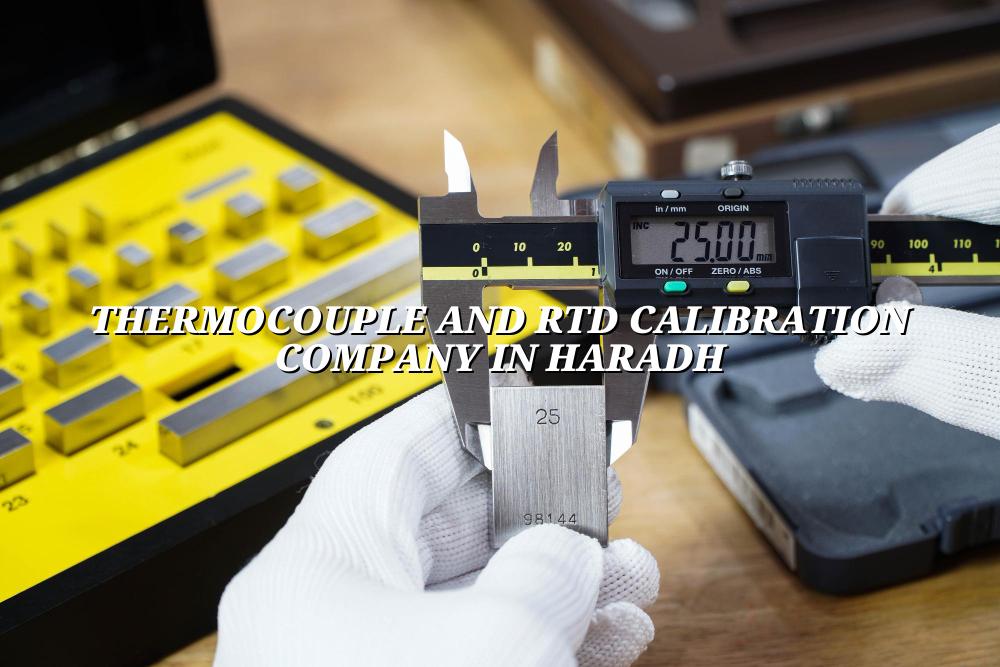
Thermocouple and RTD calibration company in Haradh is the phrase many maintenance teams use when they need temperature readings they can trust before a shutdown, startup, or audit. We help you verify that your sensors, indicators, and transmitters are reading correctly, so you can keep process temperatures under control and avoid bad decisions based on drifting instruments.
Our work supports plants and contractors in Haradh, the Eastern Province, and Saudi industrial corridors where heat, dust, vibration, and long operating hours can slowly pull a sensor out of tolerance. We use ISO/IEC 17025:2017-compliant methods, a controlled in-house laboratory, and a fully equipped mobile calibration lab for onsite work when removing instruments would be a headache.
Thermocouple and RTD calibration in Haradh for real plant conditions
Temperature instruments are easy to ignore until a batch goes off-spec, a compressor trips, or a freezers and thermal chamber log doesn’t match the setpoint. In Haradh, that risk shows up in oil and gas support work, petrochemical units, food storage, power plants, and maintenance shops where thermocouples and RTDs sit in service for long periods. We check the sensor, the associated readout, and the measurement chain so you know what the temperature value really means.
Where thermocouples and RTDs fail in practice
Most issues we see are not dramatic. They creep in. A thermocouple junction loosens after repeated thermal cycling. An RTD drifts because of moisture ingress, cable damage, or poor installation. Sometimes the problem is a transmitter or indicator, not the probe itself. That’s why calibration needs to look at the whole assembly, especially when the instrument is tied to a critical process or a quality record.
What our team checks during calibration
We compare the instrument against suitable reference equipment, record deviations at test points, and confirm whether the reading stays within the client’s acceptance criteria. For many sites, that means supporting temperature loops used on ovens, chillers, process vessels, cold rooms, steam systems, and laboratory equipment. If the item needs controlled handling, we can receive it for in-house work or arrange pick-up and delivery.
- Identify the sensor type — confirm whether it’s a thermocouple, RTD, transmitter, indicator, or a complete loop.
- Inspect the condition — check insulation, connectors, sheath condition, wiring, and signs of mechanical damage.
- Run point checks — compare readings across practical temperature points used for the application.
- Review the results — compare the error against your tolerance and decide whether the unit can stay in service.
- Onsite calibration helps when removal would stop a line or disturb a critical process.
- RTDs are often used where stability matters more than very fast response.
- Thermocouples suit wider temperature ranges, but cable condition matters a lot.
- Calibration records support QA teams during internal reviews and customer audits.
- Controlled handling helps when instruments need special storage or transport conditions.
Reference table for selecting the right temperature sensor
| Item | Thermocouple | RTD |
|---|---|---|
| Typical use | Higher temperature and fast-changing processes | Stable measurement where accuracy and repeatability matter |
| Common issue | Junction wear, drift, extension wire mismatch | Lead resistance, moisture ingress, element damage |
| Best check | Verify output at practical process points | Confirm resistance or transmitter output across range points |
| Plant fit | Heaters, furnaces, process skids, field equipment | Cold rooms, labs, utilities, regulated temperature zones |
What a proper calibration record should tell you
A good certificate does more than show a pass or fail. It should tell you what was tested, what reference equipment was used, the measured error, and how the result ties back to traceable standards. For teams working under ISO 9001:2015 or customer quality systems, that paper trail matters when an auditor asks why a batch log, test report, or maintenance record looks the way it does.
Why Haradh sites ask for onsite checks
Many clients in Haradh prefer onsite work because their sensors are buried in installed systems, tied into shutdown windows, or spread across multiple skids. Our mobile calibration lab helps with that. When special conditions are needed, we can pick up the instrument, keep it controlled, and return it after in-house calibration. That keeps fragile devices safer than a rough move across site.
Built for plant and QA teams
We handle thermocouples, RTDs, indicators, transmitters, and associated temperature tools used in oil and gas, petrochemical, power, manufacturing, and cold-chain work. If the reading affects product quality or process safety, it needs a proper check, not a guess.
Calibration paths we use for temperature instruments
Not every job needs the same setup. A field-installed thermocouple connected to a process heater may need quick verification in place. A lab RTD used for product qualification may need a more controlled test cycle and better documentation. Our team matches the approach to the application rather than forcing one method on every instrument.
We also pay attention to the surrounding equipment. A lot of “bad sensor” calls end up being cable faults, terminal problems, or a controller issue. That saves time and keeps you from replacing parts that still work. In our experience, that second look is where the real value often shows up.
Common temperature services linked to this page
Clients often ask us to pair thermocouple and RTD calibration with temperature mapping, thermal chamber checks, or general calibration of related instruments. If you’re managing a cold room in Saudi Arabia, a warehouse in Chennai, or a production line anywhere in the Middle East, having one provider handle the full temperature chain makes the record set easier to defend.
- Use onsite checks when downtime is expensive.
- Use in-house testing when the instrument needs controlled handling.
- Match the sensor type to the process temperature range.
- Ask for records that show the error at each point, not just a pass mark.
How Mayon Industrial Services Can Help
We support Haradh clients with temperature calibration, onsite mobile-lab work, in-house laboratory service, and practical advice on whether a thermocouple or RTD should be repaired, recalibrated, or replaced. If your team also needs related help, we can line up calibration services, condition monitoring, electrical testing, inspection, temperature mapping, or lab setup work through one contact point. That keeps your maintenance list shorter and your records cleaner.
Call +91 99447 80844 (India) or +966 59 633 8012 (Saudi Arabia), email services@mayonservices.com, or message us on WhatsApp.
Frequently Asked Questions
Yes, we support Haradh and nearby industrial locations through onsite and in-house calibration work. If the sensor is installed in a running process, our mobile calibration lab is usually the easiest route. If the instrument needs special handling, we can arrange controlled pick-up and delivery from the Saudi side.
They do. Thermocouples are checked by comparing their output against a suitable reference at selected temperature points, while RTDs are usually verified through resistance or transmitter output checks. The right method depends on the sensor type, the application, and the accuracy level your process needs.
Yes. Onsite work is often the best choice for installed probes, process loops, and equipment that should not be removed from service for long. We use a mobile calibration setup when the location, access, or production schedule makes field service the safer option.
We most often see oil and gas, petrochemical, power, manufacturing, cold-chain, and food-related work. Those sectors usually need traceable records because temperature affects safety, product quality, or compliance. Haradh sites in particular tend to value quick field support because process uptime matters.
Honestly, that’s a common call. We check the sensor element, cable condition, and output path step by step so we can separate probe drift from wiring or transmitter faults. That saves you from replacing a good RTD when the actual issue sits in the loop.
Ready to keep your temperature readings under control?
If you need a thermocouple and RTD calibration company in Haradh, we’re ready to help with field service, lab work, and records your team can use with confidence.
Contact Mayon