
Thermocouple and RTD Calibration Company in Madina
Traceable temperature calibration for process plants, utilities, labs and maintenance teams in Madina and across Saudi Arabia.
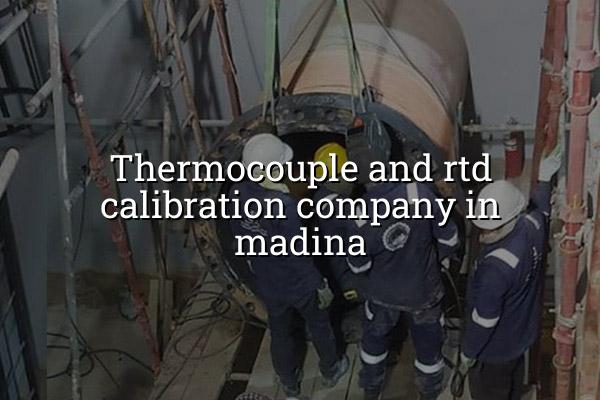
Thermocouple and RTD calibration company in Madina support helps you keep process temperatures believable, traceable, and ready for audit. If your plant depends on accurate heat control, this page shows how we handle calibration, what gets checked, and what you should ask before you send an instrument out.
We work with maintenance teams, QA staff, and procurement groups across Saudi Arabia, especially in Madina and the wider Eastern Province. Our mobile calibration lab and temperature-controlled in-house facility let us handle field work and controlled checks with the traceability that industrial sites expect under ISO/IEC 17025:2017.
Thermocouple and RTD calibration company in Madina for plant teams
In Madina, temperature measurement usually sits inside a bigger operating problem. You may be running boilers, heat exchangers, cold rooms, dryers, or a control loop that keeps drifting after maintenance. A thermocouple that reads high by a few degrees or an RTD with a damaged element can throw off the whole process, so calibration needs to be more than a label and a certificate.
What we check during calibration
For thermocouples, we verify how the probe responds across the required range and compare it against a known reference under controlled conditions. For RTDs, we check the sensor element, the wiring arrangement, and the reading stability at set points. We also look at the connected indicator or transmitter where the job calls for it, because a perfect probe still gives the wrong result if the loop is off.
Why local Madina support matters
Saudi sites often need practical support that fits shutdown windows, production schedules, and remote locations. That is where onsite work helps. Our mobile calibration lab can come to you for routine checks, while instruments that need tighter environmental control can move to our lab by pick-up and delivery. It saves you from guessing where the error started.
- Identify the instrument — confirm whether it is a thermocouple, RTD, transmitter, indicator, or complete loop.
- Check the range and application — note the process temperatures, the sensor type, and any special probe length or mounting details.
- Select the calibration method — onsite, in-lab, or a mix of both depending on access, condition, and required control.
- Compare against reference points — use traceable checks at practical set points that reflect how the instrument is used on site.
- Use calibration intervals that match process risk, not just a calendar date.
- Keep thermocouple type, sheath material, and connector condition recorded.
- For RTDs, check lead-wire faults and insulation issues before blaming the sensor.
- Ask for traceability under ISO/IEC 17025:2017 when the instrument supports compliance work.
Thermocouple vs RTD: practical differences for Madina sites
| Item | Thermocouple | RTD |
|---|---|---|
| Typical use | Higher temperature, faster response applications | Stable measurement where accuracy and repeatability matter |
| Common issue | Drift, oxidation, connector faults, damaged junction | Lead resistance, element damage, insulation breakdown |
| What calibration checks | Response at reference points and overall accuracy | Element integrity, resistance behavior, and reading stability |
| Best fit on site | Harsh, hot, vibrating process areas | Controlled process loops, laboratories, and quality-critical systems |
How we keep temperature checks trustworthy
Good calibration is not just about matching a display to a reference bath. It starts with the right setup, clean connections, proper handling, and the right reference equipment. In a plant environment, we also pay attention to how the sensor is installed, because a bent probe, poor immersion depth, or loose terminal can make the result look worse than it really is.
Useful checks before sending the instrument out
If the temperature reading is inconsistent, check the probe body, cable, connector, and mounting condition first. A surprising number of “bad sensors” are actually wiring problems or process issues. For RTDs, three-wire and four-wire arrangements need to be identified correctly, and thermocouples need the right type matched with the transmitter or indicator.
Built for industrial temperature work
We support oil & gas, petrochemical, power, manufacturing, food, cold chain, healthcare, and pharmaceutical sites across Saudi Arabia. That means your sensor can be checked in a way that fits the job, not a generic lab habit. If the instrument needs special handling, we can arrange pick-up and delivery so the chain of custody stays clear.
Onsite, in-lab, and mobile calibration options
Onsite support
Best when you want the live process connected and prefer minimal removal. Our mobile calibration lab is useful for sensors installed in skids, vessels, panels, and hard-to-access points.
In-house lab work
Best for tighter environmental control and instruments that need extra care. Our temperature-controlled lab helps when the sensor, indicator, or transmitter should be checked away from site noise and heat.
Pick-up and delivery
Best for fragile items or units that need special transport conditions. It keeps the process simple for teams in Madina, Jeddah, Dammam, and other Saudi locations we support.
How Mayon Industrial Services Can Help
We support thermocouple and RTD calibration with the same practical approach we use across our calibration, inspection, mechanical, and laboratory setup work. If you need onsite checks in Madina, a controlled in-lab job, or help deciding whether a sensor should be repaired, replaced, or rechecked, our team can guide you with clear next steps. Call us when you want temperature work handled properly and documented with traceability.
Call +91 99447 80844 (India) or +966 59 633 8012 (Saudi Arabia), email services@mayonservices.com, or message us on WhatsApp.
Frequently Asked Questions
Look for a team that can handle both onsite and controlled-lab work, because temperature instruments don’t all fail the same way. In Madina, many users need support for process plants, utilities, cold-chain storage, and maintenance shutdowns, so local response plus traceable calibration matters. Ask whether the work is supported under ISO/IEC 17025:2017 and whether the company can handle pick-up and delivery for sensitive items.
We check the sensor response at relevant reference points and look for drift, junction problems, connector damage, or installation issues. If the thermocouple is part of a transmitter loop, the transmitter and display should also be reviewed. That stops you from blaming the probe when the real issue sits somewhere else in the circuit.
RTDs are resistance-based sensors, so the test focuses on how the element behaves across the range and whether the wiring is sound. Thermocouples generate a small voltage from the junction of two dissimilar metals, so the approach is different. In practice, RTDs often suit stable, accuracy-focused measurements, while thermocouples are common where heat, speed, or rougher conditions are part of the job.
Yes, we can support onsite work through our mobile calibration lab where the application and access allow it. That is often the better choice for installed sensors, shutdown windows, and equipment that is awkward to remove. If the instrument needs a more controlled environment, we can arrange transport to our lab instead.
We commonly see demand from oil & gas, petrochemical, power, manufacturing, food, cold chain, and healthcare-related facilities. These sites care about stable process temperature, product quality, and evidence during audits. The exact instrument type may change, but the need for traceable checks stays the same.
Yes, calibration work is documented so your team has a record for maintenance files, quality systems, and audit support. The exact format depends on the job, but the aim is always the same: make it easy for you to show what was checked and how it was handled. If you need a mixed batch of probes, indicators, or related instruments reviewed, we can structure the job around that.
Ready to keep your temperature readings under control?
If you need a thermocouple and RTD calibration company in Madina that understands industrial work, speak to Mayon Industrial Services and get the right sensor check started.
Contact Mayon