
Thermocouple and RTD Calibration Company in Shedgum
Traceable temperature calibration for plants, labs, and maintenance teams working in Shedgum and across the Eastern Province.
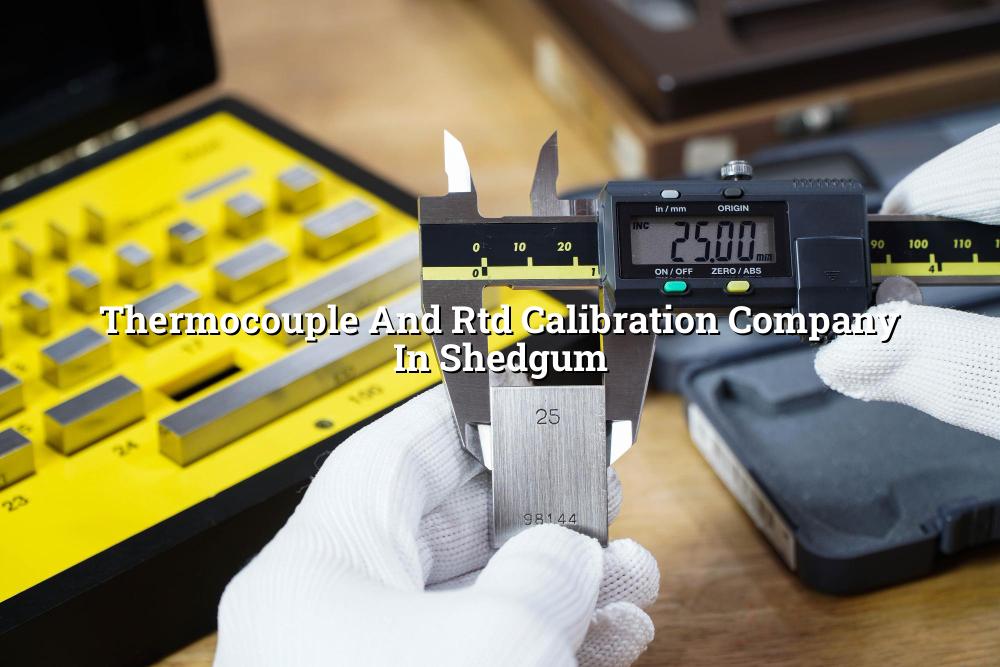
Thermocouple and RTD calibration company in Shedgum services matter when your process temperature decides product quality, safety, or shutdown risk. We help you verify that sensors are reading the same temperature your control system expects, so you can trust alarms, trends, and batch records.
Our team works with industrial clients who need traceable calibration for maintenance shutdowns, commissioning work, and routine instrument checks. In Shedgum and the wider Eastern Province, that usually means equipment tied to oil and gas, petrochemical units, power facilities, cold-chain storage, and workshop environments where a bad reading can turn into wasted time fast.
Thermocouple and RTD Calibration Company in Shedgum for field and lab use
Temperature sensors are easy to underestimate until they start drifting. A thermocouple can age, a wire can be damaged, or a head assembly can pick up noise from the process. RTDs behave differently, but they still need verification against the right reference equipment and a controlled method. We calibrate these instruments for clients who need confidence before a turnaround, before start-up, or before a quality audit.
What we check during calibration
We look at how the sensor behaves at selected points across the range you actually use, not just at one convenient spot. For thermocouples, that means checking the output against a reference setup and watching for offsets, instability, and connection issues. For RTDs, we verify resistance response and compare it with the expected temperature curve. If you’ve got a transmitter in the loop, we can check that path too, because a healthy probe with a bad transmitter still gives you the wrong answer.
Why Shedgum teams ask for onsite support
Many teams don’t want to remove every probe from a live system. That’s fair. We use our mobile calibration lab for onsite work where access, condition, or downtime makes that the better option. For sensitive items, our temperature-controlled in-house laboratory is a good fit, and we can arrange pick-up and delivery for instruments that need special handling. That mix helps when you’re managing multiple instruments across one site or several plants.
- Identify the sensor type — confirm whether it’s thermocouple, RTD, or a complete temperature loop with transmitter and display.
- Check the application range — match the calibration points to the actual process band, not just the datasheet headline.
- Prepare the instrument — inspect wiring, probe condition, mounting hardware, and any signs of corrosion or damage.
- Compare against reference standards — record readings at the selected points and note any deviation or instability.
- Review the result with the plant team — decide whether the item goes back to service, needs adjustment, or should be repaired.
- Useful for shutdown planning, startup checks, and routine maintenance rounds
- Works for process plants, cold stores, utilities, and workshop test benches
- Supports traceability expectations under ISO/IEC 17025:2017
- Helps spot drift before it affects batch quality or protective trips
- Can be done onsite in Shedgum or in our controlled laboratory setup
Thermocouple vs RTD: what plant teams usually compare
| Point to compare | Thermocouple | RTD |
|---|---|---|
| Typical use | Higher-temperature process zones and fast response checks | Stable measurement where accuracy and repeatability matter |
| Common issue | Drift from wear, junction damage, or wiring faults | Resistance changes, lead issues, or damaged sheath assemblies |
| Calibration focus | Voltage output, stability, and match to reference points | Resistance-to-temperature response and loop verification |
| Best service mode | Onsite check during maintenance or lab verification for critical items | Lab or onsite verification with clean handling and proper references |
Why temperature traceability matters before audits and handover
When you’re dealing with production records, food storage, pharma areas, or utility equipment, a temperature reading is only useful if you can stand behind it. That’s where ISO/IEC 17025:2017 traceability helps. It gives your team a clean line from the reference standard to the instrument on site, which is exactly what maintenance managers and QA teams want to see when questions come up.
Where we usually see problems
The same problems repeat across sites: a probe moved out of position after maintenance, an old sensor left in service because it “looked fine,” or a loop that was never checked after a control panel change. Those little gaps are the ones that show up later as inconsistent batches, false alarms, or nuisance shutdowns. A proper calibration visit is a chance to catch them before they spread through the process.
Built for industrial temperature work
We support thermocouples and RTDs used in ovens, furnaces, chillers, storage rooms, test rigs, and utility systems. If your setup also needs electrical testing, mechanical support, or temperature mapping, our team can coordinate the work without bouncing you between vendors.
When a Shedgum site should book calibration now
Before commissioning
New lines, new skids, and replacement panels should be checked before they go live. It saves a lot of backtracking once production starts.
After maintenance work
If a sensor was removed, rewired, or relocated, verify it again. That’s one of the most common sources of hidden error.
When readings look odd
Slow response, unexplained offsets, or unstable trends often point to the sensor itself. Don’t wait for the next outage to check it.
Before audit or client handover
QA teams in the Eastern Province often need evidence that instruments were checked with a controlled method and clean records. Calibration reports help keep that conversation short.
During shutdown planning
Temperature sensors are easy to bundle into a shutdown scope, and that’s usually the lowest-friction time to handle them. The work can be grouped with other electrical and mechanical tasks.
Information that helps us quote and plan the job cleanly
If you send the sensor type, range, quantity, and where it’s installed, we can plan the calibration route faster. Photos help too, especially when there’s a head assembly, transmitter, or awkward mounting point. For larger sites in Shedgum, that little bit of detail usually saves a second visit.
Practical details to include
We also like to know whether the items are process-critical, whether you need onsite attendance, and whether there are any access constraints. That could be a rack in a cold room, a high-point installation, or a panel inside a live area. The more specific the input, the easier it is for our team to match the right setup.
- Sensor model, type, and range
- Quantity and installation location
- Whether the item is thermocouple, RTD, or a full temperature loop
- Any access, shutdown, or safety restrictions
- Need for onsite work, lab work, or pick-up and delivery
How Mayon Industrial Services Can Help
We calibrate thermocouples and RTDs for industrial sites that need traceable temperature checks without the usual runaround. Our scope fits plant maintenance, QA verification, commissioning, and shutdown support, and we can combine the work with condition monitoring, electrical testing, or mechanical services when your scope is broader than one sensor family. If you need onsite support in Shedgum or lab-based handling for sensitive instruments, we’re set up for that.
Call +91 99447 80844 (India) or +966 59 633 8012 (Saudi Arabia), email services@mayonservices.com, or message us on WhatsApp.
Frequently Asked Questions
Yes — Mayon Industrial Services supports Shedgum and nearby industrial areas with onsite and lab-based temperature calibration. We work with thermocouples, RTDs, and related temperature loops for plants that need traceable verification before use or after maintenance.
Thermocouples generate a small voltage that changes with temperature, so we check the output against reference points and look for drift or instability. RTDs work by resistance change, so the method focuses on the resistance-to-temperature relationship and any issues in the lead or sheath assembly. The two instruments behave differently, which is why the setup matters.
Yes, we can. Our mobile calibration lab is useful when the sensor is part of a live process, or when removing it would cause unnecessary downtime. For some instruments, we may recommend lab handling instead, especially if they need controlled conditions or special transport.
We can check the full temperature loop when the job calls for it. That helps when the probe itself is fine but the transmitter, wiring, or display is causing the wrong reading. Many plant teams ask for that because it saves them from testing each part separately later.
Send the sensor type, range, quantity, location, and whether you need onsite work or lab handling. If the items are tied to a shutdown, commissioning job, or audit, mention that too. A few photos usually help us plan the visit better.
We do. Our team serves India, Saudi Arabia, and the wider Middle East, with operations based in Chennai and Dammam Industrial City 2. That helps us support regional industrial projects without stretching the service model beyond the areas we actually cover.
Ready to check your temperature sensors with confidence?
Send us the thermocouple or RTD details, and we’ll help you choose the right calibration route for your site in Shedgum.
Contact Mayon