
Thermocouple and RTD Calibration Company in Uqair
Traceable temperature calibration support for process plants, utilities and cold-chain teams working in Uqair and the Eastern Province.
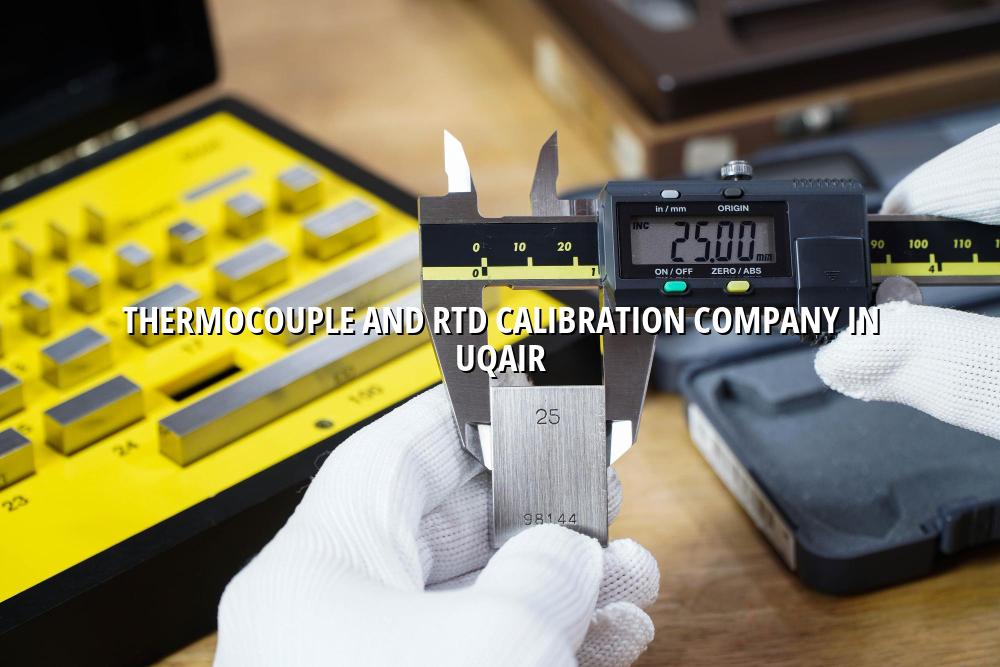
Thermocouple and RTD calibration company in Uqair services help you keep process temperatures honest, which matters when a small drift can throw off batch quality, alarms or control loops. We calibrate sensors so your team can trust the reading before it reaches the DCS, recorder or quality log.
For plants near Uqair, the work often sits inside a wider reliability plan. That means traceable calibration, clear identification of out-of-tolerance points, and practical support for maintenance shutdowns, commissioning checks and routine verification in Saudi Arabia and the wider Eastern Province.
What a thermocouple and RTD calibration company in Uqair should do
When you ask for thermocouple and RTD calibration, you’re really asking for confidence in the whole measurement chain. That starts with the sensor type, the transmitter or indicator, the range you actually use in service, and the tolerance your process expects. In oil and gas, petrochemical, utilities and cold-chain work around Uqair, we see all four of those pieces matter. A sensor can read well at one point and still cause trouble at the upper end of the span, so a proper check has to reflect real operating conditions, not just a quick spot test.
Thermocouples and RTDs are not treated the same
Thermocouples respond quickly and handle higher temperatures, so they’re common in furnaces, heaters and process lines. RTDs are often chosen where stability and repeatability matter more, such as skids, tanks, HVAC plant and quality-critical systems. We handle both with the right test setup, because the reference method, the expected error pattern and the acceptance criteria are different. If your maintenance team has mixed inventories, that difference saves a lot of avoidable rework.
How the calibration check is normally carried out
For in-house work, we use controlled temperature equipment and reference instrumentation inside a temperature-managed lab. For site work, our mobile calibration lab lets us work close to the installed point, which helps when removing long sensor runs would create more risk than value. The result is a practical report that supports ISO/IEC 17025:2017 traceability expectations and gives your QA team a record they can use during audits or internal reviews.
- Identify the sensor and service range — confirm whether it is a thermocouple or RTD, the probe construction, and the range used in the plant.
- Inspect the installation condition — check terminals, extension leads, mounting, oxidation, sheath damage and obvious mechanical wear.
- Compare against a traceable reference — test the sensor at multiple points across the span, not only at one temperature.
- Record error and acceptance status — note pass/fail, as-found deviation and any adjustment or replacement recommendation.
- Return the instrument to service — tag it clearly, store the record for QA files, and plan the next review based on usage and criticality.
- Use the same sensor type in the report that’s installed in the field; mixed naming causes audit questions.
- Check the cold junction or transmitter settings on thermocouple loops before blaming the probe.
- Ask for as-found data so you can see drift before adjustment hides the history.
- Keep calibration records with asset tags, loop numbers and location details for easier shutdown planning.
- Use onsite or mobile-lab testing when pulling the sensor would interrupt production or create safety issues.
Thermocouple versus RTD calibration points we check
| Item | Thermocouple | RTD |
|---|---|---|
| Typical use | Higher-temperature process equipment and fast response points | Stable measurements where repeatability matters most |
| Common check focus | Lead condition, junction integrity, span error and transmitter setup | Element resistance, wiring condition and full-range linearity |
| Site challenge | Cold junction errors and long cable runs can distort readings | Loose connections and moisture can affect resistance readings |
| Best service mode | Onsite verification or lab calibration when removal is practical | Lab or onsite depending on access, criticality and shutdown window |
Why calibration records matter in Uqair plants
In our experience, the trouble usually starts long before a sensor fails completely. A drifted thermocouple may still look “good enough” on the HMI, and an RTD with a loose connection can behave differently from one shift to the next. That’s where a solid calibration record helps: it shows history, not just a one-time pass. For managers handling shutdowns, compressor skids, tanks, freezers or process heaters, that history helps you decide whether to keep, repair or replace.
Better decisions during maintenance planning
We often see teams use calibration results to decide which loops need immediate attention and which can wait for the next outage. That keeps work focused. It also helps with procurement, because repeated drift across a specific sensor type can point to a better specification or a more suitable installation method. If your site works under ISO/IEC 17025:2017 expectations, clean records and clear identification make life much easier during audits.
Built for field conditions
Our team supports temperaturesensors that sit in harsh service, dusty areas, tight cable trays and production lines where access is awkward. We can work from our in-house lab or mobilize with the mobile calibration lab when onsite testing makes more sense. That helps reduce handling risk and keeps the instrument closer to its actual service condition.
Where our temperature calibration work fits with plant operations
In-house lab checks
Our temperature-controlled lab suits sensors that need careful handling, repeatable reference conditions or pickup and delivery because of special storage needs. This is useful for critical spares, batch instruments and devices that are easier to test offsite.
Onsite field verification
Onsite work is practical for installed thermocouples and RTDs that are tied into ongoing operations. It reduces disassembly, helps with faster troubleshooting and lets the maintenance team see the result against the real process condition.
Mobile-lab support
Our mobile calibration lab is a good fit for shutdown windows, remote facilities and sites that need calibration support without sending every instrument away. It’s a useful option across Saudi Arabia and the Middle East when timing and handling matter.
How Mayon Industrial Services Can Help
We support thermocouple and RTD calibration through our ISO/IEC 17025:2017-aligned calibration services, plus onsite work when the sensor should stay in place. If your project also needs related support, our team can help with condition monitoring, electrical testing and commissioning, inspection, repair and maintenance, or lab setup. That gives you one partner for the measurement chain, not five different vendors to chase.
Call +91 99447 80844 (India) or +966 59 633 8012 (Saudi Arabia), email services@mayonservices.com, or message us on WhatsApp.
Frequently Asked Questions
We support customers in Uqair with onsite calibration and lab-based checks depending on the sensor type and site access. If the probe is installed in a live process, onsite work is usually the cleaner option. If removal is easy and the sensor needs special handling, our in-house lab can be a better fit.
Thermocouples are checked with attention to junction condition, lead integrity and the full range the process uses. RTDs are checked for resistance behavior, wiring quality and repeatability across the span. The setup is different because the sensing principles are different, and mixing the methods can give poor results.
Yes. Onsite calibration is often the right answer when the sensor is wired into a running process, a control loop or a shutdown window with limited access. It reduces handling and helps you see the instrument in its real operating condition.
Yes, and we recommend asking for it. As-found data shows how the sensor performed before any adjustment, which helps maintenance teams see drift and decide whether replacement is smarter than rework. It’s also useful for QA records and audit trails.
Yes. We serve Saudi Arabia from Dammam Industrial City 2 through our local setup, and we also support projects across the Middle East where the scope fits our industrial service model. That includes temperature calibration work for process, utility and cold-chain environments.
Ready to keep your temperature readings under control?
If you need thermocouple or RTD calibration in Uqair, talk to us and we’ll help you choose the right onsite or lab option for the job.
Contact Mayon